


US and EU negotiators agreed on Friday to allow unrestricted competition on transatlantic airline routes, opening the prospect of cheaper tickets and more choice for passengers.
The breakthrough came after a week of talks at the US State Department in Washington, the latest round in a two-year drive to forge an "open skies" aviation deal between the US and the EU.
But the EU made clear that the US government will have to give more ground before a comprehensive agreement can finally be signed, perhaps next year.
"Every US airline legally authorized will be able to fly from the US to an airport in the EU, and from the EU to other airports," said John Byerly, deputy secretary for transport at the State Department.
The same will apply in reverse for European airlines flying to the US and then heading to third destinations, he told reporters.
The agreement now goes for approval by the US government and the 25 member states of the EU, whose transport ministers next meet on Dec. 5.
"Basically we want to open the gates for vigorous competition to the greatest benefit of consumers, shippers and our economy," said Byerly, who led the US negotiating team.
"This successful round follows two years of negotiations and is a historic opportunity to maximize the benefits for consumers and airlines," he said.
The EU was more circumspect, stressing that a complete agreement will depend on the US agreeing to lift ownership caps that limit foreign investment in US airlines.
The US limits foreign voting rights in its airlines to 25 percent of the capital. The EU has a higher ceiling of 49 percent.
"This is a first step. We look forward to continue [negotiations] ... in order to open up the access to markets," said Daniel Calleja, head of the transport department at the EU executive commission.
The US Department of Transportation earlier this month proposed new rules giving foreign investors more say in some aspects of US airline operations and making it easier for carriers to obtain overseas financing.
But it made no proposal to change the 25 percent ceiling on voting rights.
Both sides said the full agreement could enter into force by next October, when airlines will start their winter schedules.
The issue of so-called cabotage rights for airlines wanting to fly to wherever they choose had been one of the biggest stumbling blocks in the US-EU negotiations, which were launched in October 2003.
The aim is to do away with the existing patchwork of bilateral agreements between various EU members and the US and set up one system regulating transatlantic air transport.
Whereas now British Airways, for example, can fly from London to New York, it cannot then proceed to service domestic US routes such as Chicago or Atlanta.
US airlines can fly from Washington to Paris, for instance, and then on to Rome. But they cannot then head beyond Europe to points east in Asia.
In principle, the agreement announced after this week's talks will scrap those restrictions.
Airlines will be free to ply routes between any EU city and any US one, as well as to go further afield.
They will be able to use whichever planes they choose in any quantity, while setting whatever fares and forging whatever alliances with other airlines that they wish.
But in practice, airlines will still have to negotiate landing rights at congested airports.
London Heathrow, for example, is a prized destination for US carriers but landing rights at Europe's busiest airport remain very hard, and very expensive, to obtain.
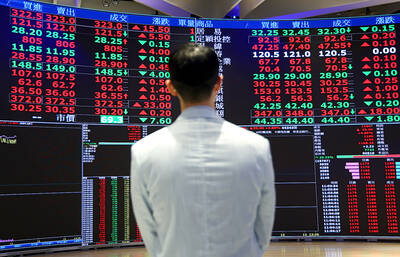
Shares in Taiwan closed at a new high yesterday, the first trading day of the new year, as contract chipmaker Taiwan Semiconductor Manufacturing Co (TSMC, 台積電) continued to break records amid an artificial intelligence (AI) boom, dealers said. The TAIEX closed up 386.21 points, or 1.33 percent, at 29,349.81, with turnover totaling NT$648.844 billion (US$20.65 billion). “Judging from a stronger Taiwan dollar against the US dollar, I think foreign institutional investors returned from the holidays and brought funds into the local market,” Concord Securities Co (康和證券) analyst Kerry Huang (黃志祺) said. “Foreign investors just rebuilt their positions with TSMC as their top target,
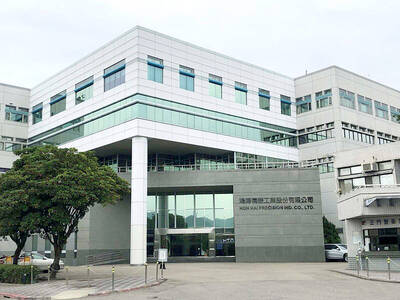
REVENUE PERFORMANCE: Cloud and network products, and electronic components saw strong increases, while smart consumer electronics and computing products fell Hon Hai Precision Industry Co (鴻海精密) yesterday posted 26.51 percent quarterly growth in revenue for last quarter to NT$2.6 trillion (US$82.44 billion), the strongest on record for the period and above expectations, but the company forecast a slight revenue dip this quarter due to seasonal factors. On an annual basis, revenue last quarter grew 22.07 percent, the company said. Analysts on average estimated about NT$2.4 trillion increase. Hon Hai, which assembles servers for Nvidia Corp and iPhones for Apple Inc, is expanding its capacity in the US, adding artificial intelligence (AI) server production in Wisconsin and Texas, where it operates established campuses. This
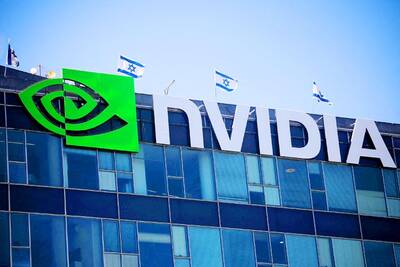
H200 CHIPS: A source said that Nvidia has asked the Taiwanese company to begin production of additional chips and work is expected to start in the second quarter Nvidia Corp is scrambling to meet demand for its H200 artificial intelligence (AI) chips from Chinese technology companies and has approached contract manufacturer Taiwan Semiconductor Manufacturing Co (TSMC, 台積電) to ramp up production, sources said. Chinese technology companies have placed orders for more than 2 million H200 chips for this year, while Nvidia holds just 700,000 units in stock, two of the people said. The exact additional volume Nvidia intends to order from TSMC remains unclear, they said. A third source said that Nvidia has asked TSMC to begin production of the additional chips and work is expected to start in the second
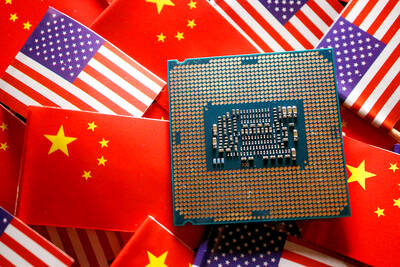
US President Donald Trump on Friday blocked US photonics firm HieFo Corp’s US$3 million acquisition of assets in New Jersey-based aerospace and defense specialist Emcore Corp, citing national security and China-related concerns. In an order released by the White House, Trump said HieFo was “controlled by a citizen of the People’s Republic of China” and that its 2024 acquisition of Emcore’s businesses led the US president to believe that it might “take action that threatens to impair the national security of the United States.” The order did not name the person or detail Trump’s concerns. “The Transaction is hereby prohibited,”


 RSS
RSS