


The government's proposal to auction off state-run Central Trust of China (
Lawmakers demanded that another legislative review be arranged, and also stipulated two conditions.
Firstly, Vice Premier Wu Rong-i (
In addition, Central Trust must ink a collective agreement with its employees to safeguard their rights before the privatization goes forward, Lin said.
The Ministry of Finance first outlined its plan to privatize Central Trust to the legislature in May. The government plans to sell the institution's banking unit, with a net value of NT$5.8 billion (US$173 million), and its life-insurance unit, valued at NT$3.5 billion, in separate auctions.
Central Trust chairman Shea Jia-dong (許嘉棟), told the committee yesterday that after deducting costs of NT$15 billion to protect employee rights, the auction should bring in a combined net profit of between NT$2.5 billion and NT$10 billion, based on estimates by the bank's financial consultant, ABN AMRO Bank.
In other words, the floor price should fall between NT$17.5 billion and NT$25 billion.
Finance Minister Lin Chuan (
Concerned about potential job losses, the Central Trust of China Employees Union (中央信託局產業工會) said it would support a merger with two other state-run banks, the Bank of Taiwan (台灣銀行) and the Lank Bank of Taiwan (土地銀行).
"The merged entity can create operational synergy as it would be equipped with banking, insurance and securities businesses," a statement issued by the union yesterday said.
Lin said the ministry would not rule out the possibility if the auction plan fails to clear the legislature.
Chinese Nationalist Party (KMT) Lawmaker Fei Hung-tai (費鴻泰) said that state-run financial institutions were big buyers when Taishin Financial Holding Co (台新金控) raised NT$38 billion by issuing preferred shares and subordinate debt in a bid to buy a controlling stake in state-run Chang Hwa Commercial Bank (彰化銀行) in July.
"Of the NT$15 billion of preferred shares issued, five state-run institutions bought over 30 percent, or NT$5.65 billion, while Taishin Financial only spent NT$1 billion. How can you say that financial reform is aimed at withdrawing the government ... from the market?" Fei said.
Lin said he was not aware of the investments, but the banks were entitled to independence.
The five state-run institutions were Taiwan Life (台灣人壽), which invested
the most, at NT$3.99 billion, the Bank of Taiwan, Hua Nan Financial Holdings
Co (華南金控), Central Trust and Central Reinsurance Corp (中央再保).

Among the rows of vibrators, rubber torsos and leather harnesses at a Chinese sex toys exhibition in Shanghai this weekend, the beginnings of an artificial intelligence (AI)-driven shift in the industry quietly pulsed. China manufactures about 70 percent of the world’s sex toys, most of it the “hardware” on display at the fair — whether that be technicolor tentacled dildos or hyper-realistic personalized silicone dolls. Yet smart toys have been rising in popularity for some time. Many major European and US brands already offer tech-enhanced products that can enable long-distance love, monitor well-being and even bring people one step closer to

Malaysia’s leader yesterday announced plans to build a massive semiconductor design park, aiming to boost the Southeast Asian nation’s role in the global chip industry. A prominent player in the semiconductor industry for decades, Malaysia accounts for an estimated 13 percent of global back-end manufacturing, according to German tech giant Bosch. Now it wants to go beyond production and emerge as a chip design powerhouse too, Malaysian Prime Minister Anwar Ibrahim said. “I am pleased to announce the largest IC (integrated circuit) Design Park in Southeast Asia, that will house world-class anchor tenants and collaborate with global companies such as Arm [Holdings PLC],”

TRANSFORMATION: Taiwan is now home to the largest Google hardware research and development center outside of the US, thanks to the nation’s economic policies President Tsai Ing-wen (蔡英文) yesterday attended an event marking the opening of Google’s second hardware research and development (R&D) office in Taiwan, which was held at New Taipei City’s Banciao District (板橋). This signals Taiwan’s transformation into the world’s largest Google hardware research and development center outside of the US, validating the nation’s economic policy in the past eight years, she said. The “five plus two” innovative industries policy, “six core strategic industries” initiative and infrastructure projects have grown the national industry and established resilient supply chains that withstood the COVID-19 pandemic, Tsai said. Taiwan has improved investment conditions of the domestic economy
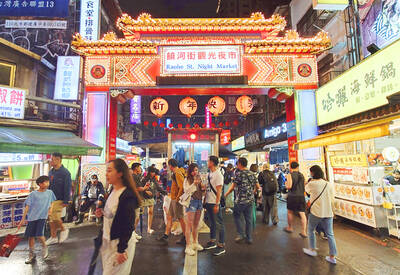
Sales in the retail, and food and beverage sectors last month continued to rise, increasing 0.7 percent and 13.6 percent respectively from a year earlier, setting record highs for the month of March, the Ministry of Economic Affairs said yesterday. Sales in the wholesale sector also grew last month by 4.6 annually, mainly due to the business opportunities for emerging applications related to artificial intelligence (AI) and high-performance computing technologies, the ministry said in a report. The ministry forecast that retail, and food and beverage sales this month would retain their growth momentum as the former would benefit from Tomb Sweeping Day


 RSS
RSS