


Shares of Taiwan's biggest flat panel maker AU Optronics Corp (友達光電) yesterday plunged to their lowest level this year as overseas fund managers continued to sell on growing concerns that a glut of flat panels would hinder a rebound in panel prices.
AU Optronics shares fall by 1.94 percent to NT$40.5 yesterday on the Taiwan Stock Exchange as overseas investors sold another 13 million shares after unloading 43 million shares on Thursday.
"Dismal outlook from market researchers on the flat panel industry is deepening worries about a worse-than-expected glut dampening panel prices ," said Roger Yu (游智超), who tracks the LCD industry for Polaris Securities Co (寶來證券).
Supply of LCD screens measuring over 10 inches diagonally will exceed demand by 5 percent in the current quarter, compared to an earlier estimate of 3.8 percent. This is the result of disappointing demand for LCD televisions and computer monitors, iSuppli Corp said on Thursday.
The oversupply will get worse, exceeding demand by 6.2 percent next quarter, the industry researcher said.
AU Optronics had said in early August that demand for computer monitors would pick up in the second half.
The gloomy prospects for the sector triggered an across-the-board sell-off of local LCD screen-makers by foreign investors for the second straight trading session yesterday.
Overseas fund managers have cut their holdings in AU Optronics to around 47 percent as of Thursday, from 49 percent in the beginning of September, according to Taiwan Stock Exchange figures.
This has sent shares of AU Optronics down 18 percent as of yesterday.
They have also trimmed their holding of Taiwan's No. 2 LCD screen supplier Chi Mei Optoelectronics Corp (奇美電子) to 26 percent from 26.42 percent which has sent the company's share price down about 12 percent in the last month.
"We don't expect shares of AU Optronics and its local peers to rebound sharply in the near term, unless foreign investors start to buy those stocks," Yu said.
Earlier this week, Macquarie Research downgraded AU Optronics and Chi Mei Optoelectronics to "underperform" from on oversupply fears.
"LCD monitor demand is weakening while panel capacity ramps. This will result in weakening panel prices by the end of the fourth quarter of 2005" said Chris Hunt in the report released on Tuesday.
Price declines will follow in the first half of 2006, he forecast.
Bill Lan (藍新仁), a portfolio manger with Jih Sun Securities Investment Trust Co (日盛投信), said: "We had anticipated improving panel prices in the second half to boost the bottom line of local LCD panel suppliers.
"But, now we have to cut our earnings forecast as signs show the strength of a price rebound will be weaker than we thought," Lan said.
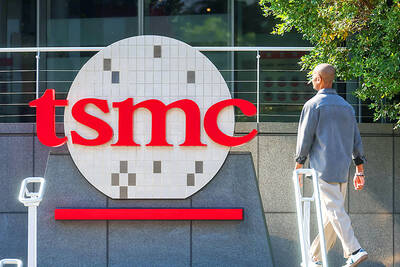
Shares of contract chipmaker Taiwan Semiconductor Manufacturing Co (TSMC, 台積電) came under pressure yesterday after a report that Apple Inc is looking to shift some orders from the Taiwanese company to Intel Corp. TSMC shares fell NT$55, or 2.4 percent, to close at NT$2,235 on the local main board, Taiwan Stock Exchange data showed. Despite the losses, TSMC is expected to continue to benefit from sound fundamentals, as it maintains a lead over its peers in high-end process development, analysts said. “The selling was a knee-jerk reaction to an Intel-Apple report over the weekend,” Mega International Investment Services Corp (兆豐國際投顧) analyst Alex Huang
Taiwan Semiconductor Manufacturing Co (TSMC, 台積電) is expected to remain Apple Inc’s primary chip manufacturing partner despite reports that Apple could shift some orders to Intel Corp, industry experts said yesterday. The comments came after The Wall Street Journal reported on Friday that Apple and Intel had reached a preliminary agreement following more than a year of negotiations for Intel to manufacture some chips for Apple devices. Taiwan Institute of Economic Research (台灣經濟研究院) economist Arisa Liu (劉佩真) said TSMC’s advanced packaging technologies, including integrated fan-out and chip-on-wafer-on-substrate, remain critical to the performance of Apple’s A-series and M-series chips. She said Intel and Samsung
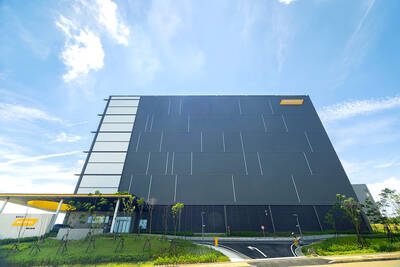
POWER BUILDUP: Powered by Nvidia’s B200 Blackwell chips, the data center would support MediaTek’s computing power demand and business growth, the company said Smartphone chip designer MediaTek Inc (聯發科) yesterday launched a new artificial intelligence (AI) data center with a maximum capacity of 45 megawatts to meet its rising demand for computing power required to develop new advanced chips for AI applications. The company has completed the first-phase computing power buildup at the data center in Miaoli County’s Tongluo Township (銅鑼), providing 15 megawatts of capacity to support its research and development (R&D) capabilities, despite an industrywide shortage of key components, MediaTek said. Supply constraints have plagued a wide range of key components, including memory chips, solid-state drives, power supply units and central
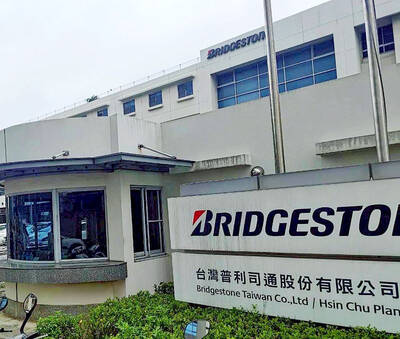
TRANSITION: With the closure, the company would reorganize its Taiwanese unit to a sales and service-focused model, Bridgestone said Bridgestone Corp yesterday announced it would cease manufacturing operations at its tire plant in Hsinchu County’s Hukou Township (湖口), affecting more than 500 workers. Bridgestone Taiwan Co (台灣普利司通) said in a statement that the decision was based on the Tokyo-based tire maker’s adjustments to its global operational strategy and long-term market development considerations. The Taiwanese unit would be reorganized as part of the closure, effective yesterday, and all related production activities would be concluded, the statement said. Under the plan, Bridgestone would continue to deepen its presence in the Taiwanese market, while transitioning to a sales and service-focused business model, it added. The Hsinchu


 RSS
RSS