


Fighting back tears, a heart expert told jurors that Vioxx manufacturer Merck & Co. ignored evidence the painkiller posed safety risks before it hit the market in 1999.
Dr. Benedict Lucchesi, who was testifying Friday on behalf of a man who blames Vioxx for his heart attack, was shown a series of internal Merck e-mails. Lucchesi, an expert on the heart and the effects of medications, appeared to fight back tears after plaintiff's attorney Chris Seeger referred to a 1997 message sent by Merck researcher Briggs Morrison to fellow company scientists.
In it, Morrison -- discussing the proposed design of an upcoming clinical trial of the drug -- advocated letting the patients in the study take aspirin at the same time as Vioxx.
"I know this has been discussed to death but real world is everyone is on it so why exclude" aspirin, Morrison wrote. Without aspirin's blood-thinning effects, he wrote, "you will get more [dangerous blood clots] and kill drug."
Lucchesi interpreted the statement to mean Merck feared that without aspirin to offset Vioxx's cardiac risk, those participating in the trial would be in greater danger and that would spell trouble for Merck as it pushed to debut Vioxx.
"When I first read that, I personally became enraged," said Lucchesi, 72, a professor at the University of Michigan who helped develop the first pacemaker.
"In my notes," he told Seeger, "I substituted `patients' for `drug.'"
Choked up, he paused in his testimony.
"These are my colleagues," he said, meaning fellow doctors.
"Do you think they're doing something wrong?" Seeger asked.
"They're putting profits before life," he replied.
Merck's attorneys, defending the company in a product liability suit brought by 60-year-old Boise, Idaho postal worker Frederick Humeston, didn't get the chance to cross-examine Lucchesi, who spent about six hours on the stand Friday.
Jim Fitzpatrick, a Merck spokesman who was in court for the testimony, said afterward that Lucchesi had misinterpreted the e-mail. He said Morrison would rebut it when he testifies as part of Merck's case later in the trial.
"What the e-mail referred to is that if you compare Vioxx to a traditional pain reliever, you'll see a difference in clotting events. What he meant was that a misinterpretation of that difference would kill the drug," Fitzpatrick said. "That e-mail was speculating that people would misinterpret it [the trial] as being a problem with Vioxx."
The testimony, in the third day of the product liability trial, came after Humeston's lawyer showed jurors evidence that Merck & Co. was told by its own experts about potential health risks of its painkiller Vioxx before it went on sale in 1999.
In a 1998 document, Merck's board of scientific advisers told the company that Vioxx and other Cox-2 inhibitors -- painkillers meant to limit stomach bleeding and irritation -- could lead to blood clots breaking loose and blocking blood vessels elsewhere in some patients, the plaintiff's lawyer told jurors.
Vioxx could create rupture-prone plaque in arteries and lead to insufficient blood flow to the heart, according to the document. It said the findings weren't conclusive but should be "taken as a basis for hypotheses that should be actively pursued."
Seeger also showed jurors a 1999 letter in which Dr. John Oates, a Vanderbilt University pharmacology professor and Merck consultant, told Merck's research chief the drugs could cause dangerous blood clots in some patients.
Lucchesi's testimony is to continue tomorrow, followed by Merck's cross-examination.
Merck, based in Whitehouse Station, withdrew Vioxx from the market last September after its own research showed the popular arthritis drug doubled risk of heart attack and stroke after 18 months' use. The drug giant faces more than 5,000 lawsuits filed in state and federal courts -- about half of them in New Jersey state courts -- by former Vioxx users alleging the medicine harmed them.
The first trial ended last month when the jury in the Texas case stunned Merck with a US$253 million liability verdict, although that will be slashed to about US$26 million because Texas caps punitive damages. Merck plans to appeal. Lucchesi testified against Merck in that trial.
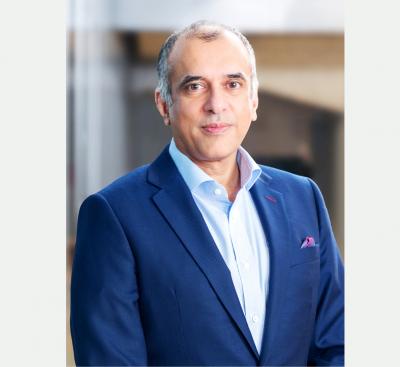
HSBC Holdings PLC is deepening its commitment to Taiwan as the economy emerges as one of the bank’s fastest-growing markets globally, driven by an artificial intelligence (AI) investment boom, expanding cross-border trade, and rising wealth creation. “The advantage that Taiwan has is a growth story linked to the semiconductor and broader AI industries, strong underlying corporate performance, and wealth creation,” said Surendra Rosha, HSBC’s co-chief executive for Asia and the Middle East, in an exclusive interview with the Taipei Times on June 2, during this year’s HSBC Taiwan Conference. That combination has helped HSBC cement its position as the most profitable international
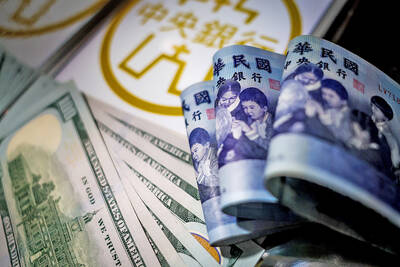
The New Taiwan dollar yesterday fell sharply against the US dollar to close at its lowest level since May 22 amid a massive outflow of funds from the country because of investors panicking over global equity markets. The NT dollar ended at NT$31.580 against the US dollar, slightly lower than its close of NT$31.568 on May 22, after moving between NT$31.5 and NT$31.648 on combined turnover of US$3.062 billion on the Taipei Foreign Exchange and the Cosmos Foreign Exchange. The NT dollar received a significant hit in the morning session, slumping as much as NT$0.173 at a time when other Asian currencies
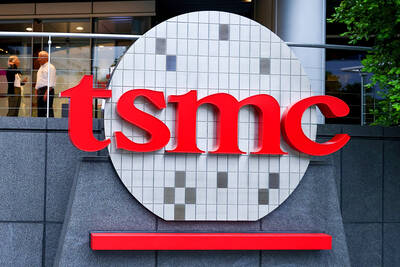
Taiwan Semiconductor Manufacturing Co (TSMC, 台積電) is now ranked ninth among the world’s 100 most valuable companies after its market capitalization more than doubled over the past year, PricewaterhouseCoopers (PwC) Taiwan said in a report last month. TSMC’s market capitalization surged 101 percent year-on-year to US$1.427 trillion as of March 31, the accounting and consulting firm’s 2026 Global Top 100 Companies by Market Capitalization report said. The gain catapulted the world’s largest contract chipmaker from 12th place to ninth in the rankings, and it was the fastest-growing among the global top 10, it said. TSMC was the only Taiwanese company among the top
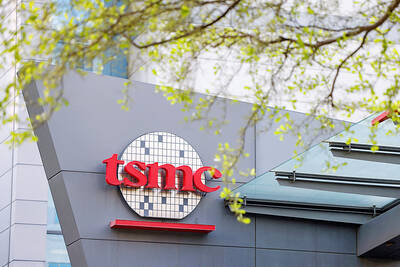
Taiwan Semiconductor Manufacturing Co (TSMC, 台積電) yesterday reported record revenue of NT$416.975 billion (US$13.17 billion) for last month, putting the world’s largest contract chipmaker on track to set a record for quarterly revenue. Last month’s figure surpassed March’s record NT$415.19 billion and represented increases of 1.5 percent from April and 30.1 percent from a year earlier. For the first five months of the year, TSMC generated NT$1.96 trillion in revenue, up 30 percent year-on-year, it said in a statement. TSMC has forecast second-quarter revenue of between US$39 billion and US$40.2 billion, representing sequential growth of about 10 percent and year-on-year growth of about


 RSS
RSS