


Wall Street was able to look past the horrific attacks in London and post solid gains over the past week as investors grew more confident on the economic outlook for the rest of the year.
But a budding summer rally faces a new test in the coming week with the first wave of corporate earnings reports for the second quarter.
The Dow Jones Industrial Average climbed 1.4 percent in the week to Friday to end at 10,449.14 while the Standard and Poor's 500 broad-market index got back to its starting level for this year, rising 1.46 percent to 1,211.86.
The tech-heavy NASDAQ index rose to its highest level since January 3, with a rally of 2.7 percent to 2,112.88.
Markets were jolted by Thursday's deadly attacks in central London that brought back memories of the Madrid bombings last year and the Sept. 11, 2001 attacks in New York and Washington.
But financial markets, having seen similar events in the past, showed resilience. Wall Street struggled higher the day of the attacks and then rallied the next day as a softer-than-expected report on US payroll growth suggested steady if less than spectacular growth.
"There are many explanations, but it is still hard to explain. The markets have been worried for years about another terrorist attack and yet when one comes, the stock market ends higher on the day," said Dick Green at Briefing.com.
"This may be due to the fact that there is already a large risk premium in the market because of terrorist concerns ... There may not be a clear cut explanation. But the response to the London attacks does show that there is good underlying demand for stocks," he said.
"There were plenty of investors and traders looking to take advantage of the opportunity of the lower open on expectations of a quick rebound," Green said.
Craig Alexander, chief economist at TD Bank Financial, said the US economy remains solid and sees no major impact from the London bombings.
"The US economy is on track to deliver a close to 3.5 per cent annualized gain in the second quarter," he said. "And, with the strength evident in the final month of the quarter, it looks like there will be a healthy kick off to the third quarter."
The big rally of the week was sparked by a payrolls report that seemed unimpressive at first -- 146,000 new jobs were created in June, well below market expectations and the second disappointing report in a row.
Yet some said the data suggest a moderate pace of growth that will not ignite inflation and may allow the Federal Reserve to ease up on its rate-boosting cycle -- the so-called "Goldilocks" economy that is neither too hot nor too cold.
"The US economy's performance may once again start inspiring the Goldilocks metaphor, with growth and hiring both running at a pace that is nearly just right for the Fed," said Leslie Preston, economist at CIBC World Markets.
"So far this year the US economy has generated an average of 180,000 jobs per month, just over the average growth of the workforce, and produced little inflation pressure as growth runs around 3.5 percent, suggesting that the Fed's tightening campaign has just about run its course."
Looking ahead, the markets get a slew of earnings data including from General Electric. Analysts expect overall earnings to grow at a modest pace of 7.5 percent.
Bonds fell as investors bet on a stronger economy and shifted to equities.
The yield on the 10-year US Treasury bond rose to 4.109 percent from 4.049 percent a week earlier while that on the 30-year bond climbed to 4.361 percent from 4.298 percent. Bond yields and prices move in opposite directions.
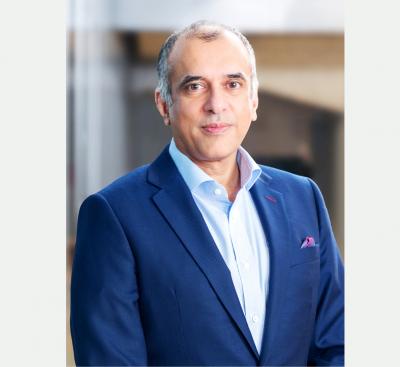
HSBC Holdings PLC is deepening its commitment to Taiwan as the economy emerges as one of the bank’s fastest-growing markets globally, driven by an artificial intelligence (AI) investment boom, expanding cross-border trade, and rising wealth creation. “The advantage that Taiwan has is a growth story linked to the semiconductor and broader AI industries, strong underlying corporate performance, and wealth creation,” said Surendra Rosha, HSBC’s co-chief executive for Asia and the Middle East, in an exclusive interview with the Taipei Times on June 2, during this year’s HSBC Taiwan Conference. That combination has helped HSBC cement its position as the most profitable international
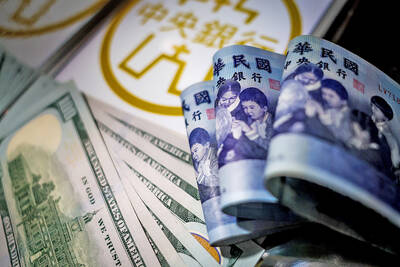
The New Taiwan dollar yesterday fell sharply against the US dollar to close at its lowest level since May 22 amid a massive outflow of funds from the country because of investors panicking over global equity markets. The NT dollar ended at NT$31.580 against the US dollar, slightly lower than its close of NT$31.568 on May 22, after moving between NT$31.5 and NT$31.648 on combined turnover of US$3.062 billion on the Taipei Foreign Exchange and the Cosmos Foreign Exchange. The NT dollar received a significant hit in the morning session, slumping as much as NT$0.173 at a time when other Asian currencies
Taiwan Semiconductor Manufacturing Co (TSMC, 台積電) is now ranked ninth among the world’s 100 most valuable companies after its market capitalization more than doubled over the past year, PricewaterhouseCoopers (PwC) Taiwan said in a report last month. TSMC’s market capitalization surged 101 percent year-on-year to US$1.427 trillion as of March 31, the accounting and consulting firm’s 2026 Global Top 100 Companies by Market Capitalization report said. The gain catapulted the world’s largest contract chipmaker from 12th place to ninth in the rankings, and it was the fastest-growing among the global top 10, it said. TSMC was the only Taiwanese company among the top
Taiwan Semiconductor Manufacturing Co (TSMC, 台積電) yesterday reported record revenue of NT$416.975 billion (US$13.17 billion) for last month, putting the world’s largest contract chipmaker on track to set a record for quarterly revenue. Last month’s figure surpassed March’s record NT$415.19 billion and represented increases of 1.5 percent from April and 30.1 percent from a year earlier. For the first five months of the year, TSMC generated NT$1.96 trillion in revenue, up 30 percent year-on-year, it said in a statement. TSMC has forecast second-quarter revenue of between US$39 billion and US$40.2 billion, representing sequential growth of about 10 percent and year-on-year growth of about


 RSS
RSS