


China said it opposes anti-dumping investigations by the EU into increased Chinese shoe imports, accusing its trading partner of distorting trade figures and misleading the public.
"China urges the EU to start with the facts, make decisions cautiously and avoid trade frictions," Chong Quan (
China has started negotiations with European counterparts to address alleged "serious errors" in collecting and calculating trade statistics, Chong said. Imports of some types of shoes from China surged 581 percent in the first four months of this year, according to EU statistics, 25 times the 22.8 percent increase recorded by China's customs, the Ministry of Commerce statement said.
EU Trade Commissioner Peter Mandelson on June 15 said he supports a probe into Chinese exports of safety shoes after a European shoemakers' group complained some footwear is being sold for less than the cost of production.
The number of jobs in the EU footwear industry dropped to 290,129 last year from 405,270 in 1998, according to the Confederation of the European Footwear Industry, which said that the job markets in Italy, Spain, Portugal, Greece, Poland and France were among the hardest hit.
The number of people working in the industry in Europe is expected to fall by about half in the next two years, the group said.
Mandelson on June 10 agreed with Chinese Commerce Minister Bo Xilai (薄熙來) to limits on growth of 10 categories of textiles under a special clothing-only World Trade Organization rule.
The EU may also apply similar limits to certain categories of shoes, notably those made from leather, which were subject to quotas until the beginning of this year.
China and the EU may be able to resolve the shoe dispute because China, which makes three out of every four pairs of shoes in the world, wants its manufacturers to make higher-value products, Cao Heping (曹和平), vice dean of the Peking University School of Economics, in a telephone interview from Kunming, Yunnan.
"Chinese companies' share in the global market is so high because of their low prices. If we reduce some of our market share and yet control the supply channels, it will benefit China," Cao said.
Shoes were not subjected to the textile trade quotas that were lifted on Jan. 1 so "it's impossible for EU imports to increase more than 500 percent," Cao said.

Among the rows of vibrators, rubber torsos and leather harnesses at a Chinese sex toys exhibition in Shanghai this weekend, the beginnings of an artificial intelligence (AI)-driven shift in the industry quietly pulsed. China manufactures about 70 percent of the world’s sex toys, most of it the “hardware” on display at the fair — whether that be technicolor tentacled dildos or hyper-realistic personalized silicone dolls. Yet smart toys have been rising in popularity for some time. Many major European and US brands already offer tech-enhanced products that can enable long-distance love, monitor well-being and even bring people one step closer to

Malaysia’s leader yesterday announced plans to build a massive semiconductor design park, aiming to boost the Southeast Asian nation’s role in the global chip industry. A prominent player in the semiconductor industry for decades, Malaysia accounts for an estimated 13 percent of global back-end manufacturing, according to German tech giant Bosch. Now it wants to go beyond production and emerge as a chip design powerhouse too, Malaysian Prime Minister Anwar Ibrahim said. “I am pleased to announce the largest IC (integrated circuit) Design Park in Southeast Asia, that will house world-class anchor tenants and collaborate with global companies such as Arm [Holdings PLC],”

TRANSFORMATION: Taiwan is now home to the largest Google hardware research and development center outside of the US, thanks to the nation’s economic policies President Tsai Ing-wen (蔡英文) yesterday attended an event marking the opening of Google’s second hardware research and development (R&D) office in Taiwan, which was held at New Taipei City’s Banciao District (板橋). This signals Taiwan’s transformation into the world’s largest Google hardware research and development center outside of the US, validating the nation’s economic policy in the past eight years, she said. The “five plus two” innovative industries policy, “six core strategic industries” initiative and infrastructure projects have grown the national industry and established resilient supply chains that withstood the COVID-19 pandemic, Tsai said. Taiwan has improved investment conditions of the domestic economy
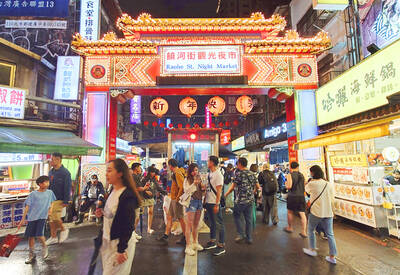
Sales in the retail, and food and beverage sectors last month continued to rise, increasing 0.7 percent and 13.6 percent respectively from a year earlier, setting record highs for the month of March, the Ministry of Economic Affairs said yesterday. Sales in the wholesale sector also grew last month by 4.6 annually, mainly due to the business opportunities for emerging applications related to artificial intelligence (AI) and high-performance computing technologies, the ministry said in a report. The ministry forecast that retail, and food and beverage sales this month would retain their growth momentum as the former would benefit from Tomb Sweeping Day


 RSS
RSS