


Mickey Mouse is nearly ready for his much-anticipated Hong Kong debut, but he has already transformed everything from trains to hotels in this Chinese territory.
With Disneyland in Hong Kong opening in September, the city is scrambling to build thousands of new hotel rooms, workers are finishing a special subway line -- the world's first dedicated to a theme park -- and officials anticipate a total reshaping of the city's investment image.
"Disney is such a healthy image that we embraced it," Hong Kong Tourism Board Chair Selina Chow said. "It makes people see that this is not just another Chinese city. It is a place where an American name like Disney is willing to invest."
Hong Kong will be the fifth venue for Disneyland, joining Tokyo, Paris and the US cities of Anaheim, California and Orlando, Florida. The 125-hectare park is being built on reclaimed land on Hong Kong's outlying Lantau island.
The park, set to open on Sept. 12, is a joint venture between Disney and the Hong Kong government, but local taxpayers are footing most of its US$3.5 billion bill.
It's part of the government's plan to make Hong Kong a major Asian getaway for vacationing families.
Tourism chairwoman Chow says about 5.6 million people are expected to visit the theme park in its first year. The city is launching a HK$470 million (US$60.3 million) tourism campaign to capitalize on the new visits, she said.
"We hope to showcase the whole package Hong Kong has to offer," Chow said.
One sector that is ready for Disney is the hotel industry. James Lu, executive director of the Hong Kong Hotels Association, said the city is gearing up for Disneyland by adding 8,000 rooms by the end of the year.
Lu said there will be 14,000 additional rooms by the end of this year, but he is concerned about overestimating the number of tourists.
"We don't know how many visitors will come from China," he said. "We don't know whether these people will be bused in and bused right out on the same day. There isn't a previous pattern to follow."
Overall, though, Lu is confident the new theme park and the tourism campaign means big business for hotels.
"Not a single hotel isn't anticipating growth," he said.
But Mickey Mouse is more of a business-grabbing threat than a cute rodent for some business.
Ocean park overhaul
Ocean Park, the city's most successful theme park for nearly 30 years, is rethinking its operation and sees a complete overhaul as the only way to compete.
"Ocean Park needs to survive," said Allan Zeman, one of Hong Kong's most successful entrepreneurs who is overseeing the park's remake.
"The only way it can survive is if it becomes world class," he added.
The renovation includes plans for a new roller coaster, a subzero "Ice Palace" and a 7.6-million liter aquarium with an underwater restaurant. Ocean Park would also like to follow the Disneyland model and build hotels at the site.
Ocean Park's chief executive, Tom Mehrmann, said he doesn't want to go head-to-head with Disney but instead thinks the two parks should complement one another. Ocean Park will emphasize nature and wildlife while Disney focuses on movies and cartoons, he said.
"We're Hong Kong," he says. "They're an American import."
Another sector anxiously awaiting Disney's arrival is the transportation industry. With Disneyland being built on Lantau Island -- a half-hour by boat or train from Central Hong Kong -- finding an efficient way to move people to and from the area has been a major dilemma.
Mass Transit Rail Corp decided to build the 3.5km train line to the park, with a price tag of HK$2 billion (US$257 million). The line is connected to the existing subway system and will be able to shuttle about 10,000 passengers per hour to the park.
To fully cater to the Disney crowd, the trains' windows and the passenger straps are shaped like Mickey Mouse. Additionally, the ceiling and the sides of the train are painted in bright hues of red, yellow, purple and blue.
Transit-oriented
Dr. Anthony Yeh of Hong Kong University's Center of Urban Planning said the new line will help the park be less dependent on cars.
"The normal pattern [for theme parks] is to have large parking lots to accommodate drivers," Yeh said. "The MTR line ensures that Hong Kong's version of Disneyland will be public-transit oriented."
Yeh also sees a big increase in tour bus services from China to Hong Kong, pointing out that residents of nearby mainland cities such as Shenzhen can easily make the visit a one-day affair.
"A lot of Chinese people want to come to Disney," Yeh said.
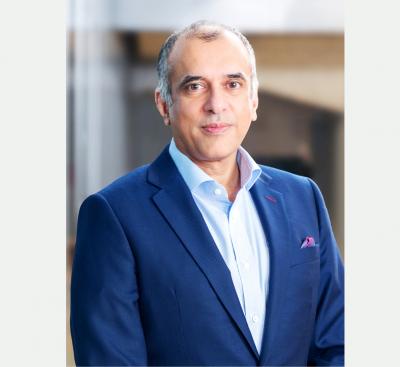
HSBC Holdings PLC is deepening its commitment to Taiwan as the economy emerges as one of the bank’s fastest-growing markets globally, driven by an artificial intelligence (AI) investment boom, expanding cross-border trade, and rising wealth creation. “The advantage that Taiwan has is a growth story linked to the semiconductor and broader AI industries, strong underlying corporate performance, and wealth creation,” said Surendra Rosha, HSBC’s co-chief executive for Asia and the Middle East, in an exclusive interview with the Taipei Times on June 2, during this year’s HSBC Taiwan Conference. That combination has helped HSBC cement its position as the most profitable international
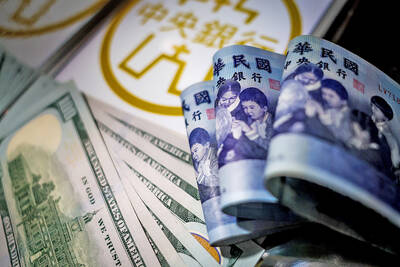
The New Taiwan dollar yesterday fell sharply against the US dollar to close at its lowest level since May 22 amid a massive outflow of funds from the country because of investors panicking over global equity markets. The NT dollar ended at NT$31.580 against the US dollar, slightly lower than its close of NT$31.568 on May 22, after moving between NT$31.5 and NT$31.648 on combined turnover of US$3.062 billion on the Taipei Foreign Exchange and the Cosmos Foreign Exchange. The NT dollar received a significant hit in the morning session, slumping as much as NT$0.173 at a time when other Asian currencies
Taiwan Semiconductor Manufacturing Co (TSMC, 台積電) is now ranked ninth among the world’s 100 most valuable companies after its market capitalization more than doubled over the past year, PricewaterhouseCoopers (PwC) Taiwan said in a report last month. TSMC’s market capitalization surged 101 percent year-on-year to US$1.427 trillion as of March 31, the accounting and consulting firm’s 2026 Global Top 100 Companies by Market Capitalization report said. The gain catapulted the world’s largest contract chipmaker from 12th place to ninth in the rankings, and it was the fastest-growing among the global top 10, it said. TSMC was the only Taiwanese company among the top
Taiwan Semiconductor Manufacturing Co (TSMC, 台積電) yesterday reported record revenue of NT$416.975 billion (US$13.17 billion) for last month, putting the world’s largest contract chipmaker on track to set a record for quarterly revenue. Last month’s figure surpassed March’s record NT$415.19 billion and represented increases of 1.5 percent from April and 30.1 percent from a year earlier. For the first five months of the year, TSMC generated NT$1.96 trillion in revenue, up 30 percent year-on-year, it said in a statement. TSMC has forecast second-quarter revenue of between US$39 billion and US$40.2 billion, representing sequential growth of about 10 percent and year-on-year growth of about


 RSS
RSS