


The rich in Russia are getting richer. Record high prices for oil and metals helped to move Russia up in the billionaire tally last year, as it leapfrogged Japan to the No. 3 spot on Forbes magazine's latest list of billionaires, behind Germany, which is No. 2, and the US.
Some of the wealth in this booming, communist-to-capitalist country is trickling down, but inequality is widening because of the way resources have been divided in the post-Soviet era.
Although wages in Russia have risen -- the average jumped 50 percent in the last three years, to 6,832 rubles (US$246) a month last year -- the income gap between the richest and the poorest Russians is growing, said Viktor Ivanter, director of the Economic Forecasting Institute at the Russian Academy of Sciences, in a recent interview with the daily Nezavisimaya Gazeta.
PHOTO: NY TIMES
Peter Westin, the chief economist with the Aton Capital Group, said: "People's incomes are growing across the board, and state-sector workers have had huge wage increases in the last few years, but they are still lagging behind the rich. Everyone is moving up the ladder, but the top rungs are moving faster."
Forbes listed the US with 341 billionaires, or 49 percent of the world's total last year, while Germany had 57. Russia had 27, with nine of them new to the list.
Being in the commodities business, often combined with being on the right side of the political power structure, was the main factor deciding which Russians made the list -- and who dropped down or off it.
The richest Russian is Roman Abramovich, head of the oil giant Sibneft; he is worth US$13.3 billion, according to Forbes, which published the list.
The list's most noticeable decline was that of Mikhail Khodorkovsky, once Russia's wealthiest man, now in jail and facing criminal charges related to one of the country's controversial privatizations. The value of his oil company, Yukos, plummeted after moves against it by the Kremlin. Khodorkovsky is now worth US$2.2 billion, down from more than US$15 billion in 2003.
But even as Russia benefited from the increasing value of its natural resources, 17.8 percent of Russians lived below the official poverty line last year, according to World Bank estimates. The poverty line is defined as wages of 2,451 rubles, or US$88 a month.
What worries some economists most is the widening income gap. Russia's top 10 percent of earners made nearly 15 times those in the bottom 10 percent last year, up from 12 times the year before. In developed countries, the norm is less than five, said Christopher Weafer, chief strategist at Alfa Bank in Moscow.
"You can't afford to have such a skew for too long," he said, "because usually it's led to political uncertainty and higher investment risk."
Russia's economic boom is mirrored by that of China (2 billionaires on the Forbes list) and India (12 billionaires); both countries have big income gaps. But, according to Marshall Goldman, associate director of the Davis Center for Russian and Eurasian Studies at Harvard, there are some significant differences.
"In India and China, many of the billionaires are self-made -- they founded the businesses, they invest in them," Goldman said.
Most of the rich Russians, however, took over state assets from ministries where they worked or through questionable means like the "loans for shares" program in the early 1990s, when the Kremlin sold companies to well-connected businessmen for far less than market value.
That poses a quandary for Russian President Vladimir Putin.
"On the one hand, he has to be responsive to public anger over the oligarchs," Goldman said. "On the other, he must realize the Yukos affair has gotten out of hand, and hurt the economy and his standing in the international investment community."
Putin aims to lift the tide for everyone by doubling Russia's gross domestic product, now at US$582 billion, by 2012, a target date that has shifted several times, depending on the country's progress. To some extent, the strategy is working. Last year's poverty level of 17.8 percent was down from 20.6 percent in 2003 and from more than 24 percent in 2002.
But many specialists say a crucial piece is missing in Russia's riches-and-rags economy.
"The presence of dozens of billionaires, however eye-catching, is of less moment than the absence of millions of small and medium businesses," Stephen Kotkin, director of Princeton University's Russian studies program, said in an e-mail interview. Russia's middle class still consists mostly of salaried workers for the state or for large corporations, rather than a broad group of property owners, he said.
The Kremlin has noticed. "The government and the regional authorities have failed to create conditions for small and medium-sized business to flourish," Putin said on state-run television in March.
Even some Russian billionaires say they see problems with the country's wealth gap.
"It's a dubious privilege," Alexander Lebedev said of making the latest Forbes list with a net worth of US$1.6 billion. "The general attitude here in Russia to people who have wealth is not very positive. It's partly explained by the attitude of the rich, not paying in kind to the population of their country."
Lebedev, the former president of the National Reserve Bank, one of Russia's biggest private banks, also said, "It's not very ethical if it is an unlawful source of wealth."
Lebedev, now a member of Russia's Parliament, is trying to persuade state television to develop a reality show that would detail the tribulations of small-business owners. Entrepreneurs would be trailed by hidden cameras ready to reveal any encounter with corrupt bureaucrats or police and endless licensing agencies and other forms of red tape.
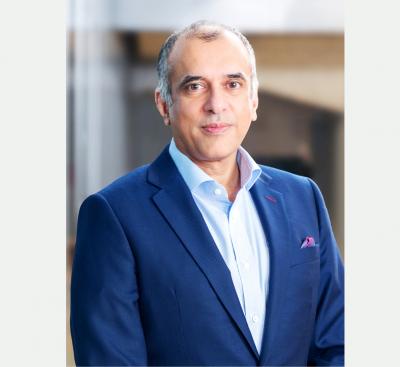
HSBC Holdings PLC is deepening its commitment to Taiwan as the economy emerges as one of the bank’s fastest-growing markets globally, driven by an artificial intelligence (AI) investment boom, expanding cross-border trade, and rising wealth creation. “The advantage that Taiwan has is a growth story linked to the semiconductor and broader AI industries, strong underlying corporate performance, and wealth creation,” said Surendra Rosha, HSBC’s co-chief executive for Asia and the Middle East, in an exclusive interview with the Taipei Times on June 2, during this year’s HSBC Taiwan Conference. That combination has helped HSBC cement its position as the most profitable international
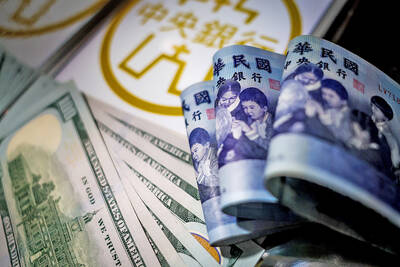
The New Taiwan dollar yesterday fell sharply against the US dollar to close at its lowest level since May 22 amid a massive outflow of funds from the country because of investors panicking over global equity markets. The NT dollar ended at NT$31.580 against the US dollar, slightly lower than its close of NT$31.568 on May 22, after moving between NT$31.5 and NT$31.648 on combined turnover of US$3.062 billion on the Taipei Foreign Exchange and the Cosmos Foreign Exchange. The NT dollar received a significant hit in the morning session, slumping as much as NT$0.173 at a time when other Asian currencies
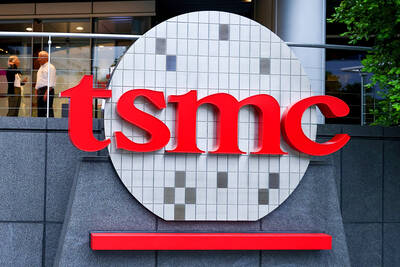
Taiwan Semiconductor Manufacturing Co (TSMC, 台積電) is now ranked ninth among the world’s 100 most valuable companies after its market capitalization more than doubled over the past year, PricewaterhouseCoopers (PwC) Taiwan said in a report last month. TSMC’s market capitalization surged 101 percent year-on-year to US$1.427 trillion as of March 31, the accounting and consulting firm’s 2026 Global Top 100 Companies by Market Capitalization report said. The gain catapulted the world’s largest contract chipmaker from 12th place to ninth in the rankings, and it was the fastest-growing among the global top 10, it said. TSMC was the only Taiwanese company among the top
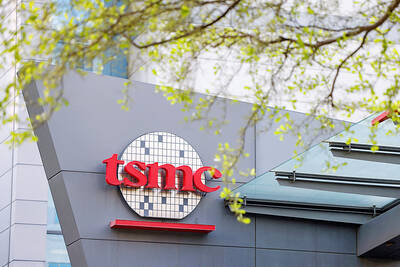
Taiwan Semiconductor Manufacturing Co (TSMC, 台積電) yesterday reported record revenue of NT$416.975 billion (US$13.17 billion) for last month, putting the world’s largest contract chipmaker on track to set a record for quarterly revenue. Last month’s figure surpassed March’s record NT$415.19 billion and represented increases of 1.5 percent from April and 30.1 percent from a year earlier. For the first five months of the year, TSMC generated NT$1.96 trillion in revenue, up 30 percent year-on-year, it said in a statement. TSMC has forecast second-quarter revenue of between US$39 billion and US$40.2 billion, representing sequential growth of about 10 percent and year-on-year growth of about


 RSS
RSS