


China said it will impose new taxes and other restrictions on real estate transactions, stepping up efforts to curb speculation that has caused what the government calls a property price bubble.
Home buyers who sell within two years of purchase will have to pay a tax on the sale price starting June 1, the official Xinhua news agency said, citing rules announced by seven government agencies.
The rate of tax wasn't specified. The government will revoke land-use rights for sites kept idle for more than two years to prevent hoarding by speculators.
China, the world's largest consumer of steel, copper and cement, has imposed a series of curbs this year to cool home prices that jumped 19 percent in the first quarter in Shanghai.
Premier Wen Jiabao (
"Today's rules are much tougher than the market expected," said Li Huiyong, a Shanghai-based analyst at Shenyin Wanguo Securities Co (申銀萬國證券).
"The measures both increase land supply and curb demand. I expect the market to fluctuate a lot in the short term," he said.
Nationwide, home prices rose 13.5 percent from a year earlier in the first quarter, the National Bureau of Statistics said on April 25. The rate of increase in 36 major cities may slow to 7.5 percent in the second quarter, Beijing News reported today, citing a forecast by the National Development and Reform Commision.
Buyers of unbuilt or unfinished properties will be banned from reselling before construction has been completed, a practice known as "flipping," the Xinhua report said.
Land idle for more than a year after purchase will also be taxed, according to the report.
"These measures are specifically targeted at property investors and speculators," said Sun Jianping, an analyst at Guotai Junan Securities Co (
"We expect house prices increases will slow down this year. In some places, such as Shanghai, prices will go down."
China's government is concerned that speculation has been pushing home prices beyond the reach of most buyers, fueling social tension and raising the risk of a collapse.
Rising property prices pose a threat to the stability of Asia's second-largest economy, the State Council, China's cabinet, said in a March circular that ordered city governments to take measures to rein in growth.
The government should encourage "buying for living instead of investing," Zheng Jingping (
China started imposing curbs on real estate in June 2003, when the central bank ordered domestic lenders to tighten property lending to reduce loan risk and avoid a bubble.
The People's Bank of China (
The measures reported by Xinhua were issued by the Ministry of Construction, the National Development and Reform Commission, the Ministry of Finance, Ministry of Land and Resources, People's Bank of China, the State Administration of Taxation and the China Banking Regulatory Commission. The announcements haven't yet been posted on any of the agency's Web sites.

Among the rows of vibrators, rubber torsos and leather harnesses at a Chinese sex toys exhibition in Shanghai this weekend, the beginnings of an artificial intelligence (AI)-driven shift in the industry quietly pulsed. China manufactures about 70 percent of the world’s sex toys, most of it the “hardware” on display at the fair — whether that be technicolor tentacled dildos or hyper-realistic personalized silicone dolls. Yet smart toys have been rising in popularity for some time. Many major European and US brands already offer tech-enhanced products that can enable long-distance love, monitor well-being and even bring people one step closer to

Malaysia’s leader yesterday announced plans to build a massive semiconductor design park, aiming to boost the Southeast Asian nation’s role in the global chip industry. A prominent player in the semiconductor industry for decades, Malaysia accounts for an estimated 13 percent of global back-end manufacturing, according to German tech giant Bosch. Now it wants to go beyond production and emerge as a chip design powerhouse too, Malaysian Prime Minister Anwar Ibrahim said. “I am pleased to announce the largest IC (integrated circuit) Design Park in Southeast Asia, that will house world-class anchor tenants and collaborate with global companies such as Arm [Holdings PLC],”
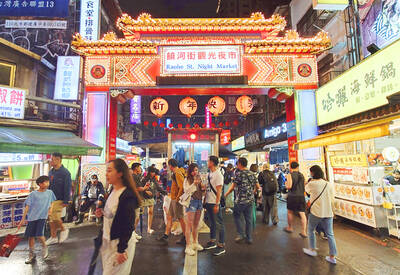
Sales in the retail, and food and beverage sectors last month continued to rise, increasing 0.7 percent and 13.6 percent respectively from a year earlier, setting record highs for the month of March, the Ministry of Economic Affairs said yesterday. Sales in the wholesale sector also grew last month by 4.6 annually, mainly due to the business opportunities for emerging applications related to artificial intelligence (AI) and high-performance computing technologies, the ministry said in a report. The ministry forecast that retail, and food and beverage sales this month would retain their growth momentum as the former would benefit from Tomb Sweeping Day
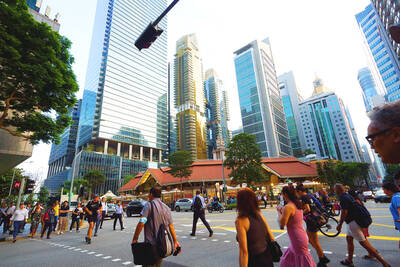
Thousands of parents in Singapore are furious after a Cordlife Group Ltd (康盛人生集團), a major operator of cord blood banks in Asia, irreparably damaged their children’s samples through improper handling, with some now pursuing legal action. The ongoing case, one of the worst to hit the largely untested industry, has renewed concerns over companies marketing themselves to anxious parents with mostly unproven assurances. This has implications across the region, given Cordlife’s operations in Hong Kong, Macau, Indonesia, the Philippines and India. The parents paid for years to have their infants’ cord blood stored, with the understanding that the stem cells they contained


 RSS
RSS