


Following a week of flip-flops over automatic teller machine (ATM) transfers and cash-card advertisement bans, critics have started to worry about whether the Financial Supervisory Commission (FSC) is losing its authority to independently make and stick by policy.
The Ministry of the Interior meddled in the commission's duties last week by unilaterally announcing that a limit would be imposed on the amount of money transferred via ATMs. This move led to a flood of public complaints and sharp criticism over the commission's failure to exercise its authority.
Earlier this month the FSC announced plans to ban lenders from airing television, movie and radio advertisements for cash cards starting May 1, in a bid to discourage consumers from taking out high loans. But in an about-face last week after mounting pressure, the commission said it may backtrack on the plan.
"The commission is not clear about its role at all," Chinese Nationalist Party (KMT) Legislator Lai Shyh-bao (
Lai added that the commission has often failed to make a detailed and comprehensive evaluation of its proposed policies. It has often leaked information before finalizing policies, which damages the commission's professional image and credibility, Lai said.
The Cabinet-level commission has often failed to address issues they are supposed to manage -- such as the ATM transfers -- while paying too much attention to less important things like the bans on cash-card ads, said Lai, who is also professor at the Graduate School for Business Administration at National Chengchi University.
The commission was established on July 1 last year after the legislature passed the Financial Supervisory Commission Organizational Law (金融監理委員會組織法) in July 2003.
The commission merges government agencies which were previously under the Central Bank of China, the Central Deposit Insurance Corp and the Ministry of Finance into one umbrella agency, in a bid to centralize regulation of the nation's banking sector.
But since July last year, the commission has several times flip-flopped on its policies. It has indicated a possible delay on increasing the stock market's daily trading limit after Premier Frank Hsieh (
"The organization law bestowed an independent status on the commission ... and the commission should not surrender to pressure coming from its superiors, peer departments and others," People First Party Legislator Christina Liu (
Liu said she couldn't believe the commission failed to stick to its stance on the ATM issue and make professional evaluations, such as how much society would have to pay for the ATM restrictions.
Both Liu, who used to be head of the Graduate Institute of Finance at National Taiwan University, and Hsieh Wen-cheng (
In response, Hsieh said the commission's function in financial supervision should be independent, but when it comes to financial regulations, the commission should negotiate with other related departments.
The idea of setting up the commission dates back to the KMT administration when Paul Chiu (邱正雄) served as Minister of Finance in 1999. At the time the ministry submitted a draft organizational bill regarding the planned agency to the legislature, but it was shelved until Shea Jia-dong (許嘉棟) took the ministry's helm in 2000 when the Democratic Progressive Party beat the KMT in the presidential election.
While the commission's organizational bill was still left untouched in the legislature during the next four years, the idea of forming a government agency combining the administrative and supervisory roles of the banking, securities and insurance industries remained.
However, the commission is now facing uncertainty as the Cabinet is mulling whether the commission's policy-making and supervisory roles should be split up. It may return the administrative role to the Ministry of Finance.
If the commission is only responsible for financial supervision, it could retain its independence without needing to face questions and intervention from the legislature, Lai said.
However, he added that the finance ministry, which controls many state-run financial institutions, should get rid of all state-owned shares before taking over the financial policy-making power, in order to avoid a conflict of interest.
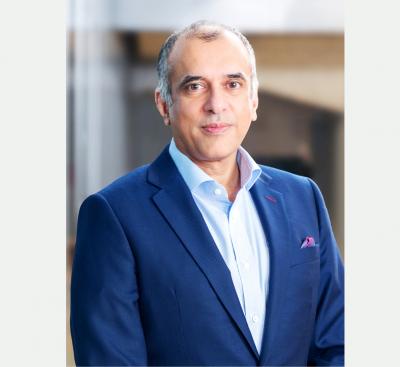
HSBC Holdings PLC is deepening its commitment to Taiwan as the economy emerges as one of the bank’s fastest-growing markets globally, driven by an artificial intelligence (AI) investment boom, expanding cross-border trade, and rising wealth creation. “The advantage that Taiwan has is a growth story linked to the semiconductor and broader AI industries, strong underlying corporate performance, and wealth creation,” said Surendra Rosha, HSBC’s co-chief executive for Asia and the Middle East, in an exclusive interview with the Taipei Times on June 2, during this year’s HSBC Taiwan Conference. That combination has helped HSBC cement its position as the most profitable international
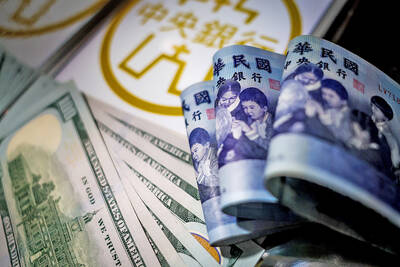
The New Taiwan dollar yesterday fell sharply against the US dollar to close at its lowest level since May 22 amid a massive outflow of funds from the country because of investors panicking over global equity markets. The NT dollar ended at NT$31.580 against the US dollar, slightly lower than its close of NT$31.568 on May 22, after moving between NT$31.5 and NT$31.648 on combined turnover of US$3.062 billion on the Taipei Foreign Exchange and the Cosmos Foreign Exchange. The NT dollar received a significant hit in the morning session, slumping as much as NT$0.173 at a time when other Asian currencies
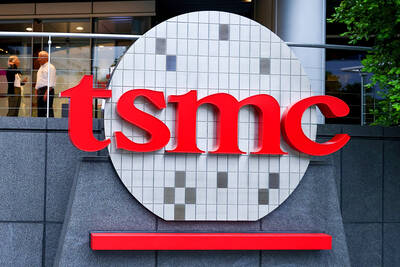
Taiwan Semiconductor Manufacturing Co (TSMC, 台積電) is now ranked ninth among the world’s 100 most valuable companies after its market capitalization more than doubled over the past year, PricewaterhouseCoopers (PwC) Taiwan said in a report last month. TSMC’s market capitalization surged 101 percent year-on-year to US$1.427 trillion as of March 31, the accounting and consulting firm’s 2026 Global Top 100 Companies by Market Capitalization report said. The gain catapulted the world’s largest contract chipmaker from 12th place to ninth in the rankings, and it was the fastest-growing among the global top 10, it said. TSMC was the only Taiwanese company among the top
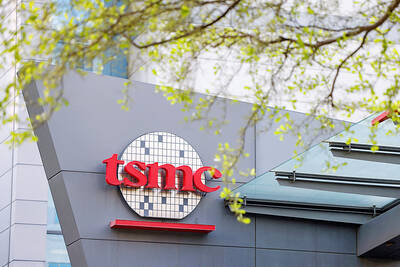
Taiwan Semiconductor Manufacturing Co (TSMC, 台積電) yesterday reported record revenue of NT$416.975 billion (US$13.17 billion) for last month, putting the world’s largest contract chipmaker on track to set a record for quarterly revenue. Last month’s figure surpassed March’s record NT$415.19 billion and represented increases of 1.5 percent from April and 30.1 percent from a year earlier. For the first five months of the year, TSMC generated NT$1.96 trillion in revenue, up 30 percent year-on-year, it said in a statement. TSMC has forecast second-quarter revenue of between US$39 billion and US$40.2 billion, representing sequential growth of about 10 percent and year-on-year growth of about


 RSS
RSS