


Chic fashion freaks all the way from Barcelona to Bangkok, La Coruna to Kyoto and Seville to Surabaya are lapping up the products of Spanish success story Inditex group, led by flagship outlet Zara.
This year is a key moment for Inditex and its competitors, January having seen the end of the international textiles quota regime, fueling fears of an explosion in Chinese exports.
European and US textile industries have been bracing for a flood of low-cost textiles from China since import quotas established under the 1974 Multi-Fiber Arrangement came to an end to open markets globally.
Though China is easily the world's largest exporter of clothing with 28 percent of the market, Inditex, which Thursday unveils its 2004 results, is effectively looking to carrying proverbial "coal to Newcastle" by targeting major retail expansion within Asia -- but making the bulk of the goods at home.
Two weeks ago the Zara fashion chain, the group's flagship, said it was to open two stores in prime sites in Jakarta in the second half of 2005, following an agreement with Indonesia's PT Mitra Adiperkasa TBK group.
Eight new stores are also on the cards for Japan, taking the total to 20, and Inditex, known for its "just-in-time" stock turnaround strategy, also has expansion into China and Thailand in its sights, just 30 years after first opening its doors in the western city of La Coruna.
"Japan is an important market for our development and we think we can successfully impose our model" on Asian markets, an Inditex spokesman told reporters.
The Inditex success story has seen the group mushroom to about 1,400 stores in 54 countries led by the Zara, Pull and Bear and Massimo Dutti brands, backed up by its Bershka, Stradivarius, Oysho, Zara Home and Kiddy's Class brands, wildly popular with youthful modish consumers.
"Inditex seems to have developed a format which works in every country it goes into. The business model is quite a centralized distribution system, feeding its stores," explained an analyst with a leading US brokerage.
"It tends to have fewer stores [than competitors] per country -- but in prestigious locations," the analyst added, noting the move into Indonesia.
"It's quite rare for a clothing retailer to have real international presence -- ones which work abroad attract a premium rating," the analyst noted, adding the end of the Multi-Fiber Arrangement did not appear to have made waves.
"The end of quotas has probably had less impact than people thought," he explained as, to a degree, "price deflation has been driven by the lower dollar."
Inditex's notoriously media-shy chairman Amancio Ortega, considered the richest man in Spain, and director general Jose Maria Castellano, are now looking to see 6.7 percent of the 2005 turnover emanate from Asia, according to business daily Cinco Dias.
Last October, Inditex, which imports about 30 percent of its products from Asia, preferring to source most of its materials from home, controlled 2,163 stores, some 730 under the Zara name, rising from 1,818 in 2003.
Late last year, Goldman Sachs, while noting some concerns on "excessive space expansion," expressed the view that "Inditex is a fabulously well-merchandised company in our view," with a strong inbuilt competitive advantage coming from its key principles of vertical integration and customer focus. According to a recent Interbrand survey, Zara is one of Europe's eight most influential marques.
Next week, Inditex, which in October employed 44,324 people, will unveil its 2004 results, having posted 447 million euros (US$580 million) in net profits on consolidated 2003 turnover of 4.599 billion euros (US$6 billion).
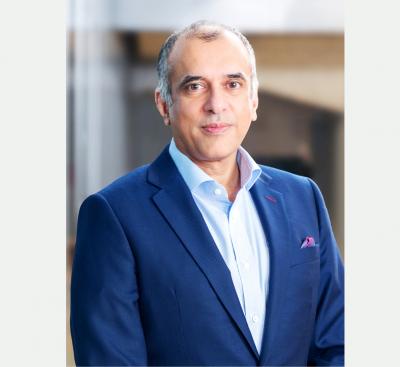
HSBC Holdings PLC is deepening its commitment to Taiwan as the economy emerges as one of the bank’s fastest-growing markets globally, driven by an artificial intelligence (AI) investment boom, expanding cross-border trade, and rising wealth creation. “The advantage that Taiwan has is a growth story linked to the semiconductor and broader AI industries, strong underlying corporate performance, and wealth creation,” said Surendra Rosha, HSBC’s co-chief executive for Asia and the Middle East, in an exclusive interview with the Taipei Times on June 2, during this year’s HSBC Taiwan Conference. That combination has helped HSBC cement its position as the most profitable international
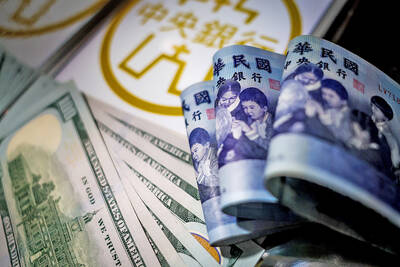
The New Taiwan dollar yesterday fell sharply against the US dollar to close at its lowest level since May 22 amid a massive outflow of funds from the country because of investors panicking over global equity markets. The NT dollar ended at NT$31.580 against the US dollar, slightly lower than its close of NT$31.568 on May 22, after moving between NT$31.5 and NT$31.648 on combined turnover of US$3.062 billion on the Taipei Foreign Exchange and the Cosmos Foreign Exchange. The NT dollar received a significant hit in the morning session, slumping as much as NT$0.173 at a time when other Asian currencies
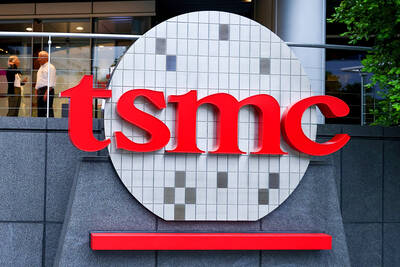
Taiwan Semiconductor Manufacturing Co (TSMC, 台積電) is now ranked ninth among the world’s 100 most valuable companies after its market capitalization more than doubled over the past year, PricewaterhouseCoopers (PwC) Taiwan said in a report last month. TSMC’s market capitalization surged 101 percent year-on-year to US$1.427 trillion as of March 31, the accounting and consulting firm’s 2026 Global Top 100 Companies by Market Capitalization report said. The gain catapulted the world’s largest contract chipmaker from 12th place to ninth in the rankings, and it was the fastest-growing among the global top 10, it said. TSMC was the only Taiwanese company among the top
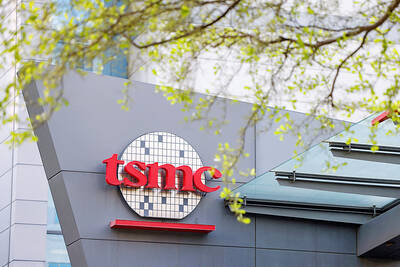
Taiwan Semiconductor Manufacturing Co (TSMC, 台積電) yesterday reported record revenue of NT$416.975 billion (US$13.17 billion) for last month, putting the world’s largest contract chipmaker on track to set a record for quarterly revenue. Last month’s figure surpassed March’s record NT$415.19 billion and represented increases of 1.5 percent from April and 30.1 percent from a year earlier. For the first five months of the year, TSMC generated NT$1.96 trillion in revenue, up 30 percent year-on-year, it said in a statement. TSMC has forecast second-quarter revenue of between US$39 billion and US$40.2 billion, representing sequential growth of about 10 percent and year-on-year growth of about


 RSS
RSS