


The nation's investment environment that is vulnerable to political issues is expected to experience brighter prospects this year, given more constructive trends in domestic politics and cross-strait relations, Deutsche Securities Asia Ltd predicted.
"With no major elections in the next three years, we think the political climate will become much more stable," Ken Chen (
The nation's political landscape changed little after the presidential and legislative elections last year, as the Democratic Progressive Party (DPP) kept control of the executive branch while the opposition parties retained a majority in the legislature.
That situation indicated that people wanted to maintain the status quo, in both domestic politics and China-Taiwan relations, Chen said in the report.
Deutsche Securities also predicted that the upcoming Cabinet reshuffle would be positive on the nation's political dynamics, as incoming premier Frank Hsieh (
Relations between the executive and the legislative branches of government therefore may improve, the report said, as Hsieh is by nature pragmatic and willing to negotiate with opposition lawmakers to get financial reform bills passed in the legislature.
Deutsche Securities also predicted that Hsieh will be more keen in dealing with China than the previous premier. Further, Beijing is also more friendly towards Hsieh since he is one of the few senior members in the DPP that visited China in the past, the report said.
The agreement on the two-way direct charter flights for the Lunar New Year holiday that began last weekend could also be taken as a hint of more pragmatic cross-strait relations, according to the report.
"The Jan. 16 landmark agreement ? is a testament that both sides are willing to set aside their differences when the occasion demands it," Chen said in the report.
The Macau negotiation that took only two hours to complete signaled the stronger-than-expected willingness of both sides to improve cross-strait relations and implied that dialogue at the higher levels was already taking place, he said.
In this regard, analysts at Deutsche Securities said they would not be surprised if negotiations on direct cargo charter flights start right after the Lunar New Year. Moreover, both sides may want to make charter flights much more frequent, extending such services to Mid-Autumn Festival and other traditional holidays, according to Chen.
Sectors that would benefit from the positive political momentum are the airlines, tourism, retail and property industries, Deutsche Securities said, with top picks including EVA Airways Corp (
Eva and Formosa International shares closed 1.03 percent and 1.8 percent up at NT$14.7 and NT$39.5, on the TAIEX last week, respectively.
For this year, Deutsche Securities predicted that the benchmark index would reach 6,617 points within the next 12 months.

Cairo’s new monorail slices across the city skyline, running above the familiar chaos of blaring horns and aging buses’ exhaust fumes that mark rush hour below. The US$4.5 billion monorail, opened this month, is among Egypt’s most prominent new transport projects, part of a debt-funded infrastructure drive criticized for sapping state finances while bringing limited benefits to most of the country’s 109 million people. “It feels like you’re in a different country,” said Ramy Sayed, a restaurant manager, aboard a driverless Innovia 300 train. “No noise, no traffic, we’re not used to this.” The eastern line runs 56km from the bustling middle-class

Taiwanese firms have increased investment in the Philippines in recent years as Manila’s ties with Washington deepen and global supply chains continue to shift away from China, an expert at the Chung-Hua Institution for Economic Research (CIER, 中華經濟研究院) said yesterday. The Philippines had not been among Taiwanese investors’ top choices in Southeast Asia, CIER Taiwan ASEAN Studies Center director Kristy Hsu (徐遵慈) said at a seminar in Taipei. However, Taiwan’s investment in the country has grown significantly since the COVID-19 pandemic, reaching US $257 million last year, a high in recent years, she said. Although Taiwan’s total investment in the Philippines still lags
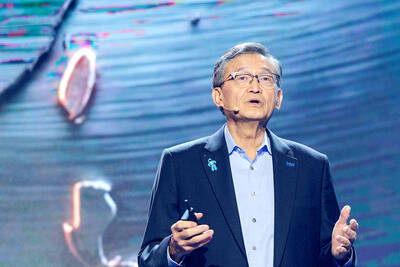
Intel Corp regards Taiwan Semiconductor Manufacturing Co (TSMC, 台積電) as a longstanding partner, as the US chipmaker would continue outsourcing production of advanced chips to TSMC, Intel chief executive officer Lip-Bu Tan (陳立武) said yesterday. “I don’t look at people as competitors. I look at the collaboration... Nvidia is also, you know, a good friend,” Tan told a news conference following his keynote speech at the Computex trade show in Taipei. “It’s a very trusted partnership for us... We are a big, top customer for them, and we’re going to continue doing that,” he said, referring to TSMC, the world’s largest foundry

Artificial intelligence (AI) agents would supplant smartphones as the center of people’s digital lives, fundamentally reshaping personal devices and driving a major computing upgrade cycle, Qualcomm Inc CEO Cristiano Amon said yesterday. In his keynote speech for this year’s Computex trade show in Taipei, Amon said that the rise of "agentic AI" — AI systems capable of reasoning, planning and carrying out tasks autonomously — would transform how people interact with technology across phones, PCs, vehicles and wearable devices. Describing the technology as the next major evolution in computing, Amon said that "2026 is the year of agents.” For decades, smartphones have sat


 RSS
RSS