


The oil services conglomerate Halliburton Co will wind down its operations in Iran and seek to separate its engineering and construction subsidiary KBR from the parent, chairman and CEO Dave Lesar said on Friday.
Lesar made the disclosures on Friday to analysts in a conference call after the company disclosed its fourth-quarter loss narrowed to US$201 million from a loss of US$947 million in the same period a year ago.
Halliburton does business in Iran through a foreign-owned subsidiary, which is allowed as long as Americans don't participate in or direct that business. But a federal grand jury is investigating whether the Houston-based company or its executives deliberately violated a US ban on trade with Iran.
Lesar said services the company provides in Iran aren't illegal, but they are "miniscule" in comparison with the company's other work and that Iran's business environment "is not conducive to our overall strategies and objectives."
"We have decided to wind down our operations there while fulfilling our existing contracts and commitments," Lesar said on the conference call.
Shares fell US$2.67, or 6 percent, to close at US$40.84 on Friday on the New York Stock Exchange -- still near the high end of their 52-week range of US$26.45 to US$43.58.
Lesar told analysts Halliburton will return to Iran if US sanctions are lifted in the future and more of its major customers go there.
"It's not a huge market for them," Dan Pickering, an analyst with Pickering Energy Partners, said of the Iran pullout. "Halliburton's probably getting tired of being a punching bag on various issues and Iran was one that they could eliminate and are doing so."
Halliburton said in September the company would consider selling or spinning off KBR once its multibillion-dollar settlement of thousands of asbestos and silica claims was finalized. Lesar said Friday he would recommend to Halliburton's board that KBR be separated, but didn't say how or when.
KBR is the largest US contractor in Iraq, with more than US$10 billion in work orders from the Army to provide troop support and rebuild Iraq's oil industry. Various agencies are investigating allegations of overbilling and favoritism because US Vice President Dick Cheney ran Halliburton from 1995 until 2000, but the company denies wrongdoing, calling itself a political target.
To maximize shareholder value and select the right kind of deal, "it may be necessary to establish a track record of solid earnings for several quarters and resolve government investigations and disputes, and to work out price, terms and structure," Lesar said.
The wrap-up of the asbestos and silica settlement led to the smaller fourth-quarter loss, though results fell short of Wall Street expectations.
Halliburton's fourth-quarter net loss amounted to US$0.45 per share, including a US$384 million loss, or US$0.86 per share, which is a non-cash expense reflecting the increase in value of 59.5 million Halliburton shares involved in the settlement. In the fourth quarter of 2003, Halliburton posted a net loss of US$2.18 per share which included a US$1.1 billion charge related to the asbestos settlement.
Excluding the charge, Halliburton reported income from continuing operations of US$183 million, or US$0.41 per share, compared with US$146 million, or US$0.34 per share, in the fourth quarter of 2003.
Analysts surveyed by Thomson First Call had expected earnings of US$0.48 per share.
Pickering called the results "slightly disappointing," noting a sale or spinoff of KBR would turn Halliburton into "a pure oilfield service company, which in the minds of investors is probably more valuable."
Halliburton's revenues for the quarter reached US$5.2 billion, down 5 percent from US$5.46 billion a year ago because of KBR's reduced government contract work primarily in the Middle East.
For the year, Halliburton reported a net loss of US$977 million, or US$2.21 per share, compared with a net loss of US$820 million, or US$1.88 per share, for 2003. Revenues for last year were US$20.46 billion, compared with US$16.27 billion in 2003.
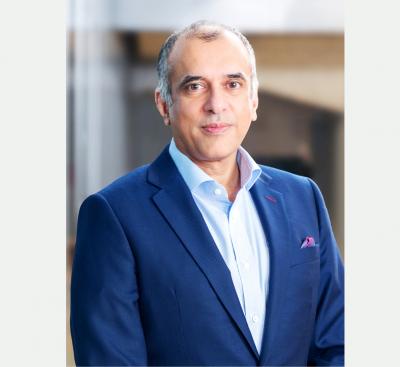
HSBC Holdings PLC is deepening its commitment to Taiwan as the economy emerges as one of the bank’s fastest-growing markets globally, driven by an artificial intelligence (AI) investment boom, expanding cross-border trade, and rising wealth creation. “The advantage that Taiwan has is a growth story linked to the semiconductor and broader AI industries, strong underlying corporate performance, and wealth creation,” said Surendra Rosha, HSBC’s co-chief executive for Asia and the Middle East, in an exclusive interview with the Taipei Times on June 2, during this year’s HSBC Taiwan Conference. That combination has helped HSBC cement its position as the most profitable international
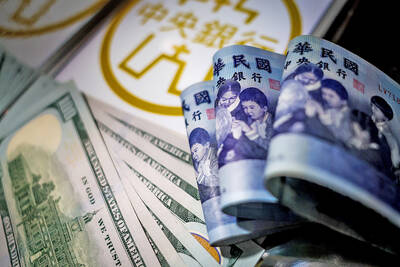
The New Taiwan dollar yesterday fell sharply against the US dollar to close at its lowest level since May 22 amid a massive outflow of funds from the country because of investors panicking over global equity markets. The NT dollar ended at NT$31.580 against the US dollar, slightly lower than its close of NT$31.568 on May 22, after moving between NT$31.5 and NT$31.648 on combined turnover of US$3.062 billion on the Taipei Foreign Exchange and the Cosmos Foreign Exchange. The NT dollar received a significant hit in the morning session, slumping as much as NT$0.173 at a time when other Asian currencies
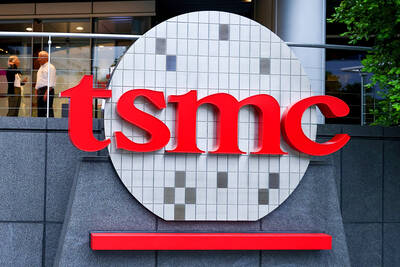
Taiwan Semiconductor Manufacturing Co (TSMC, 台積電) is now ranked ninth among the world’s 100 most valuable companies after its market capitalization more than doubled over the past year, PricewaterhouseCoopers (PwC) Taiwan said in a report last month. TSMC’s market capitalization surged 101 percent year-on-year to US$1.427 trillion as of March 31, the accounting and consulting firm’s 2026 Global Top 100 Companies by Market Capitalization report said. The gain catapulted the world’s largest contract chipmaker from 12th place to ninth in the rankings, and it was the fastest-growing among the global top 10, it said. TSMC was the only Taiwanese company among the top
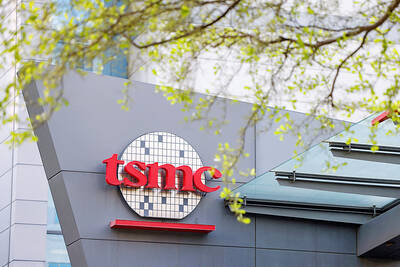
Taiwan Semiconductor Manufacturing Co (TSMC, 台積電) yesterday reported record revenue of NT$416.975 billion (US$13.17 billion) for last month, putting the world’s largest contract chipmaker on track to set a record for quarterly revenue. Last month’s figure surpassed March’s record NT$415.19 billion and represented increases of 1.5 percent from April and 30.1 percent from a year earlier. For the first five months of the year, TSMC generated NT$1.96 trillion in revenue, up 30 percent year-on-year, it said in a statement. TSMC has forecast second-quarter revenue of between US$39 billion and US$40.2 billion, representing sequential growth of about 10 percent and year-on-year growth of about


 RSS
RSS