


Japanese stocks are expected to slip in early 2005 on a slowdown in the world's second-largest economy but should rebound later in the year in tandem with expected stronger growth, analysts said.
After seeing the market end 2004 on a positive note, investors are betting that the semiconductor industry will emerge from the current downturn to help drive exports and the economy by mid-2005.
They said other positive factors include an expected recovery in corporate capital spending and stronger consumer sentiment later in the year.
"Growth concerns in Japan are most likely to weigh heavily on the equity market in early 2005," said Societe Generale Asset Management senior economist Akio Yoshino.
"We think there is the possibility that the Nikkei index could slip to below the 10,000 mark around March, when the Japanese fiscal year ends."
Japanese shares posted a second consecutive, but modest, annual gain over the past 12 months. The benchmark Nikkei-225 index closed 2004 at 11,488.76, up 7.6 percent, after hitting a low of 10,299.43 and a high of 12,195.66.
The broader TOPIX index of all First Section shares ended the year at 1,149.63, up 10.15 percent, after a low of 1,017.84 and a high of 1,225.97.
Investors have had a lot to be wary about in the final months of 2004. There have been concerns over slowing demand for information technology products from overseas, the appreciation of the yen against the dollar and the soaring price of oil, steel and other commodities.
Going forward, analysts expect the current softer patch to pass, leaving the way clear for a resumption of growth.
"The continued strength in the corporate sector suggests that any forthcoming downturn will be mild and short-lived," said Taro Saito, an economist at NLI Research, an arm of Japan's largest life insurer Nippon Life Insurance. Hideo Mizutani, chief strategist at Sieg Securities, said the Nikkei index could rally towards 14,000 by November 2005.
"The Nikkei index may hit a bottom of around 10,500 around February, then rebound, pricing in a global economic recovery in the latter half of the year," Mizutani said.
Analysts said banks have made considerable progress toward halving bad loans by March 2005.
SINGAPORE
Singapore's stock market still offers rich pickings in selected sectors in 2005 amid projections that economic growth will moderate to 3.0-5.0 percent from 8.1 percent this year, analysts said.
The main Straits Times Index (STI) finished 2004 at 2,066.14 points, representing a 15 percent gain over the year. For 2005, the STI may top 2,500 points, they said.
"It will be an okay year, it won't be a breakneck rally," Timothy Wong, head of research at DBS Vickers brokerage, told AFP.
"We are looking at a situation where growth is slowing down and there are uncertainties over whether corporate earnings can be sustained," he said.
Economic growth in 2004 had rebounded off a low base in 2003 when an outbreak of the SARS-paralyzed business activity in the city-state. The coming year still held pitfalls and Prime Lee Hsien Loong warned Friday that a sharp slowdown in the US or a slump in global electronics demand would have knock-on effects for the country.
But analysts said some stocks are expected to do well in 2005, especially those that have strong fundamentals but have been neglected by investors in 2004. According to Wong, all three Singapore banks -- DBS Group, United Overseas Bank and Oversea-Chinese Banking Corp. -- offer good value in 2005 as these stocks have generally lagged the STI in 2004. Another brokerage house, UOB Kay Hian, had a similar upbeat assessment for the three banks in its Singapore Strategy 2005 report.
"Upside surprises could be in store for banks if interest rates are driven up a lot faster than expected, and this could be positive for interest rate spreads and margins," UOB Kay Hian said.
The brokerage also recommended that investors look at property companies, especially those that have made aggressive moves to expand into regional markets. These included Keppel Land and CapitaLand, southeast Asia's biggest property developer, the brokerage said.
SEOUL
South Korean stocks will have to wait for the second half of 2005 before any meaningful pick-up as weak economic fundamentals keep investors in check until they see an improvement in private consumption, dealers said.
The KOSPI index opened at 821.26 points on January 2 and closed at 895.92 on Thursday, after a 720-936 range, for a gain of some 9.0 percent in the year.
Stocks should consolidate early next year as companies post weak results before rebounding to test the 1,000 points level in the second half, Korea Investment and Securities analysts Shin Dong-Seong and Park Si-Young said in a joint report.
Domestic consumption may pick up from the middle of the year when a government stimulus package should begin to take effect, they said.
"Market jitters over the feeble economy and weak corporate profits will peak early next year, possibly generating a shock but then a rally may emerge either late in the second quarter or in the third quarter," the report said.
Shin and Park said weak performances in key blue chips such as Samsung Electronics, the country's largest stock by market value, should begin to bottom out in the second quarter.
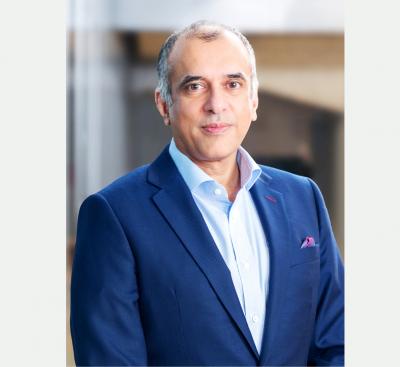
HSBC Holdings PLC is deepening its commitment to Taiwan as the economy emerges as one of the bank’s fastest-growing markets globally, driven by an artificial intelligence (AI) investment boom, expanding cross-border trade, and rising wealth creation. “The advantage that Taiwan has is a growth story linked to the semiconductor and broader AI industries, strong underlying corporate performance, and wealth creation,” said Surendra Rosha, HSBC’s co-chief executive for Asia and the Middle East, in an exclusive interview with the Taipei Times on June 2, during this year’s HSBC Taiwan Conference. That combination has helped HSBC cement its position as the most profitable international
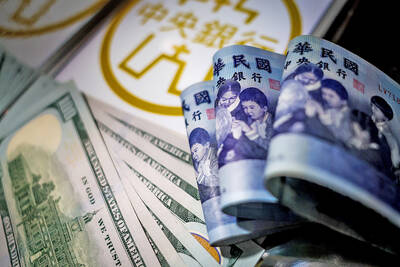
The New Taiwan dollar yesterday fell sharply against the US dollar to close at its lowest level since May 22 amid a massive outflow of funds from the country because of investors panicking over global equity markets. The NT dollar ended at NT$31.580 against the US dollar, slightly lower than its close of NT$31.568 on May 22, after moving between NT$31.5 and NT$31.648 on combined turnover of US$3.062 billion on the Taipei Foreign Exchange and the Cosmos Foreign Exchange. The NT dollar received a significant hit in the morning session, slumping as much as NT$0.173 at a time when other Asian currencies
Taiwan Semiconductor Manufacturing Co (TSMC, 台積電) is now ranked ninth among the world’s 100 most valuable companies after its market capitalization more than doubled over the past year, PricewaterhouseCoopers (PwC) Taiwan said in a report last month. TSMC’s market capitalization surged 101 percent year-on-year to US$1.427 trillion as of March 31, the accounting and consulting firm’s 2026 Global Top 100 Companies by Market Capitalization report said. The gain catapulted the world’s largest contract chipmaker from 12th place to ninth in the rankings, and it was the fastest-growing among the global top 10, it said. TSMC was the only Taiwanese company among the top
Taiwan Semiconductor Manufacturing Co (TSMC, 台積電) yesterday reported record revenue of NT$416.975 billion (US$13.17 billion) for last month, putting the world’s largest contract chipmaker on track to set a record for quarterly revenue. Last month’s figure surpassed March’s record NT$415.19 billion and represented increases of 1.5 percent from April and 30.1 percent from a year earlier. For the first five months of the year, TSMC generated NT$1.96 trillion in revenue, up 30 percent year-on-year, it said in a statement. TSMC has forecast second-quarter revenue of between US$39 billion and US$40.2 billion, representing sequential growth of about 10 percent and year-on-year growth of about


 RSS
RSS