


The fate of an amendment to a bill to fund a clean-up of the financial sector is still up in the air after the caretaker Cabinet and the legislature failed to reach an agreement late Monday.
"We are pretty pessimistic that the Financial Restructuring Fund (
According to Chen, Premier Yu Shyi-kun met with Legislative Speaker Wang Jin-pyng (王金平) Monday afternoon in an attempt to solicit his support to accelerate the passage of 33 bills, including the one related to the fund, which are on the Cabinet's priority list for passage before a reshuffle in February.
But Wang only promised to push forward passage of bills that are urgent -- such as the central government's budget -- by the year's end.
The Financial Restructuring Fund is modelled after the US Resolution Trust Corp of the 1980s and was set up in 2001. The fund has dwindled to around NT$40 billion (US$1.23 billion) from an initial NT$140 billion. The amendment lawmakers are considering would expand the size of the depleted fund.
The legislature is reviewing the supplemental funding this week, but people close to the inter-party negotiations see slim chances of it being passed during the lame-duck legislative session that ends on Dec. 31.
DPP Legislator-at-large Lin Chung-cheng (林忠正) yesterday reiterated that there's little chance of the bill being added to the legislative agenda in the next two weeks, making the odds of it being passed in an extraordinary session early next year even slimmer.
Lin had previously predicted that the bill, which has been frozen in the legislature for over a year, might re-emerge after the newly elected legislature convenes in two months.
Still, People First Party legislator Norman Yin (
"It all depends on the legislature's pace, since most disagreements have been ironed out," Yin said. He denied media reports that the party wants to cut the government's proposed funding to NT$240 billion.
Even so, the government's failure to quickly re-open a legislative discussion on the fund's size has impacted financial shares.
On Monday, the market fell slightly following the DPP's electoral defeat, further pushing the stock market's financial index down by 19.2 points from Friday's 1020.69 points, to close at 1001.45 points.
The financial index edged up to 1004.13 points yesterday after a local media report said the legislature had agreed to pass the fund's bill by the year's end, pending a finalization of the fund's size.
The report, however, turned out to be inaccurate, according to the Cabinet's spokesman.
Alex Huang (
"Financial shares may go through up-and-downs along with the bill's progress, but in the long term, upside is foreseeable, which is irrelevant to the bill's passage," Huang said.
Huang said the government is unlikely to backtrack on financial reform and the banking sector is recovering as a result of rising interest-rate spreads, triggered by an interest-rate increase.
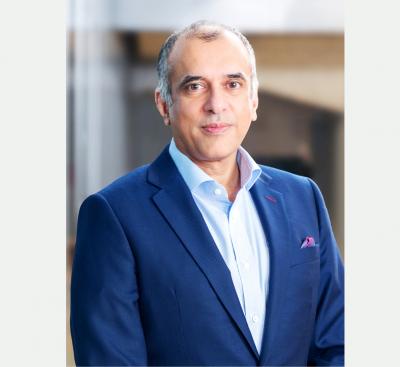
HSBC Holdings PLC is deepening its commitment to Taiwan as the economy emerges as one of the bank’s fastest-growing markets globally, driven by an artificial intelligence (AI) investment boom, expanding cross-border trade, and rising wealth creation. “The advantage that Taiwan has is a growth story linked to the semiconductor and broader AI industries, strong underlying corporate performance, and wealth creation,” said Surendra Rosha, HSBC’s co-chief executive for Asia and the Middle East, in an exclusive interview with the Taipei Times on June 2, during this year’s HSBC Taiwan Conference. That combination has helped HSBC cement its position as the most profitable international
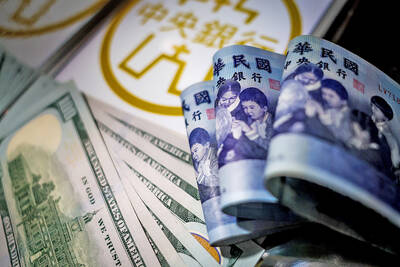
The New Taiwan dollar yesterday fell sharply against the US dollar to close at its lowest level since May 22 amid a massive outflow of funds from the country because of investors panicking over global equity markets. The NT dollar ended at NT$31.580 against the US dollar, slightly lower than its close of NT$31.568 on May 22, after moving between NT$31.5 and NT$31.648 on combined turnover of US$3.062 billion on the Taipei Foreign Exchange and the Cosmos Foreign Exchange. The NT dollar received a significant hit in the morning session, slumping as much as NT$0.173 at a time when other Asian currencies
Taiwan Semiconductor Manufacturing Co (TSMC, 台積電) is now ranked ninth among the world’s 100 most valuable companies after its market capitalization more than doubled over the past year, PricewaterhouseCoopers (PwC) Taiwan said in a report last month. TSMC’s market capitalization surged 101 percent year-on-year to US$1.427 trillion as of March 31, the accounting and consulting firm’s 2026 Global Top 100 Companies by Market Capitalization report said. The gain catapulted the world’s largest contract chipmaker from 12th place to ninth in the rankings, and it was the fastest-growing among the global top 10, it said. TSMC was the only Taiwanese company among the top
Taiwan Semiconductor Manufacturing Co (TSMC, 台積電) yesterday reported record revenue of NT$416.975 billion (US$13.17 billion) for last month, putting the world’s largest contract chipmaker on track to set a record for quarterly revenue. Last month’s figure surpassed March’s record NT$415.19 billion and represented increases of 1.5 percent from April and 30.1 percent from a year earlier. For the first five months of the year, TSMC generated NT$1.96 trillion in revenue, up 30 percent year-on-year, it said in a statement. TSMC has forecast second-quarter revenue of between US$39 billion and US$40.2 billion, representing sequential growth of about 10 percent and year-on-year growth of about


 RSS
RSS