


Crude oil prices soared to record highs Friday as hot world demand strained producers, sharpening an array of threats from a possible strike in Venezuela to Iraqi pipeline sabotage.
New York's benchmark light sweet crude for delivery in September leapt US$1.08 to a record high settlement of US$46.58 a barrel. It spiked at an all-time high of US$46.65.
London's Brent North Sea crude oil for September soared US$1.59 dollars to a record finish of US$43.88 a barrel after hitting an all-time high of US$43.92.
China, the second-biggest oil consumer after the US, said imports of crude oil in the first seven months rose by nearly 40 percent from a year ago as its energy-hungry economy expanded at close to double-digit levels.
Saudi Arabia has said it has immediate spare capacity of up 1.3 million barrels per day but analysts are sceptical.
The Organization of Petroleum Exporting Countries is widely believed to be pumping at near capacity.
Meanwhile, the market faced a slew of risks: a referendum in Venezuela that could lead to a strike, Iraqi bloodshed that could spark pipeline attacks, and the threat of terrorist attacks at the Athens Olympics.
Many traders were buying oil as a precaution ahead of a recall referendum on Sunday directed at Venezuelan President Hugo Chavez. The vote has raised fears of strike action in the oil industry.
"It looks like it is going to be a tight election," said Fimat USA market analyst John Kilduff.
"You have to believe the losing side is going to allege fraud and that the situation will deteriorate," he said. "There is a real possibility oil production will be affected or reduced as result."
The fifth-largest crude exporter, Venezuela produces between 2.5 million and 2.6 million barrels per day, according to analysts, and about 15 percent of the oil imported by the US.
Russian oil titan Yukos -- facing a bankruptcy threat because of a massive tax bill -- further undermined confidence in oil supplies.
But the outlook improved a little as a Western bank was asked to mediate in the Yukos oil saga.
The decision followed heavy pressure from US officials on President Vladimir Putin's administration to come clean about what it planned to do with Yukos amid fears of disruption in oil exports from the world's number two producing nation.
Yukos produces about 1.7 million barrels of oil per day, nearly as much as the maximum output of Iraq.
Reports of a fire at a BP refinery in Whiting, Indiana, which was later extinguished, supported prices of gasoline and the rest of the market, traders said.

SECOND-RATE: Models distilled from US products do not perform the same as the original and undo measures that ensure the systems are neutral, the US’ cable said The US Department of State has ordered a global push to bring attention to what it said are widespread efforts by Chinese companies, including artificial intelligence (AI) start-up DeepSeek (深度求索), to steal intellectual property from US AI labs, according to a diplomatic cable. The cable, dated Friday and sent to diplomatic and consular posts around the world, instructs diplomatic staff to speak to their foreign counterparts about “concerns over adversaries’ extraction and distillation of US AI models.” Distillation is the process of training smaller AI models using output from larger, more expensive ones to lower the costs of training a powerful new
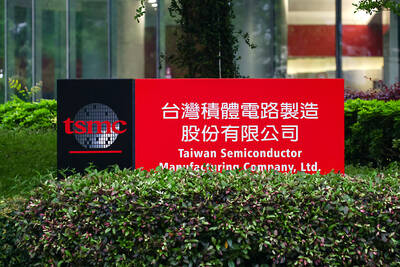
Shares of Taiwan Semiconductor Manufacturing Co (TSMC, 台積電) have repeatedly hit new highs, but an equity analyst said the stock’s valuation remains within a reasonable range and any pullback would likely be technical. The contract chipmaker’s historical price-to-earnings (P/E) ratio has ranged between 20 and 30, Cathay Futures Consultant Co (國泰證期) analyst Tsai Ming-han (蔡明翰) told Central News Agency. With market consensus projecting that TSMC would post earnings per share of about NT$100 (US$3.17) this year, supported by strong global demand for artificial intelligence (AI) applications, and the stock currently trading at a P/E ratio of below 25, Tsai said the valuation

The artificial intelligence (AI) boom has triggered a seismic reshuffling of global equity markets, with Taiwan and South Korea muscling past European nations one by one. With its stock market now valued at nearly US$4.3 trillion, Taiwan surpassed the UK, Europe’s biggest market, earlier this month, data compiled by Bloomberg showed. South Korea is about US$140 billion away from doing the same. The tech-heavy Asian markets have shot past Germany and France in the past seven months. The shift is largely down to massive gains in shares of three companies that provide essential hardware for AI: Taiwan Semiconductor Manufacturing Co (TSMC, 台積電),

The US Department of Commerce last week ordered multiple chip equipment companies to halt shipments of certain tools to China’s second-largest chipmaker, Hua Hong Semiconductor Ltd (華虹半導體), its latest action to slow the country’s development of advanced chips, two people familiar with the matter said. The department sent letters to at least a handful of companies informing them of restrictions on tools and other materials destined for two Hua Hong facilities US officials believe make China’s most sophisticated chips, the people said. Top US chip equipment companies Lam Research Corp, Applied Materials Inc and KLA Corp, each of which has significant


 RSS
RSS