


The number of Taiwanese with bank debts has almost doubled from four years ago, and the average age of borrowers is concentrated in a lower age group than in other nations, a banker at the Hong Kong and Shanghai Banking Corp (HSBC) said yesterday.
This has encouraged an increasing number of financial institutions to attempt to grab a piece of the nation's NT$300 billion (US$8.8 billion) personal loan market, Jacky Shen (沈家齊), HSBC's vice president of personal financial services, said at a press conference.
"According to our latest survey of people's borrowing habits, around 13 percent of the respondents have applied for small loans or cash-advance cards, up from seven percent in 2000," Shen said.
He said this percentage is not especially high compared with other nations, but Taiwanese borrowers are becoming younger -- their average age is between 20 and 35, in contrast the average age range of 20 to 50 years in the rest of the world.
In a survey conducted by the TVBS Poll Center among 7,644 people in June, around 73 percent of respondents said they are most concerned about interest rates when choosing a loan, followed by the methods for making repayments (24.8 percent) and application procedures (24.4 percent).
The top three concerns for choosing cash-advance cards are the same, according to the survey.
But marked differences were found to exist between the motives behind taking out a personal loan and applying for a cash card, Shen said.
"Small loans are mainly used to clear applicants' credit card debts and housing or car loans, or to facilitate their wealth management. An increasing number of people are integrating their debts through one financial tool," he said.
The circulation of cash cards, however, has been evolving in a similar way to that of credit cards, which have become prevalent products in the market.
The survey showed that 21 percent of respondents applied for cash cards because of pressure from their friends, while 19.4 percent they applied to prepare for a rainy day.
"It's worth noting that 8.6 percent said they were motivated by free gifts, a common practice among card issuers to lure applications. This has led to a high ratio of idle cards, increasing costs on the part of banks," Shen said.
Consumers were found to be generally aware that financial institutions charge additional fees disguised under different names, such as handling fees, account management fees or credit insurance, and 64.7 percent of respondents said that this practice was unreasonable.
Shen said the costs involved in granting loans include interest rates and processing fees. When banks boast extremely low interest rates to borrowers, he said, consumers should determine whether any hidden or added fees are included in their loan packages.
Based on the survey results, HSBC yesterday launched a new personal loan program which offers a maximum credit line of NT$2 million at a rate of 3.99 percent for the first six months, with no extra fees contained.
"Our target is to retain customers. The longer they use our program, the higher the returns we'll get," he said.
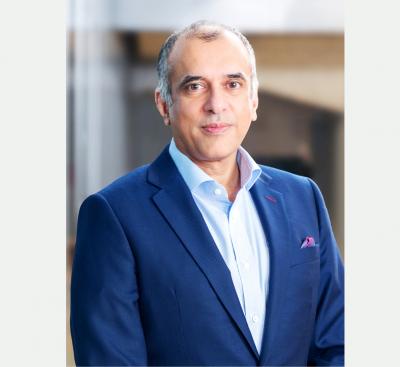
HSBC Holdings PLC is deepening its commitment to Taiwan as the economy emerges as one of the bank’s fastest-growing markets globally, driven by an artificial intelligence (AI) investment boom, expanding cross-border trade, and rising wealth creation. “The advantage that Taiwan has is a growth story linked to the semiconductor and broader AI industries, strong underlying corporate performance, and wealth creation,” said Surendra Rosha, HSBC’s co-chief executive for Asia and the Middle East, in an exclusive interview with the Taipei Times on June 2, during this year’s HSBC Taiwan Conference. That combination has helped HSBC cement its position as the most profitable international

Taiwanese firms have increased investment in the Philippines in recent years as Manila’s ties with Washington deepen and global supply chains continue to shift away from China, an expert at the Chung-Hua Institution for Economic Research (CIER, 中華經濟研究院) said yesterday. The Philippines had not been among Taiwanese investors’ top choices in Southeast Asia, CIER Taiwan ASEAN Studies Center director Kristy Hsu (徐遵慈) said at a seminar in Taipei. However, Taiwan’s investment in the country has grown significantly since the COVID-19 pandemic, reaching US $257 million last year, a high in recent years, she said. Although Taiwan’s total investment in the Philippines still lags

Intel Corp regards Taiwan Semiconductor Manufacturing Co (TSMC, 台積電) as a longstanding partner, as the US chipmaker would continue outsourcing production of advanced chips to TSMC, Intel chief executive officer Lip-Bu Tan (陳立武) said yesterday. “I don’t look at people as competitors. I look at the collaboration... Nvidia is also, you know, a good friend,” Tan told a news conference following his keynote speech at the Computex trade show in Taipei. “It’s a very trusted partnership for us... We are a big, top customer for them, and we’re going to continue doing that,” he said, referring to TSMC, the world’s largest foundry

Hon Hai Precision Industry Co (鴻海精密) yesterday said it would work with US chipmaker Intel Corp to jointly develop and deploy next-generation artificial intelligence (AI) infrastructure and intelligent computing platforms in a move to capture booming demand for AI computing systems. Hon Hai, also known as Foxconn Technology Group (富士康), said in a statement that the partnership would combine its global manufacturing scale, system integration expertise and AI data center deployment capabilities with Intel’s strengths in processor architecture, silicon technologies and software ecosystem. The companies said they plan to work on equipment used in AI data centers, including server racks powered by


 RSS
RSS