


Science park weathers typhoon
Operations at the Hsinchu Science-based Industrial Park (新竹科學園區) proceeded smoothly yesterday, despite heavy downpours brought by Typhoon Rananim, a park administration official said.
Yen Tsung-ming (顏宗明), deputy director of the Hsinchu Science-based Industrial Park Administration, said that operations remained normal and that no incidents were reported, despite the fact that more than 300mm of rain fell in the Hsinchu area on Wednesday.
Yen claimed that companies based at the park will not be troubled by water shortages in the short term thanks to the rainfall brought by the typhoon.
The park is Taiwan's flagship high-tech facility and is widely viewed as the country's "Silicon Valley."
Major reservoirs in Hsinchu County and neighboring Taoyuan County have taken in large amounts of water.
The Paoshan and Yunghoshan reservoirs now hold more than 90 percent of their capacities.
ProMOS elects new chairman
The board of ProMOS Techno-logies Inc (茂德科技), the nation's leading producer of computer memory chips, yesterday elected its current vice chairman, Chen Liang-min (陳良民), to take over from outgoing chairman Hu Hung-chiu (胡洪九), the company said in a statement submitted to the Taiwan Stock Exchange Corp.
Hu, who also chairs ProMOS' parent company, Mosel Vitelic Inc (茂矽), offered his resignation at ProMOS amid an investigation about the alleged embezzlement of more than NT$10 billion from Pacific Electric Wire and Cable Co (太平洋電線電纜).
Hu served as a chief financial officer at Pacific Electric between 1988 and 1998.
Keelung harbor ups its tonnage
Keelung harbor handled 8.5 million tonnes of cargo last month, an increase of 6 percent over the same month last year, according to statistics compiled by the Kee-lung Harbor Bureau.
The port handled a total of 178,172 twenty-foot-equivalent unit (TEU) containers, an annual growth of 6.03 percent.
Of these, 81,823 TEUs were for imports, while 76,905 were for exports.
Transshipments amounted to 19,444 TEUs.
In July, outbound and inbound ships made a total of 856 visits to Keelung, an increase of 3.38 percent over the same month last year.
In the first seven months of this year, Keelung harbor dealt with 57.37 million tonnes of cargo, representing a growth of 9.03 percent over the same period last year.
The port handled 1.21 million TEUs from January to July, representing a rise of 6.98 percent over the same period last year.
Inbound and outbound ships made a total of 5,715 visits during the first seven months of the year.
Yulon Motor plans buyback
Yulon Motor Co (裕隆汽車), which makes Nissan Motor Co cars in Taiwan, said it plans to buy as many as 30 million of its shares in the next two months.
Yulon Motor may pay as much as NT$35 a share, a 19 percent premium to the stock's closing price of NT$29.30 yesterday, the company said in a statement to the Taiwan Stock Exchange.
The stock has fallen 27 percent this year, compared with an 8.9 percent decline in the TAIEX.
NT dollar unchanged
The New Taiwan dollar remained unchanged at NT$34.140 against its US counterpart on the Taipei foreign exchange market yesterday.
The turnover stood at US$429 million.
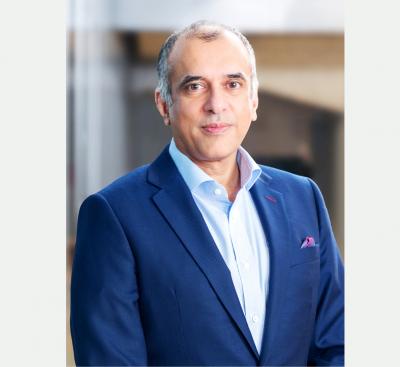
HSBC Holdings PLC is deepening its commitment to Taiwan as the economy emerges as one of the bank’s fastest-growing markets globally, driven by an artificial intelligence (AI) investment boom, expanding cross-border trade, and rising wealth creation. “The advantage that Taiwan has is a growth story linked to the semiconductor and broader AI industries, strong underlying corporate performance, and wealth creation,” said Surendra Rosha, HSBC’s co-chief executive for Asia and the Middle East, in an exclusive interview with the Taipei Times on June 2, during this year’s HSBC Taiwan Conference. That combination has helped HSBC cement its position as the most profitable international

Taiwanese firms have increased investment in the Philippines in recent years as Manila’s ties with Washington deepen and global supply chains continue to shift away from China, an expert at the Chung-Hua Institution for Economic Research (CIER, 中華經濟研究院) said yesterday. The Philippines had not been among Taiwanese investors’ top choices in Southeast Asia, CIER Taiwan ASEAN Studies Center director Kristy Hsu (徐遵慈) said at a seminar in Taipei. However, Taiwan’s investment in the country has grown significantly since the COVID-19 pandemic, reaching US $257 million last year, a high in recent years, she said. Although Taiwan’s total investment in the Philippines still lags

Intel Corp regards Taiwan Semiconductor Manufacturing Co (TSMC, 台積電) as a longstanding partner, as the US chipmaker would continue outsourcing production of advanced chips to TSMC, Intel chief executive officer Lip-Bu Tan (陳立武) said yesterday. “I don’t look at people as competitors. I look at the collaboration... Nvidia is also, you know, a good friend,” Tan told a news conference following his keynote speech at the Computex trade show in Taipei. “It’s a very trusted partnership for us... We are a big, top customer for them, and we’re going to continue doing that,” he said, referring to TSMC, the world’s largest foundry
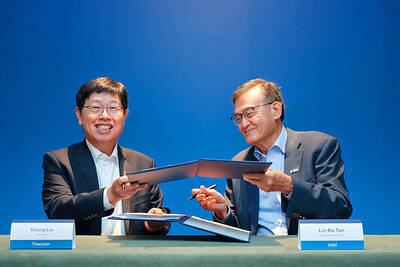
Hon Hai Precision Industry Co (鴻海精密) yesterday said it would work with US chipmaker Intel Corp to jointly develop and deploy next-generation artificial intelligence (AI) infrastructure and intelligent computing platforms in a move to capture booming demand for AI computing systems. Hon Hai, also known as Foxconn Technology Group (富士康), said in a statement that the partnership would combine its global manufacturing scale, system integration expertise and AI data center deployment capabilities with Intel’s strengths in processor architecture, silicon technologies and software ecosystem. The companies said they plan to work on equipment used in AI data centers, including server racks powered by


 RSS
RSS