


Fubon Financial Holding Co (富邦金控), the nation's fifth-largest financial services provider by assets, yesterday reported a 11 percent drop in its first half earnings from a year ago due to declining investment returns, company officials said yesterday.
Fubon Financial announced a net income of NT$8.42 billion (US$247.9 million) for the first half of the year, 53 percent of its forecast of NT$16 billion for the year. Earnings per share (EPS) in this the period was NT$1.14.
Pre-tax earnings reached NT$2.1 billion last month, meaning the company earned NT$10.5 billion in the first seven months of the year, with an EPS of NT$1.41, said chief financial officer Victor Kung (龔天行) at an investor conference yesterday.
"Our performance for the January to June period was in line with our budget forecast," Kung said.
Among Fubon Financial's subsidiaries, TaipeiBank (台北銀行) outperformed Fubon Bank (富邦銀行) to be the No.1 earnings contributor with a net income of NT$2.54 billion for the first half of the year.
Fubon Bank came in second with NT$2.03 billion, followed by Fubon Securities Investment Trust Co (
Fubon Securities, however, turned in the strongest performance as its net income grew more than threefold, while TaipeiBank and Fubon Bank saw their net income tumble by 21.7 percent and 52.2 percent, respectively, due to lower investment gains.
One high-profile new force for Fubon Financial is International Bank of Asia Limited (IBA,
It reported HK$303.7 million (US$38.9) in net income for the first half of the year, a 0.9 percent increase over the same period last year.
Fubon Financial acquired the Hong Kong bank in order to tap into the massive Chinese market through the China-Hong Kong Closer Economic Partnership Arrangement (CEPA).
Lee Jin-yi (李晉頤), managing director and chief executive officer of IBA, said the bank is putting efforts on magnifying its assets from US$5.2 billion to US$6 billion, a threshold to apply for setting representative offices in China.
"We hope to file the application by the end of this year ... initially, our Chinese representative offices will concentrate in the Pearl River Delta," Lee said.
Lee said IBA's 26 branches in Hong Kong, as well as future operations in China, will target China-bound Taiwanese busi-nesspeople due to the alliance with Fubon Financial. He said the segment could constitute 10 percent to 20 percent of its earnings within a year from now.
But investors are cautious about the expansion plans.
"The cross-strait situation is not expected to improve in the near-term, which may slow Fubon's attempts to expand throughout the Greater China market," George Lai, an analyst at SinoPac Securities Co (建華證券) said in a release yesterday.
Fubon Financial shares slipped NT$0.5 to close at NT$27.4 on the TAIEX yesterday. Its share prices are under increasing pressure as the Taipei City Government is expected to sell 415.3 million shares -- or 1 percent of its 14.04-percent stake in Fubon -- this year at NT$32.52 per share.
But Kung said he didn't expect the sale to get through, because the company has not receive any notice from the city government regarding the sale. He also noted that the current market value of the shares are much lower than the set price.
But another stock sale by Citigroup Inc is impending.
The two banks terminated their strategic partnership in late June. As a result, Citigroup, which had 10.2 percent stake in Fubon Financial, sold 20 million shares last month, and is applying to release 80 million shares this month, Kung said.
The rest of the shares may be transformed to Global Depository Receipts as Citigroup had earlier proposed, he said.
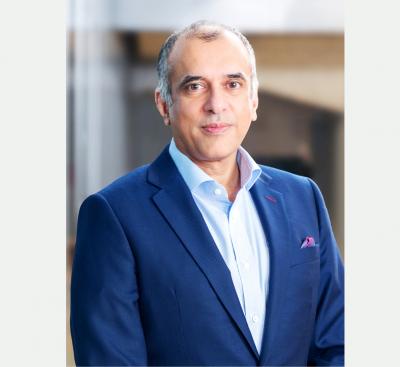
HSBC Holdings PLC is deepening its commitment to Taiwan as the economy emerges as one of the bank’s fastest-growing markets globally, driven by an artificial intelligence (AI) investment boom, expanding cross-border trade, and rising wealth creation. “The advantage that Taiwan has is a growth story linked to the semiconductor and broader AI industries, strong underlying corporate performance, and wealth creation,” said Surendra Rosha, HSBC’s co-chief executive for Asia and the Middle East, in an exclusive interview with the Taipei Times on June 2, during this year’s HSBC Taiwan Conference. That combination has helped HSBC cement its position as the most profitable international

Taiwanese firms have increased investment in the Philippines in recent years as Manila’s ties with Washington deepen and global supply chains continue to shift away from China, an expert at the Chung-Hua Institution for Economic Research (CIER, 中華經濟研究院) said yesterday. The Philippines had not been among Taiwanese investors’ top choices in Southeast Asia, CIER Taiwan ASEAN Studies Center director Kristy Hsu (徐遵慈) said at a seminar in Taipei. However, Taiwan’s investment in the country has grown significantly since the COVID-19 pandemic, reaching US $257 million last year, a high in recent years, she said. Although Taiwan’s total investment in the Philippines still lags

Intel Corp regards Taiwan Semiconductor Manufacturing Co (TSMC, 台積電) as a longstanding partner, as the US chipmaker would continue outsourcing production of advanced chips to TSMC, Intel chief executive officer Lip-Bu Tan (陳立武) said yesterday. “I don’t look at people as competitors. I look at the collaboration... Nvidia is also, you know, a good friend,” Tan told a news conference following his keynote speech at the Computex trade show in Taipei. “It’s a very trusted partnership for us... We are a big, top customer for them, and we’re going to continue doing that,” he said, referring to TSMC, the world’s largest foundry

Hon Hai Precision Industry Co (鴻海精密) yesterday said it would work with US chipmaker Intel Corp to jointly develop and deploy next-generation artificial intelligence (AI) infrastructure and intelligent computing platforms in a move to capture booming demand for AI computing systems. Hon Hai, also known as Foxconn Technology Group (富士康), said in a statement that the partnership would combine its global manufacturing scale, system integration expertise and AI data center deployment capabilities with Intel’s strengths in processor architecture, silicon technologies and software ecosystem. The companies said they plan to work on equipment used in AI data centers, including server racks powered by


 RSS
RSS