


Structural flaws in the accounting system must be addressed, an accounting professor said yesterday at a seminar in Taipei. He also urged accountants to exercise professional self-discipline to reduce frauds and strengthen corporate governance.
Although accountants are hired by companies to verify financial statements, these professionals should manifest their independence and competence to hold their clients accountable to the companies' current and future shareholders, said Ko Chen-en (
Ko said the defective accounting system can become an accomplice to corporate financial irregularities when company leaders intend to cover up wrongdoing. Ko is also director-general of the Corporate Governance Association Taiwan (中華公司治理協會).
"Because the party that pays money [to accountants] and the party that [the accountants] should be responsible to are different, these professionals face difficulty in maintaining their supervision quality when they're sometimes under pressure from higher-ups," he said.
Speaking at a crowded seminar held by Standard & Poor's Ratings Services, Ko said a better way would be for companies' auditing committees, composed of independent board members, to directly communicate with accountants.
Ko spoke to review the aftermath of Procomp Informatics Ltd's (
Nearly 10,000 of Procomp's more than 38,000 investors had been affected by the default, Vice Minister of Finance Gordon Chen (
Several Procomp investors demanded the government compensate them for their losses yesterday at a press conference organized by Democratic Progressive Party legislators Charles Chiang (江昭儀) and Chen Mao-nan (陳茂男).
Liang Hsi-tsung (
"We bought Procomp's corporate bond because we believed that the Securities and Futures Bureau conducted a detailed examination before allowing Procomp to raise more capital," Liang said.
Therefore, Liang and other affected investors said they would also demand compensation from the Securities and Futures Bureau and from the Taiwan Stock Exchange Corp for alleged negligence.
Yeh was detained on June 27, and four accountants were punished last week by the Financial Supervisory Commission for their negligence in certifying Procomp's financial documents.
"All these problems boil down to morality," Ko said.
To nip such fraud in the bud, Ko said, corporate governance should be stressed and become a reference indicator for the government to manage financial institutions and listed companies.
"The Procomp fraud is only a beginning, not an independent case," said Tony Tsai (
"I believe this case has sent shockwaves through and served as a warning for the investment trust sector," Tsai said. He said the sector requires further risk controls or it will risk rejection by investors.
(With additional reporting by Debby Wu)

Cairo’s new monorail slices across the city skyline, running above the familiar chaos of blaring horns and aging buses’ exhaust fumes that mark rush hour below. The US$4.5 billion monorail, opened this month, is among Egypt’s most prominent new transport projects, part of a debt-funded infrastructure drive criticized for sapping state finances while bringing limited benefits to most of the country’s 109 million people. “It feels like you’re in a different country,” said Ramy Sayed, a restaurant manager, aboard a driverless Innovia 300 train. “No noise, no traffic, we’re not used to this.” The eastern line runs 56km from the bustling middle-class

Taiwanese firms have increased investment in the Philippines in recent years as Manila’s ties with Washington deepen and global supply chains continue to shift away from China, an expert at the Chung-Hua Institution for Economic Research (CIER, 中華經濟研究院) said yesterday. The Philippines had not been among Taiwanese investors’ top choices in Southeast Asia, CIER Taiwan ASEAN Studies Center director Kristy Hsu (徐遵慈) said at a seminar in Taipei. However, Taiwan’s investment in the country has grown significantly since the COVID-19 pandemic, reaching US $257 million last year, a high in recent years, she said. Although Taiwan’s total investment in the Philippines still lags
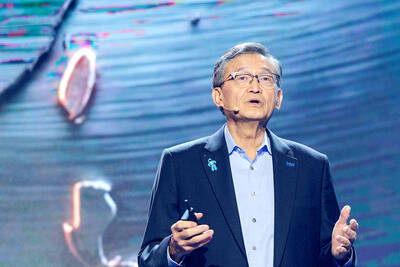
Intel Corp regards Taiwan Semiconductor Manufacturing Co (TSMC, 台積電) as a longstanding partner, as the US chipmaker would continue outsourcing production of advanced chips to TSMC, Intel chief executive officer Lip-Bu Tan (陳立武) said yesterday. “I don’t look at people as competitors. I look at the collaboration... Nvidia is also, you know, a good friend,” Tan told a news conference following his keynote speech at the Computex trade show in Taipei. “It’s a very trusted partnership for us... We are a big, top customer for them, and we’re going to continue doing that,” he said, referring to TSMC, the world’s largest foundry

Artificial intelligence (AI) agents would supplant smartphones as the center of people’s digital lives, fundamentally reshaping personal devices and driving a major computing upgrade cycle, Qualcomm Inc CEO Cristiano Amon said yesterday. In his keynote speech for this year’s Computex trade show in Taipei, Amon said that the rise of "agentic AI" — AI systems capable of reasoning, planning and carrying out tasks autonomously — would transform how people interact with technology across phones, PCs, vehicles and wearable devices. Describing the technology as the next major evolution in computing, Amon said that "2026 is the year of agents.” For decades, smartphones have sat


 RSS
RSS