


After 30 years, their faces are still unlined and their smiles unfaded, but Playmobil people inhabit a world unchanged even as a toy revolution goes on around them.
In the beginning, in 1974, there was an American Indian, a construction worker with his own little hardhat and a Medieval knight (horse not included).
Since then, over 1.7 billion little folk -- shiny colored plastic men and women the size of a toddler's hand -- have peopled their universe and created a historical global brand out of one German toymaker's vision.
An ongoing exhibit at the Children's Museum in the southwestern German city of Speyer traces their history, from Playmobil's prototype people to the latest inventions.
In the hands-on fashion of a child's romper room, visitors to the two-story museum can fashion their own landscapes from the dozens Playmobil has created, which include farms, tropical isles, underwater explorers, gas pumps, space stations, supermarkets and the ever-popular pirates' lairs.
The exhibit has drawn 15,000 visitors -- the equivalent of half the population of the small Rhineland-Palatinate town of 30,000 -- since it opened on Nov. 30.
"Lots of children know Playmobil, but they don't know when and how they were invented," said exhibit curator Catherine Biasini.
This, too, is part of Playmobil's strength -- becoming ageless in an industry where faddish toys of today are the discarded refuse of next season.
The Speyer display brings their unchanging form into view. Of 600 different figurines produced over three decades, there is little change between prototypes from the early 1970s, and recent products.
Indian feathers are replaced by firefighter hats, jesters' caps, shining armor, braids. Women came along in 1976, followed by children in 1981. The Playmobil world is marvelously accessorized -- with swords, space shuttles, muskets, canned goods, and an impressive array of uniforms.
In a slight concession to changing times the company's catalog does include a new "police" line, offering such edifying settings as a prison with jail cells and a police checkpoint.
The father of the Playmobil world was a toy entrepreneur fascinated with plastic. Horst Brandstaetter first made his mark in the late 1950s by championing the industrial production of plastic hoola hoops, and supplying all of Europe during its hooping craze.
His Indian-worker-knight trio made their debut at Germany's Nuremberg toy fair in 1974 and, while professionals showed little interest, parents and children took an instant liking to figurines they could relate to.
The company's continued financial strength is proof that Playmobil is resisting the onset of video and computer games, its 7cm dolls still edging out rivals that can sing and move. Earnings for the group last year were 320 million euros (US$402 million), up 8 percent from the previous year.
At the Speyer museum exhibit, which will officially celebrate the toy's 30th birthday on March 11 and close on April 18, adults have also shared their private Playmobil collections, including a circus built out of several buildings, with hundreds of musicians, actors, and audience members in costumes, or decked out in 1809 Napoleonic wear.
"All generations find something of interest in Playmobil", curator Biasini said.
One father-and-son pair agreed.
"You leave this exhibit younger than when you came in," 36-year-old Michael Schmidt said, accompanied by his son Florian, 11.
"I used to play with Playmobil when I was little. Now my son does. These toys don't age -- they've managed to stay modern."
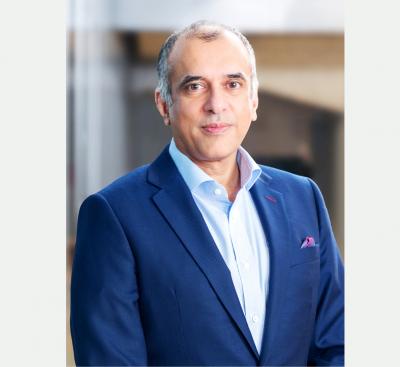
HSBC Holdings PLC is deepening its commitment to Taiwan as the economy emerges as one of the bank’s fastest-growing markets globally, driven by an artificial intelligence (AI) investment boom, expanding cross-border trade, and rising wealth creation. “The advantage that Taiwan has is a growth story linked to the semiconductor and broader AI industries, strong underlying corporate performance, and wealth creation,” said Surendra Rosha, HSBC’s co-chief executive for Asia and the Middle East, in an exclusive interview with the Taipei Times on June 2, during this year’s HSBC Taiwan Conference. That combination has helped HSBC cement its position as the most profitable international
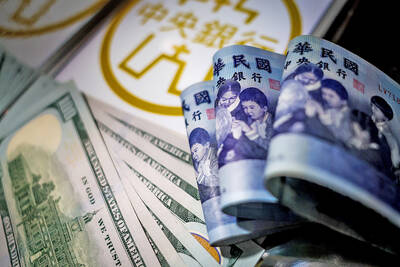
The New Taiwan dollar yesterday fell sharply against the US dollar to close at its lowest level since May 22 amid a massive outflow of funds from the country because of investors panicking over global equity markets. The NT dollar ended at NT$31.580 against the US dollar, slightly lower than its close of NT$31.568 on May 22, after moving between NT$31.5 and NT$31.648 on combined turnover of US$3.062 billion on the Taipei Foreign Exchange and the Cosmos Foreign Exchange. The NT dollar received a significant hit in the morning session, slumping as much as NT$0.173 at a time when other Asian currencies

Taiwan Semiconductor Manufacturing Co (TSMC, 台積電) is now ranked ninth among the world’s 100 most valuable companies after its market capitalization more than doubled over the past year, PricewaterhouseCoopers (PwC) Taiwan said in a report last month. TSMC’s market capitalization surged 101 percent year-on-year to US$1.427 trillion as of March 31, the accounting and consulting firm’s 2026 Global Top 100 Companies by Market Capitalization report said. The gain catapulted the world’s largest contract chipmaker from 12th place to ninth in the rankings, and it was the fastest-growing among the global top 10, it said. TSMC was the only Taiwanese company among the top

Taiwan Semiconductor Manufacturing Co (TSMC, 台積電) yesterday reported record revenue of NT$416.975 billion (US$13.17 billion) for last month, putting the world’s largest contract chipmaker on track to set a record for quarterly revenue. Last month’s figure surpassed March’s record NT$415.19 billion and represented increases of 1.5 percent from April and 30.1 percent from a year earlier. For the first five months of the year, TSMC generated NT$1.96 trillion in revenue, up 30 percent year-on-year, it said in a statement. TSMC has forecast second-quarter revenue of between US$39 billion and US$40.2 billion, representing sequential growth of about 10 percent and year-on-year growth of about


 RSS
RSS