


Supermarkets appear to be bearing the brunt of fears about chicken resulting from the bird flu outbreak, but the effect of the epidemic has been limited so far.
"Bird flu did cause me to be cautious over the safety of eating chicken and I have decreased the amount of chicken we eat after news of the disease came out," said Yeh Mei-chu (
Another consumer agreed, saying that she had stopped buying chicken as soon as the disease appeared earlier this month.
"And our suspension will continue until the epidemic vanishes in the future," added Wang Chi-hung (
The outbreak was first identified in South Korea last month and has now appeared in Japan, Vietnam, Thailand and Pakistan.
Taiwan detected a weaker strain of the bird flu virus, H5N2, earlier this month and has since culled more than 35,000 chickens.
Worries over the outbreak has been reflected in a decline in the sale of chicken in supermarkets.
"We saw a decrease of up to 20 percent in sales of chicken after the outbreak of the disease in mid-January," said Howard Tsai (
"Sales have recovered a little thanks the demand for poultry to worship gods and ancestors [during the Lunar New Year]," Tsai added. "Whether or not and how long the impact will last is yet to be determined, and will depend on how the virus evolves in the future."
While large retailers have suffered, vendors in traditional marketplaces said their sales have risen.
"We have run a business in traditional marketplaces for over 40 years and have established a good reputation," said Chen Tung-fu (
"Therefore, customers now buy chicken from us instead of at roadside vendors, who sell chickens from questionable sources at lower prices," Chen added. "And we saw roughly a 10 percent increase in sales."
Sales of cooked chicken do not seem to have suffered either.
"I will continue to consume fried chicken in fast-food chain restaurants with a good reputation like KFC, but have stopped eating cooked chicken from roadside vendors," said Nini Chen (
KFC, the nation's largest fried chicken restaurant with more than 130 outlets, said the chicken they use complies with national hygiene standards. The company has not seen any negative effects on sales from the disease.
However, one industry official is worried about the market price of chicken declining further if the epidemic worsens.
"The price of native broiler chicken dropped to NT$19.8 per catty [600g] today from NT$23 per catty before the New Year," said an official at National Animal Industry Foundation (
"Both the disease and oversupply during the New Year period can be blamed for the price drop, and we do worry about the potential for a domestic outbreak of the more severe H5N1 virus, which would further depress chicken prices," the office said.

Among the rows of vibrators, rubber torsos and leather harnesses at a Chinese sex toys exhibition in Shanghai this weekend, the beginnings of an artificial intelligence (AI)-driven shift in the industry quietly pulsed. China manufactures about 70 percent of the world’s sex toys, most of it the “hardware” on display at the fair — whether that be technicolor tentacled dildos or hyper-realistic personalized silicone dolls. Yet smart toys have been rising in popularity for some time. Many major European and US brands already offer tech-enhanced products that can enable long-distance love, monitor well-being and even bring people one step closer to

Malaysia’s leader yesterday announced plans to build a massive semiconductor design park, aiming to boost the Southeast Asian nation’s role in the global chip industry. A prominent player in the semiconductor industry for decades, Malaysia accounts for an estimated 13 percent of global back-end manufacturing, according to German tech giant Bosch. Now it wants to go beyond production and emerge as a chip design powerhouse too, Malaysian Prime Minister Anwar Ibrahim said. “I am pleased to announce the largest IC (integrated circuit) Design Park in Southeast Asia, that will house world-class anchor tenants and collaborate with global companies such as Arm [Holdings PLC],”
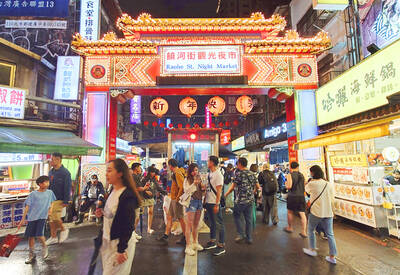
Sales in the retail, and food and beverage sectors last month continued to rise, increasing 0.7 percent and 13.6 percent respectively from a year earlier, setting record highs for the month of March, the Ministry of Economic Affairs said yesterday. Sales in the wholesale sector also grew last month by 4.6 annually, mainly due to the business opportunities for emerging applications related to artificial intelligence (AI) and high-performance computing technologies, the ministry said in a report. The ministry forecast that retail, and food and beverage sales this month would retain their growth momentum as the former would benefit from Tomb Sweeping Day
Thousands of parents in Singapore are furious after a Cordlife Group Ltd (康盛人生集團), a major operator of cord blood banks in Asia, irreparably damaged their children’s samples through improper handling, with some now pursuing legal action. The ongoing case, one of the worst to hit the largely untested industry, has renewed concerns over companies marketing themselves to anxious parents with mostly unproven assurances. This has implications across the region, given Cordlife’s operations in Hong Kong, Macau, Indonesia, the Philippines and India. The parents paid for years to have their infants’ cord blood stored, with the understanding that the stem cells they contained


 RSS
RSS