


Speculation that French pharmaceutical group Sanofi-Synthelabo is preparing a hostile bid for Aventis intensified Friday with a report that key Sanofi shareholder L'Oreal would hold a board meeting to consider an offer.
A merger or takeover involving Sanofi-Synthelabo and Aventis would create one of the biggest pharmaceutical groups in the world.
Officials at both groups have denied that merger contacts are under way, although a source close to the matter said Aventis had retained two US investment banks to help prepare a defense in the event a bid is made.
Sanofi, responding on Thursday to a German newspaper report that a merger between the two pharmaceutical groups was close to being concluded, insisted it was not negotiating with Aventis. But it also said it continued to consider any deal that could strengthen its business.
The French newspaper Le Figaro reported that the board of cosmetics group L'Oreal, which owns 19.5 percent of Sanofi, would meet Saturday to study a possible bid by Sanofi for Aventis, a French-German company.
Le Figaro, which did not provide sources for its report, affirmed that a big transaction between Sanofi and Aventis was in the wind.
While analysts and investors had taken the view that Sanofi and Aventis might agree to a friendly merger, the newspaper said an unwelcome bid by Sanofi now seemed more likely.
The New York Times, according to a note from brokers Raymond James, said Sanofi could launch a hostile bid for Aventis worth 47.24 billion euros (US$60 billion).
Another broker observed that such an offer would represent a premium of only 5 percent or 6 percent over Aventis's current stock price, given the weakness of the dollar.
In Frankfurt, the Frankfurter Allgemeine Zeitung quoted Aventis chairman Igor Landau as saying his company was not in merger talks with Sanofi, and in Paris he was quoted by the newspaper Le Monde as saying he did not believe that Sanofi would make a takeover bid.
"There's not the slightest contact between us," he told Le Monde in editions to appear today. "There have never been serious discussions on this matter."
He also dismissed the likelihood that a hostile bid was being considered.
"Unsollicited mergers are rare in pharmaceuticals," he said.
Nonetheless, Aventis has engaged two US investment banks, Goldman Sachs and Morgan Stanley, to help prepare its defense in the event of a takeover bid by Sanofi, a source close to matter told reporters.
Officials at Aventis were not immediately available for comment.
A shareholder agreement between L'Oreal and French oil group Total in Sanofi expires on Dec. 2. Total owns 24.4 percent of Sanofi but has indicated it would like to sell the holding because pharmaceuticals are not central to its business.
L'Oreal declined to comment on the report that its board would meet, and so did the Swiss group Nestle, which holds three of 14 seats on the board of L'Oreal. Nestle controls 26.3 percent of L'Oreal.
Sanofi shares were unchanged from Thursday at 53.20 euros in late-day trade Friday after falling sharply earlier in the day, while those of Aventis had gained 2.12 percent to 57.80 euros.
"It's always the predator who falls and the target who rises," noted one Paris trader.
Another broker commented: "Some people think that this is a good time for Sanofi to acquire Aventis by paying in shares since the capitalization of both groups is roughly at the same level."
"As no one is denying a scenario in which an offer would be made, while insisting that no negotiations are under way, investors are betting on a hostile bid," the broker said.
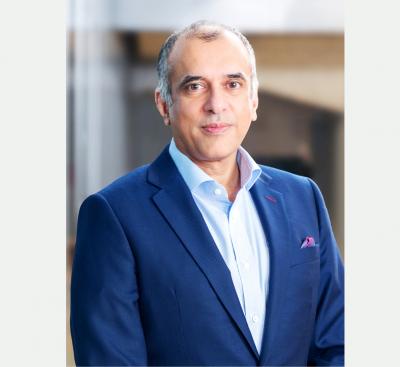
HSBC Holdings PLC is deepening its commitment to Taiwan as the economy emerges as one of the bank’s fastest-growing markets globally, driven by an artificial intelligence (AI) investment boom, expanding cross-border trade, and rising wealth creation. “The advantage that Taiwan has is a growth story linked to the semiconductor and broader AI industries, strong underlying corporate performance, and wealth creation,” said Surendra Rosha, HSBC’s co-chief executive for Asia and the Middle East, in an exclusive interview with the Taipei Times on June 2, during this year’s HSBC Taiwan Conference. That combination has helped HSBC cement its position as the most profitable international
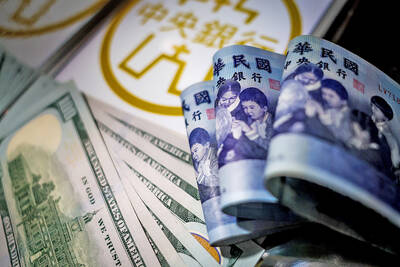
The New Taiwan dollar yesterday fell sharply against the US dollar to close at its lowest level since May 22 amid a massive outflow of funds from the country because of investors panicking over global equity markets. The NT dollar ended at NT$31.580 against the US dollar, slightly lower than its close of NT$31.568 on May 22, after moving between NT$31.5 and NT$31.648 on combined turnover of US$3.062 billion on the Taipei Foreign Exchange and the Cosmos Foreign Exchange. The NT dollar received a significant hit in the morning session, slumping as much as NT$0.173 at a time when other Asian currencies
Taiwan Semiconductor Manufacturing Co (TSMC, 台積電) is now ranked ninth among the world’s 100 most valuable companies after its market capitalization more than doubled over the past year, PricewaterhouseCoopers (PwC) Taiwan said in a report last month. TSMC’s market capitalization surged 101 percent year-on-year to US$1.427 trillion as of March 31, the accounting and consulting firm’s 2026 Global Top 100 Companies by Market Capitalization report said. The gain catapulted the world’s largest contract chipmaker from 12th place to ninth in the rankings, and it was the fastest-growing among the global top 10, it said. TSMC was the only Taiwanese company among the top
Taiwan Semiconductor Manufacturing Co (TSMC, 台積電) yesterday reported record revenue of NT$416.975 billion (US$13.17 billion) for last month, putting the world’s largest contract chipmaker on track to set a record for quarterly revenue. Last month’s figure surpassed March’s record NT$415.19 billion and represented increases of 1.5 percent from April and 30.1 percent from a year earlier. For the first five months of the year, TSMC generated NT$1.96 trillion in revenue, up 30 percent year-on-year, it said in a statement. TSMC has forecast second-quarter revenue of between US$39 billion and US$40.2 billion, representing sequential growth of about 10 percent and year-on-year growth of about


 RSS
RSS