


■ Family Mart's 1,500th store
Family Mart Co (全家), the nation's second largest convenience store chain, has opened 262 outlets this year and is planning to open hundreds more nationwide in the next three years, company chairman Pan Jin-tin (潘進丁) said yesterday at the opening of the chain's 1,500th store in Taiwan.
"We will open new stores and close the outlets performing badly according to how the market develops ... but basically we expect a net increase of more than 150 stores each year," Pan said.
The chain also plans to expand its business to Eastern Taiwan to compete head-to-head with the President Chain Store Corp's (統一超商) 7-Eleven stores, Pan said.
"We expect to establish our first store in Hualien or Taitung next spring and eventually open more than 20 stores there next year," he said.
The company has also teamed up with the state-run Taiwan Power Co (台電) and aims to open stores at TaiPower's more than 280 business centers nationwide, Pan said.
■ Civil pension fund outsources
The Public Service Pension Fund (PSPF), run by the Ministry of Civil Service, outsourced a total of US$500 million yesterday to five international asset management firms for overseas investment.
The outsourcing is in accordance with the government's outsourcing policy and is a move to improve asset management expertise, diversify investment risk and implement asset allocation, Examination Yuan President Yao Chia-wen (姚嘉文) said yesterday.
The PSPF's Management Board inked contracts with Barclays Global Investors Ltd, State Street Bank & Trust Co, J.P. Morgan Investment Management Inc, UBS Global Asset Management (Singapore) Ltd and Allianz Dresdner Asset Management of America L.P. in a joint signing ceremony held at the Examination Yuan. It is the first government fund to undertake overseas discretionary operations.
Under the terms of the contracts, each of the five international asset management companies will be allocated an outsourcing fund of US$100 million for a tenure of two years, while Citibank has been awarded the custodian contract for overseas investment, for a tenure of four years.
■ Visa cards reach peak in China
The circulation of international Visa credit cards in China peaked at 1.08 million cards in the third quarter, Visa International said yesterday.
With a 70 percent market share, the circulation of Visa international credit cards doubled from last September to reach a record high.
The total of transactions charged to Visa cards in China also peaked at US$381 million in the third quarter -- a 144 percent growth from one year earlier, the international credit-card issuer said yesterday at a media conference in Taipei.
"The potential of China's credit-card market has showed signs of picking up," it said.
■ BenQ plans to buy back shares
BenQ Corp (明基電通), the nation's largest mobile phone maker, said it plans to buy back and cancel 30 million shares with a market value of NT$1.2 billion (US$35.3 million) to improve profit per share.
The company plans to buy back the shares between today and Feb. 15, BenQ said in a statement. The price range is to be NT$40 to NT$45, BenQ said. The shares last traded at NT$41 at the close in Taipei.
■ NT dollar higher
The NT dollar yesterday traded higher against its US counterpart, rising NT$0.013 to close at NT$34.015 on the Taipei foreign exchange market.
Turnover was US$528 million.
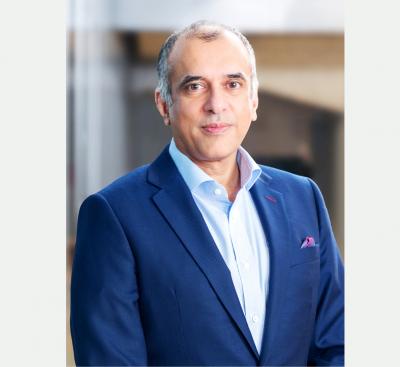
HSBC Holdings PLC is deepening its commitment to Taiwan as the economy emerges as one of the bank’s fastest-growing markets globally, driven by an artificial intelligence (AI) investment boom, expanding cross-border trade, and rising wealth creation. “The advantage that Taiwan has is a growth story linked to the semiconductor and broader AI industries, strong underlying corporate performance, and wealth creation,” said Surendra Rosha, HSBC’s co-chief executive for Asia and the Middle East, in an exclusive interview with the Taipei Times on June 2, during this year’s HSBC Taiwan Conference. That combination has helped HSBC cement its position as the most profitable international
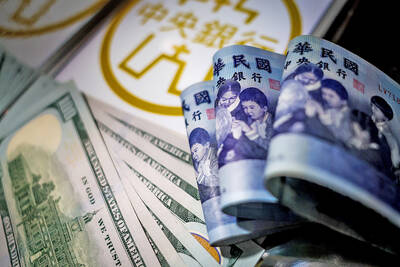
The New Taiwan dollar yesterday fell sharply against the US dollar to close at its lowest level since May 22 amid a massive outflow of funds from the country because of investors panicking over global equity markets. The NT dollar ended at NT$31.580 against the US dollar, slightly lower than its close of NT$31.568 on May 22, after moving between NT$31.5 and NT$31.648 on combined turnover of US$3.062 billion on the Taipei Foreign Exchange and the Cosmos Foreign Exchange. The NT dollar received a significant hit in the morning session, slumping as much as NT$0.173 at a time when other Asian currencies
Taiwan Semiconductor Manufacturing Co (TSMC, 台積電) is now ranked ninth among the world’s 100 most valuable companies after its market capitalization more than doubled over the past year, PricewaterhouseCoopers (PwC) Taiwan said in a report last month. TSMC’s market capitalization surged 101 percent year-on-year to US$1.427 trillion as of March 31, the accounting and consulting firm’s 2026 Global Top 100 Companies by Market Capitalization report said. The gain catapulted the world’s largest contract chipmaker from 12th place to ninth in the rankings, and it was the fastest-growing among the global top 10, it said. TSMC was the only Taiwanese company among the top
Taiwan Semiconductor Manufacturing Co (TSMC, 台積電) yesterday reported record revenue of NT$416.975 billion (US$13.17 billion) for last month, putting the world’s largest contract chipmaker on track to set a record for quarterly revenue. Last month’s figure surpassed March’s record NT$415.19 billion and represented increases of 1.5 percent from April and 30.1 percent from a year earlier. For the first five months of the year, TSMC generated NT$1.96 trillion in revenue, up 30 percent year-on-year, it said in a statement. TSMC has forecast second-quarter revenue of between US$39 billion and US$40.2 billion, representing sequential growth of about 10 percent and year-on-year growth of about


 RSS
RSS