


China on Tuesday announced an average cut of 3 percentage points in export tax rebates next year, aiming to ease mounting US pressure for a revaluation of the yuan.
But analysts said the new policy may negatively impact some Taiwanese businesses operating in China.
"Profit margins of many China-based Taiwanese businesses may be narrowed by an average 3 percent," Jason Fong (馮志良), deputy secretary general of the Chinese National Federation of Industries (工總), told the Taipei Times yesterday.
Currently, about one-third of Taiwanese businesses operating in China are located in unaffected tax-free bonded areas, Fong said.
Businesses located in China's economically developed areas such as Shanghai, Guangzhou and Shenzhen will be hit the hardest, since local governments in these areas usually adopt an iron-fisted approach to new policy execution, Fong added.
Yet Taiwanese businessmen can expect the policy to be applied more loosely by some inner Chinese local governments.
Governments in Chengdu city, Wuhan city and Jiangxi Province, for instance, may come up with other supporting measures or other preferable treatments that offset the impact of cuts in tax rebates in order to retain business, Fong explained.
Kao Charng (
But he also said that China-based exporters may then reduce other expenditures by importing tax-free raw material to take advantage of the tax-free treatment while making exports with higher production costs.
Kao, nevertheless, gave credit to the new policy.
He said Chinese governments' domestic fiscal problems, as well as international pressures on its currency, may be addressed and alleviated by the policy.
But Fong expressed concern about Beijing's lack of efficiency in rebating business taxes, which he said has contributed to a squeeze in China-based businesses' working capital.
Another analyst said the tax rebates reform will create no negative impact on the majority of Taiwan's high-tech and electronics industries with operations in China.
"Most Taiwanese high-tech and electronics industries will be unaffected by the new policy since they are still subject to the 17 percent tax rebate-rate category," said James Yeh (葉雲龍), a senior fund manager of HSBC Asset Management (Taiwan) Ltd's research department.
According to a statement by the Chinese State Council, export goods will be classified into five rate-categories with aircraft, automobiles and related components continuing to enjoy their 17 percent rebate-rates.
Products granted a new 13 percent rate include steel, chemicals, plastic and rubber, clothing, textiles, toys, shoes and leather products.
Yeh added that the new rebate policy is expected to help China restructure its industrial focus from a low-end and labor-intensive economy to a high-end, capital-intensive economy.
"Environmentally-unfriendly industries such as raw material and mineral industries will no longer enjoy high rebate rates and, therefore, be gradually phased out," Yeh said.
The Hongkong and Shanghai Banking Corp (HSBC) expressed its official views of the rebate policy, saying China is sending a message to the world that it's willing to make compromises to address concerns about its trade surplus while determining to maintain a stable Chinese yuan policy.
"Since a 3 percentage point reduction on value-added tax (VAT) rebates will force some Chinese exporters to increase prices to protect their margins, it can be seen as an effective 3 percent revaluation of the currency," the HSBC said in a written statement, adding that most Chinese exporters should succeed in passing on the extra charges to customers.
The policy will save China an annual fiscal cost by 50 billion yuan to 60 billion yuan while expecting the VAT tax cut to further lower China's export growth by 3 percent to 5 percent next year to an estimated 16 percent, HSBC said.
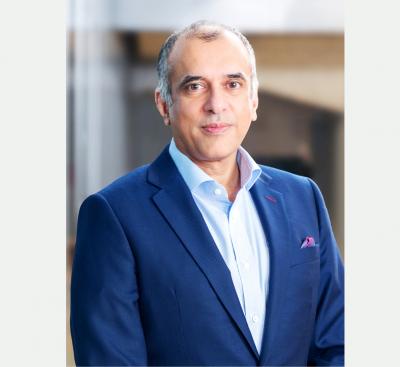
HSBC Holdings PLC is deepening its commitment to Taiwan as the economy emerges as one of the bank’s fastest-growing markets globally, driven by an artificial intelligence (AI) investment boom, expanding cross-border trade, and rising wealth creation. “The advantage that Taiwan has is a growth story linked to the semiconductor and broader AI industries, strong underlying corporate performance, and wealth creation,” said Surendra Rosha, HSBC’s co-chief executive for Asia and the Middle East, in an exclusive interview with the Taipei Times on June 2, during this year’s HSBC Taiwan Conference. That combination has helped HSBC cement its position as the most profitable international
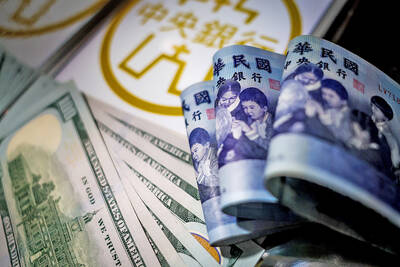
The New Taiwan dollar yesterday fell sharply against the US dollar to close at its lowest level since May 22 amid a massive outflow of funds from the country because of investors panicking over global equity markets. The NT dollar ended at NT$31.580 against the US dollar, slightly lower than its close of NT$31.568 on May 22, after moving between NT$31.5 and NT$31.648 on combined turnover of US$3.062 billion on the Taipei Foreign Exchange and the Cosmos Foreign Exchange. The NT dollar received a significant hit in the morning session, slumping as much as NT$0.173 at a time when other Asian currencies
Taiwan Semiconductor Manufacturing Co (TSMC, 台積電) is now ranked ninth among the world’s 100 most valuable companies after its market capitalization more than doubled over the past year, PricewaterhouseCoopers (PwC) Taiwan said in a report last month. TSMC’s market capitalization surged 101 percent year-on-year to US$1.427 trillion as of March 31, the accounting and consulting firm’s 2026 Global Top 100 Companies by Market Capitalization report said. The gain catapulted the world’s largest contract chipmaker from 12th place to ninth in the rankings, and it was the fastest-growing among the global top 10, it said. TSMC was the only Taiwanese company among the top
Taiwan Semiconductor Manufacturing Co (TSMC, 台積電) yesterday reported record revenue of NT$416.975 billion (US$13.17 billion) for last month, putting the world’s largest contract chipmaker on track to set a record for quarterly revenue. Last month’s figure surpassed March’s record NT$415.19 billion and represented increases of 1.5 percent from April and 30.1 percent from a year earlier. For the first five months of the year, TSMC generated NT$1.96 trillion in revenue, up 30 percent year-on-year, it said in a statement. TSMC has forecast second-quarter revenue of between US$39 billion and US$40.2 billion, representing sequential growth of about 10 percent and year-on-year growth of about


 RSS
RSS