


Tech stocks achieved their seventh straight monthly advance and blue chips their sixth Friday in an otherwise unremarkable pre-Labor Day session. Trading was extremely light.
After fluctuating in the early going, the market by the afternoon achieved moderate gains. The atmosphere was dull despite encouraging reports on consumer spending and the manufacturing sector.
The Dow Jones Industrial Average closed up 41.61, or 0.4 percent, at 9,415.82. For the week, the Dow gained 0.7 percent.
The NASDAQ composite index rose 10.27, or 0.6 percent, to 1,810.45. The Standard & Poor's 500 index advanced 5.17, or 0.5 percent, to 1,008.01. For the week, the NASDAQ climbed 2.6 percent and the S&P gained 1.5 percent.
While trading was slow throughout August as traders were away on summer vacations, the major indexes easily ended the month higher.
The Dow and S&P posted their sixth straight winning month, while the NASDAQ had its seventh consecutive monthly gain.
It was the fourth straight winning week for the Dow and the third for the NASDAQ, S&P and Russell 200 index.
Market observers were encouraged that Wall Street was able to advance again, this time in the doldrums of August.
"This is potentially good news ... because if we now see the top of the range begin to act as support, we increase the chance of breaking out to the top side as traders return to the market," said Chris Johnson, manager of quantitative analysis at Schaeffer's Investment Research in Cincinnati.
There was a lot of economic news Friday, most of it positive.
Federal Reserve Chairman Alan Greenspan sought to reassure the market that the Fed aimed to guard against even remote risk of deflation.
In a speech, Greenspan defended the Fed's recent worries about deflation, which caused some volatility on Wall Street. He said it was sometimes necessary for the Fed in its interest rate policy to take out an insurance policy "against the emergence of especially adverse outcomes."
Before the market opened, the US Commerce Department reported consumers boosted their spending 0.8 percent in July as the latest tax cut left people with extra cash.
The increase in spending last month was the largest since March and followed a sizable 0.6 percent advance in June.
Last month's spending figure matched economists' expecta-tions. Consumer spending accounts for two-thirds of the US economy.
Later, the Purchasing Management Association of Chicago said its index of area business activity rose to 58.9 in August on a seasonally adjusted basis from 55.9 in July. It was the fourth straight month that the business barometer signaled expansion. It is considered a harbinger of the Institute for Supply Management's index, to be released on Tuesday.
The Goodyear Tire & Rubber Co rose US$0.50 to US$7.12 after the company announced Thursday it will eliminate about 500 jobs at its North American tire operations as part of continuing cost-cutting measures.
Starbucks Corp advanced US$0.75 to US$28.39 after reporting a 9 percent increase in same-store sales in August.
The last time the Dow had six or more straight monthly gains was an eight-month run from December 1994 through July 1995.
The S&P last had a six-month rally from January through June 1996, and the last time the tech-dominated NASDAQ had a streak as long was the 10-month period that ran from December 1994 through September 1995.
Advancing issues outnumbered decliners more than 2 to 1 on the New York Stock Exchange. Trading volume was light at 944.85 million shares, below 1.16 billion on Thursday.
The Russell 2000 index, which tracks smaller company stocks, rose 1.62, or 0.3 percent, at 497.43. The Russell had a weekly gain of 2.5 percent.
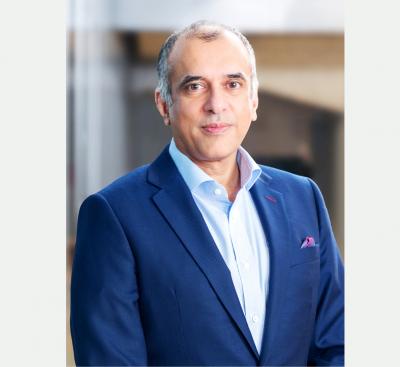
HSBC Holdings PLC is deepening its commitment to Taiwan as the economy emerges as one of the bank’s fastest-growing markets globally, driven by an artificial intelligence (AI) investment boom, expanding cross-border trade, and rising wealth creation. “The advantage that Taiwan has is a growth story linked to the semiconductor and broader AI industries, strong underlying corporate performance, and wealth creation,” said Surendra Rosha, HSBC’s co-chief executive for Asia and the Middle East, in an exclusive interview with the Taipei Times on June 2, during this year’s HSBC Taiwan Conference. That combination has helped HSBC cement its position as the most profitable international
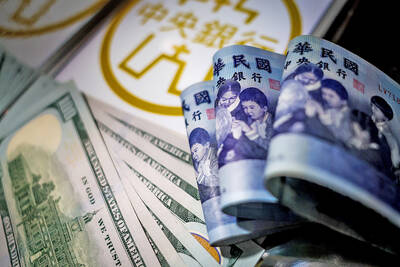
The New Taiwan dollar yesterday fell sharply against the US dollar to close at its lowest level since May 22 amid a massive outflow of funds from the country because of investors panicking over global equity markets. The NT dollar ended at NT$31.580 against the US dollar, slightly lower than its close of NT$31.568 on May 22, after moving between NT$31.5 and NT$31.648 on combined turnover of US$3.062 billion on the Taipei Foreign Exchange and the Cosmos Foreign Exchange. The NT dollar received a significant hit in the morning session, slumping as much as NT$0.173 at a time when other Asian currencies
Taiwan Semiconductor Manufacturing Co (TSMC, 台積電) is now ranked ninth among the world’s 100 most valuable companies after its market capitalization more than doubled over the past year, PricewaterhouseCoopers (PwC) Taiwan said in a report last month. TSMC’s market capitalization surged 101 percent year-on-year to US$1.427 trillion as of March 31, the accounting and consulting firm’s 2026 Global Top 100 Companies by Market Capitalization report said. The gain catapulted the world’s largest contract chipmaker from 12th place to ninth in the rankings, and it was the fastest-growing among the global top 10, it said. TSMC was the only Taiwanese company among the top
Taiwan Semiconductor Manufacturing Co (TSMC, 台積電) yesterday reported record revenue of NT$416.975 billion (US$13.17 billion) for last month, putting the world’s largest contract chipmaker on track to set a record for quarterly revenue. Last month’s figure surpassed March’s record NT$415.19 billion and represented increases of 1.5 percent from April and 30.1 percent from a year earlier. For the first five months of the year, TSMC generated NT$1.96 trillion in revenue, up 30 percent year-on-year, it said in a statement. TSMC has forecast second-quarter revenue of between US$39 billion and US$40.2 billion, representing sequential growth of about 10 percent and year-on-year growth of about


 RSS
RSS