


Japanese stocks fell, with benchmarks retreating from 10-month highs. Canon Inc led declines by exporters after a US jobless report tempered optimism consumer demand will help fuel a rebound in the world's largest economy.
"We are not expecting a strong recovery in the US," said Koichi Ogawa, who helps manage the equivalent of US$8.5 billion in Japanese equities as chief portfolio manager at Daiwa SB Investments Ltd. "The stock market has already discounted much of the improvement."
The Nikkei 225 Stock Average shed 0.8 percent to 9547.73 at the 3pm close in Tokyo, ending a three-day, 6 percent rally.
The Topix index lost 0.4 percent to 948.67. Computer-related stocks contributed to 38 percent of the index's slide today. The stocks had rallied 16 percent as a group in the past month.
Elsewhere in Asia, Australia's S&P/ASX 200 Index lost 0.5 percent, led by News Corp, which makes three-quarters of its sales in the US. The rise in the US unemployment rate to more than a nine-year high raised concern that consumer spending may not pick up soon.
South Korea's Kospi index added 0.9 percent, and completed its sixth weekly advance in seven. Hyundai Motor Co led gains by other carmakers after the government said it will revise its sales tax on cars earlier than planned.
Taiwan's TWSE Index had its biggest weekly gain in eight months. Computer-related shares such as AU Optronics Corp and Quanta Computer Inc rose as some investors bet demand for computer parts will improve as people replace obsolete computers.
Stock indexes in Thailand and India rose, while those in Hong Kong, Singapore and Malaysia swung between gains and losses.
China's benchmarks were little changed.
Japan
Japan's Topix gained had its seventh straight week of gains, rising 5.1 percent. The winning streak is the longest since the seven-week rally in July 1999. The Nikkei rose 4.9 percent, its biggest weekly gain since November.
Today, Canon slid 1.7 percent to ?5,880. The maker of Eos cameras gets 70 percent of its revenue from overseas. Toyota Motor Corp shed 0.6 percent to ?3,240. The world's third-largest automaker gets about 80 percent of its operating profit from North America.
The US unemployment rate jumped to 6.4 percent last month, the highest since April 1994, from 6.1 percent the previous month.
Declines by exporters were limited as a separate report showed US service industries, the largest part of the economy, expanded last month for a third straight month as new orders rose to the highest in more than 2 1/2 years.
"The jobless report was a dampener and it's probably toned down expectations of a quick US recovery," said Wee Ban Yew, who helps manage the equivalent of US$2.1 billion as a fund manager at OCBC Asset Management Ltd in Singapore.
Kyocera Corp, the world's largest maker of ceramic packaging used to protect finished microchips, fell 5.3 percent to ?7,230. The company, which gets more than half of its sales overseas, said it may have to record "substantial" inventory writedowns this fiscal year.
Nikkei futures for September delivery rose 0.4 percent to 9600 in Osaka and added 0.2 percent to 9585 in Singapore.
The S&P/ASX 200 slid 16.40 to 3028.40, dropping for a second week. The September futures contract declined 0.7 percent to 3024.
"We need to see growing employment and if we don't get that, it could slow the rate of growth" in the US economy, said Paul Xiradis, who helps manage the equivalent of US$682 million at Ausbil Dexia Ltd in Sydney.
News Corp, which relies on US economic growth to drive advertising sales at its Fox television network and the New York Post newspaper, shed 1.7 percent to A$11.06.
Rio Tinto Group, the world's third-largest miner, shed 0.6 percent to A$28.40. The company, which gets almost 40 percent of its sales in the US, also had a forecast for this year's net profit trimmed 6 percent by J.P. Morgan Chase & Co.
South Korea
The Kospi climbed 6.42 to 693.25, the highest since Dec. 20.
Kospi 200 futures for September rose 0.7 percent to 89.20, while the underlying index gained 1 percent to 88.59.
Hyundai Motor, South Korea's largest automaker, rallied 4.5 percent to 34,700 won. Kia Motors Corp, the second largest, climbed 4.6 percent to 9,600 won. Ssangyong Motor Co, the fourth largest, surged 12 percent to 7,090 won.
South Korea will revise its sales tax on cars earlier than its plan for next year to boost demand for new vehicles after domestic sales dropped by a 10th in the first half of this year.
"The revision will attract more buyers at home and help raise automakers' total revenue as they are already doing well abroad," said Kang Pyung To, who manages the equivalent of US$211 million at Kyobo Investment Trust Management Co in Seoul.
Kang's holding in Hyundai Motor is more than the stock's 2.7 percent weighting in the Kospi.
Taiwan
Taiwan's TWSE index added 1.1 percent to 5151.85. The benchmark gained 5.6 percent for the week, the biggest advance since the five days ended Nov. 8. July futures on the index rose 1.4 percent to 5191.
"An increasing number of retail investors are now convinced that this is a bull market and have started entering the race," said Simon Chao, whose US$17 million Infrastructure Fund at President Investment Trust Corp has gained 20 percent since the start of the second quarter compared with the benchmark index's 18 percent gain. He expects the index to reach 6,000 this month.
AU Optronics, Taiwan's largest maker of flat-display panels for computers, gained 6.6 percent to NT$27.30. Quanta, Taiwan's largest notebook computer maker, rose 6.5 percent to NT$82.
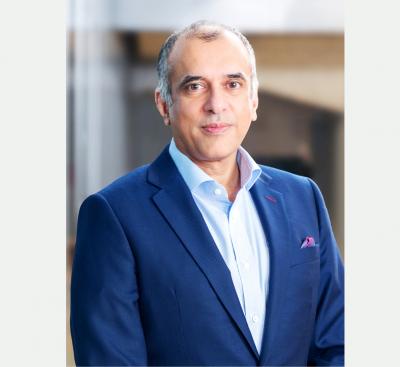
HSBC Holdings PLC is deepening its commitment to Taiwan as the economy emerges as one of the bank’s fastest-growing markets globally, driven by an artificial intelligence (AI) investment boom, expanding cross-border trade, and rising wealth creation. “The advantage that Taiwan has is a growth story linked to the semiconductor and broader AI industries, strong underlying corporate performance, and wealth creation,” said Surendra Rosha, HSBC’s co-chief executive for Asia and the Middle East, in an exclusive interview with the Taipei Times on June 2, during this year’s HSBC Taiwan Conference. That combination has helped HSBC cement its position as the most profitable international
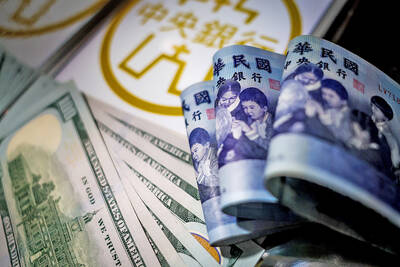
The New Taiwan dollar yesterday fell sharply against the US dollar to close at its lowest level since May 22 amid a massive outflow of funds from the country because of investors panicking over global equity markets. The NT dollar ended at NT$31.580 against the US dollar, slightly lower than its close of NT$31.568 on May 22, after moving between NT$31.5 and NT$31.648 on combined turnover of US$3.062 billion on the Taipei Foreign Exchange and the Cosmos Foreign Exchange. The NT dollar received a significant hit in the morning session, slumping as much as NT$0.173 at a time when other Asian currencies
Taiwan Semiconductor Manufacturing Co (TSMC, 台積電) is now ranked ninth among the world’s 100 most valuable companies after its market capitalization more than doubled over the past year, PricewaterhouseCoopers (PwC) Taiwan said in a report last month. TSMC’s market capitalization surged 101 percent year-on-year to US$1.427 trillion as of March 31, the accounting and consulting firm’s 2026 Global Top 100 Companies by Market Capitalization report said. The gain catapulted the world’s largest contract chipmaker from 12th place to ninth in the rankings, and it was the fastest-growing among the global top 10, it said. TSMC was the only Taiwanese company among the top
Taiwan Semiconductor Manufacturing Co (TSMC, 台積電) yesterday reported record revenue of NT$416.975 billion (US$13.17 billion) for last month, putting the world’s largest contract chipmaker on track to set a record for quarterly revenue. Last month’s figure surpassed March’s record NT$415.19 billion and represented increases of 1.5 percent from April and 30.1 percent from a year earlier. For the first five months of the year, TSMC generated NT$1.96 trillion in revenue, up 30 percent year-on-year, it said in a statement. TSMC has forecast second-quarter revenue of between US$39 billion and US$40.2 billion, representing sequential growth of about 10 percent and year-on-year growth of about


 RSS
RSS