


While SARS infections have ebbed across east Asia, the economic consequences will continue to be felt for months to come, according to business executives and economists.
Tourism is proving very slow to recover across the region. Retail sales have only begun to rebound, leaving stores reluctant to order more from factories because they are still stuck with huge inventories of goods that went unsold at the height of fears over SARS.
The effects of the continued sluggishness are being felt well beyond Hong Kong. Electronics manufacturers complain that the development of new consumer products has been badly delayed because companies barred engineers from traveling to the US, Taiwan and China after the SARS outbreak.
That means stores around the world will have fewer innovative computer printers, scanners and wireless network devices on the shelves next Christmas, said Frank Huang (
"There will be, because of SARS, a reduced number of products on the market, that is sure," during the crucial Christmas selling season, said Huang, who is also the chairman of Power Chip, one of Taiwan's largest makers of computer chips. The development of new computers has been less affected than the development of computer peripherals like printers, he added.
Yet some encouraging signs remain for Asian economies. Exports are still strong, especially from China and especially to Europe, as the rising euro has improved the competitiveness of Asian goods. Most Asian currencies are formally or informally pegged to the sinking US dollar, making Asian products less expensive in Asian markets.
And the number of new cases of SARS is down sharply from the levels of two months ago. China and Taiwan each reported seven new cases of SARS on Friday, while Hong Kong had four new cases.
The strong divergence between slow domestic demand and brisk exports has made it especially difficult for economists to gauge economic output. Sometimes misleading statistics from image-conscious governments have made matters worse.
China's government-controlled news media, for example, recently said that economic output in China was 8.9 percent higher in April than a year earlier. But investment bank economists say that this figure just shows that the Chinese economy expanded very fast in the third and fourth quarters of last year and the first quarter of this year.
Comparing economic output in the second quarter of this year to output in the first quarter, estimates range from Morgan Stanley's prediction of zero growth to J.P. Morgan's assessment of minus 2 percent. Most economists expect growth in China to resume in the third quarter, but not until the fourth quarter is the Chinese economy expected to resume the 7 to 10 percent growth that it enjoyed until this spring.
On Thursday, Hong Kong's government cut in half its estimate of economic growth this year, to 1.5 percent, with most of that growth having occurred in January, February and early March, before the SARS outbreak started in mid-March and crippled demand.
"The economy was actually doing very well until we hit SARS," said Antony Leung, Hong Kong's financial secretary. Even before SARS, however, Hong Kong was suffering from severe deflation, and Leung predicted on Friday that because of SARS, the general price level here will drop 2.5 percent this year, instead of the 1.5 percent previously forecast by the government.
Economies have also suffered in other countries with large SARS outbreaks, according to assessments issued this week. Taiwan's Council of Economic Planning and Development reported steep declines in many industries this week, while Morgan Stanley warned that Singapore appeared to be headed into another recession.
Andy Xie, a Morgan Stanley economist, said that companies ranging from sausage makers to paper makers had been complaining to him that stores in China had stopped ordering new supplies because of bulging inventories of unsold goods.
At Lee Fung China Ware, a large store in downtown Hong Kong selling porcelain vases and bone china plates in many hues, sales are deeply depressed, said Lily Wong, a sales representative. Foreign tourists used to account for a third of sales, yet not one has come to the store since March.
Sales to local residents leaped on May 23 in the euphoria that erupted when the World Health Organization lifted its advisory against travel here, Wong said. But these transactions plunged again a day later and remain 40 percent below their pre-SARS levels; the store has told its supplier, a factory in southern China, to halt shipments.
Multinationals' long-term enthusiasm for investing in China, from building factories to setting up new sales networks, appears to have survived the SARS outbreak this spring.
But company officials warn of delays in negotiating deals and performing due diligence inspections in China, however, which could easily reduce the pace of investment flows through the rest of the year.
A few businesses are still entering the market. Heller Ehrman White & McAuliffe LLP, a San Francisco-based law firm with 660 lawyers, has just hired 19 lawyers from a firm here in order to expand substantially its Hong Kong practice.
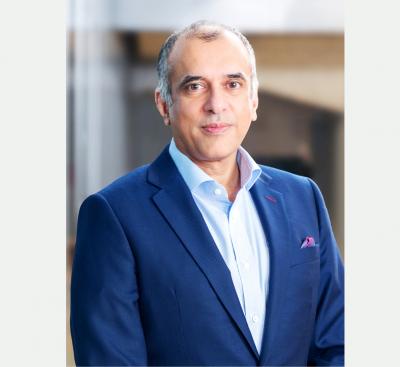
HSBC Holdings PLC is deepening its commitment to Taiwan as the economy emerges as one of the bank’s fastest-growing markets globally, driven by an artificial intelligence (AI) investment boom, expanding cross-border trade, and rising wealth creation. “The advantage that Taiwan has is a growth story linked to the semiconductor and broader AI industries, strong underlying corporate performance, and wealth creation,” said Surendra Rosha, HSBC’s co-chief executive for Asia and the Middle East, in an exclusive interview with the Taipei Times on June 2, during this year’s HSBC Taiwan Conference. That combination has helped HSBC cement its position as the most profitable international
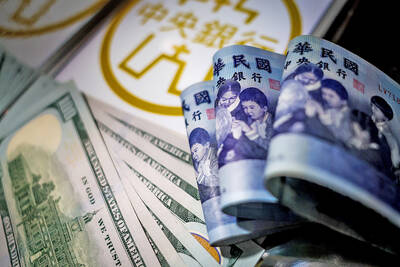
The New Taiwan dollar yesterday fell sharply against the US dollar to close at its lowest level since May 22 amid a massive outflow of funds from the country because of investors panicking over global equity markets. The NT dollar ended at NT$31.580 against the US dollar, slightly lower than its close of NT$31.568 on May 22, after moving between NT$31.5 and NT$31.648 on combined turnover of US$3.062 billion on the Taipei Foreign Exchange and the Cosmos Foreign Exchange. The NT dollar received a significant hit in the morning session, slumping as much as NT$0.173 at a time when other Asian currencies
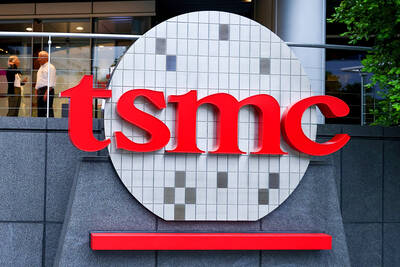
Taiwan Semiconductor Manufacturing Co (TSMC, 台積電) is now ranked ninth among the world’s 100 most valuable companies after its market capitalization more than doubled over the past year, PricewaterhouseCoopers (PwC) Taiwan said in a report last month. TSMC’s market capitalization surged 101 percent year-on-year to US$1.427 trillion as of March 31, the accounting and consulting firm’s 2026 Global Top 100 Companies by Market Capitalization report said. The gain catapulted the world’s largest contract chipmaker from 12th place to ninth in the rankings, and it was the fastest-growing among the global top 10, it said. TSMC was the only Taiwanese company among the top
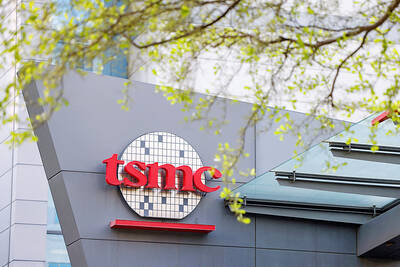
Taiwan Semiconductor Manufacturing Co (TSMC, 台積電) yesterday reported record revenue of NT$416.975 billion (US$13.17 billion) for last month, putting the world’s largest contract chipmaker on track to set a record for quarterly revenue. Last month’s figure surpassed March’s record NT$415.19 billion and represented increases of 1.5 percent from April and 30.1 percent from a year earlier. For the first five months of the year, TSMC generated NT$1.96 trillion in revenue, up 30 percent year-on-year, it said in a statement. TSMC has forecast second-quarter revenue of between US$39 billion and US$40.2 billion, representing sequential growth of about 10 percent and year-on-year growth of about


 RSS
RSS