


The UN resolution to remove trade sanctions against Iraq will officially end 13 years of international isolation for this country. But business executives and other experts said on Friday that it would bring little immediate relief to Iraq's battered economy.
The new resolution will allow Iraq to export oil more freely, but Iraqi oil production is still only a fraction of its prewar level as a result of damage to refineries and pipelines. Production is so low that American military officials need to truck in more than a million liters of gasoline a day to meet the country's domestic needs.
Prohibitions on most Iraqi imports had for all practical purposes disappeared as soon as American and British forces defeated the government of Saddam Hussein. For weeks now, American border guards have turned a blind eye to traders who are importing everything from cars and candy to satellite dishes from Jordan, Turkey, Iran and Persian Gulf countries like Abu Dhabi.

PHOTO: REUTERS
Contrary to frequent complaints by American officials here about the obstacles created by the sanctions programs, business executives say the biggest restraint on trade and investment has been fear about the current state of lawlessness and instability.
"Lifting the sanctions was an essential ingredient, but the other is establishing an environment of security and stability," said Joseph Braude, an Iraqi-American business consultant and author of The New Iraq, a book on Iraq's prospects for postwar renewal.
Iraq also faces wrenching economic adjustments, which will not be made easier by the lifting of sanctions. On Friday, the American civilian administrator in the country, L. Paul Bremer , announced that the Iraqi armed forces and the information ministry would be dissolved. That decision will add hundreds of thousands of people to the country's unemployment rolls at a time when a huge but undefined percentage of workers are already jobless.
Foreign investors remain reluctant to commit money to Iraq because of the security problems here. But Iraqi leaders are far from clear about how much they want to encourage such investment. Some of the country's leading business families are urging foreign investors to team up with Iraqi partners and let the Iraqi partners retain more than half the shares in any ventures.
If that view becomes policy in the new Iraqi government, many foreign companies are likely to stay on the sidelines.
In a brief statement on Friday, Bremer said that ending the sanctions had created a "new day" for Iraqis and would allow them to "take one giant step forward in its recovery and its future prosperity."
But increased oil production and exports, the main path to money for rebuilding the country, is still some time away. As of a week ago, Iraqi oil fields were producing only 300,000 barrels per day (bpd). By comparison, Iraq produced about 2 million bpd before the war and about 3.5 million bpd at its peak level.
Thamir Ghadhban, the interim chief executive of the Iraqi Oil Ministry, predicted two weeks ago that the production could reach one million bpd by next month and more than 2 million bpd by the end of the year after sanctions were lifted.
In addition, Iraq has built up inventories of roughly 7 million barrels stored at the Turkish port of Ceyhan, which could provide the government with a quick, one-time source of cash.
Still, one measure of the modest expectations surrounding Iraqi oil are prices on the world oil markets. Global prices dropped sharply when traders realized that American forces would win a fairly quick victory and that the oil fields were not going to be destroyed by Saddam.
Since then, prices have climbed back to relatively high levels, about US$26.50 a barrel, as traders scaled back their expectations of big output here and scaled up their expectations of global demand.
The bigger question is whether foreign investment and normal domestic business activity accelerate. In Baghdad, most stores have reopened, but many if not most of those stores close well before 5pm for fear of being robbed by the increasingly brazen thieves who now roam the city.
"Initially, investment will come from highly entrepreneurial companies," said Frederick Barton, an analyst at the Center for Strategic and International Studies in Washington. "The bigger players are much talked about, but their projects are more complicated."
Barton said business insurers are still reluctant to insure investments in Iraq. But he added that merchants and traders have already jumped to bring in imported goods from nearby countries and that Turkish trucking executives are expecting traffic into and out of Iraq to be twice as much through next month as it was for all of last year.
"From the beginning, I don't think people were counting on oil money to get the country moving again," said Hashim Hamandi, a vice president at JP Morgan Chase & Co and a founder of the Iraqi Economic Institute, a nonprofit association of Iraqi economists and business executives in New York.
That said, Hamandi predicted that foreign investment would accelerate dramatically in the coming months as people become more confident about security here.
For the immediate future, Hamandi and other experts believe that most of the private investment here will come from Iraq's roughly 4 million expatriates in the US, Europe and neighboring countries in the Persian Gulf.
Entrepreneurs throughout the Persian Gulf region are beginning to salivate over the money to be made in Iraqi reconstruction and in new opportunities. But entrepreneurs in Iraq are bracing for tough times.
Companies that often knew no competition from imports, including many in the food industry, are already finding that they cannot compete against a rising flood of imports from Iran, Jordan and Abu Dhabi.
If the experience of companies in post-communist countries provides any guide, many, if not most, of Iraq's manufacturing companies will be lucky to survive as anything more than a shadow of their former selves, as they scramble to replace outdated technology.

Among the rows of vibrators, rubber torsos and leather harnesses at a Chinese sex toys exhibition in Shanghai this weekend, the beginnings of an artificial intelligence (AI)-driven shift in the industry quietly pulsed. China manufactures about 70 percent of the world’s sex toys, most of it the “hardware” on display at the fair — whether that be technicolor tentacled dildos or hyper-realistic personalized silicone dolls. Yet smart toys have been rising in popularity for some time. Many major European and US brands already offer tech-enhanced products that can enable long-distance love, monitor well-being and even bring people one step closer to

Malaysia’s leader yesterday announced plans to build a massive semiconductor design park, aiming to boost the Southeast Asian nation’s role in the global chip industry. A prominent player in the semiconductor industry for decades, Malaysia accounts for an estimated 13 percent of global back-end manufacturing, according to German tech giant Bosch. Now it wants to go beyond production and emerge as a chip design powerhouse too, Malaysian Prime Minister Anwar Ibrahim said. “I am pleased to announce the largest IC (integrated circuit) Design Park in Southeast Asia, that will house world-class anchor tenants and collaborate with global companies such as Arm [Holdings PLC],”
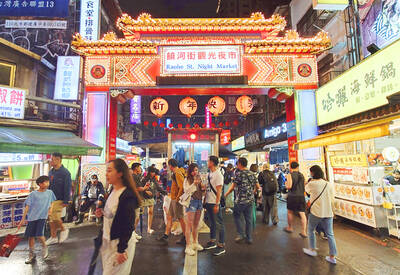
Sales in the retail, and food and beverage sectors last month continued to rise, increasing 0.7 percent and 13.6 percent respectively from a year earlier, setting record highs for the month of March, the Ministry of Economic Affairs said yesterday. Sales in the wholesale sector also grew last month by 4.6 annually, mainly due to the business opportunities for emerging applications related to artificial intelligence (AI) and high-performance computing technologies, the ministry said in a report. The ministry forecast that retail, and food and beverage sales this month would retain their growth momentum as the former would benefit from Tomb Sweeping Day
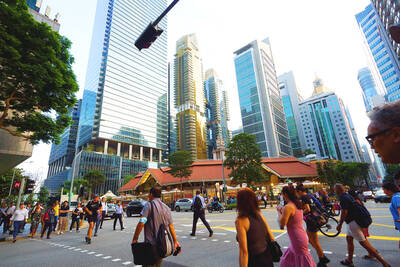
Thousands of parents in Singapore are furious after a Cordlife Group Ltd (康盛人生集團), a major operator of cord blood banks in Asia, irreparably damaged their children’s samples through improper handling, with some now pursuing legal action. The ongoing case, one of the worst to hit the largely untested industry, has renewed concerns over companies marketing themselves to anxious parents with mostly unproven assurances. This has implications across the region, given Cordlife’s operations in Hong Kong, Macau, Indonesia, the Philippines and India. The parents paid for years to have their infants’ cord blood stored, with the understanding that the stem cells they contained


 RSS
RSS