


As he waited for an interview at a job center in this gritty corner of Japan's industrial heartland a few miles north of Osaka, Seiichi Okamoto looked as if he bore the weight of the world on his shoulders.
It was not hard to see why: his six months of government benefits are running out, and every job opening he finds pays less than half of the US$4,200 a month he earned fixing garage doors. Two of his three children now work, but he still has one child in school, a mortgage and car payments.
"It's my first time out of work, and losing the income is tough," said Okamoto, 49. "I've looked at lots of jobs, but it's tough when you are competing against people in their 20s and 30s."
Okamoto's plight, one heard often in Japan these days, is a siren's wail for the prime minister, Junichiro Koizumi, and the political elite cloistered in Tokyo.
As the government fumbles with formulas to jump-start the sagging economy, ordinary Japanese are inching closer to exasperation. This discontent, which simmers ever closer to the surface, threatens to bring down Koizumi and further erode support for the governing party.
"Most Japanese are of the feeling that we are all stuck together in this," said R. Taggart Murphy, a professor of political economy at Tsukuba University and co-author of Japan's policy trap.
"With Koizumi there was a hope," Taggart said. "But now that has faded."
The soaring dissatisfaction with Koizumi's policies is startling, given the support he once enjoyed. Like President Reagan and his "Morning in America" campaign, Koizumi staked his job on halting his country's malaise when he came to power almost two years ago.
He was hailed as Japan's great hope, someone willing to stare down the powerful and deeply entrenched constituencies. In response, his public approval ratings soared into the range of 80 percent and higher, even as he called on middle-class people to endure more pain, albeit briefly.
Recently those ratings have slumped to about 45 percent. What is worse, the prime minister's ratings among older people, who have long supported the governing Liberal Democratic Party, have noticeably weakened, suggesting further declines ahead.
Koizumi's dwindling public support suggests that voters are concluding that the prime minister's no-pain, no-gain politics means that they get squeezed while the nation's big, heavily indebted, inefficient and loss-making businesses limp along without being forced to restructure.
To make matters worse, the unemployment rate sits at a record high, wages are sliding and consumer confidence is slipping. Japan's economy grew an anemic 0.5 percent last year, and even that was a "jobless recovery" similar to the one America experienced in the early 1990s.
Citizens worry about their pensions and health care benefits, and they express skepticism about ending deflation.
Koizumi's mishandling of the economy has alienated many in the middle class. The prime minister is seen not only as unfairly distributing the economic pain, but also backtracking on his reform campaign through sometimes callous and misguided decisions. While being grilled in Parliament in February, he said that "it was no big deal" that he had broken his longtime pledge to cap deficit spending.
Later in February, after months of calling for a "bold deflation fighter," he tapped Toshihiko Fukui to become the next governor of the Bank of Japan, an establishment candidate who many consider anything but bold.
Whether Koizumi succumbed to pressure from Fukui's supporters or never meant to choose an aggressive central banker is unclear, but the result is the same: He has invited scorn for saying one thing and doing another.
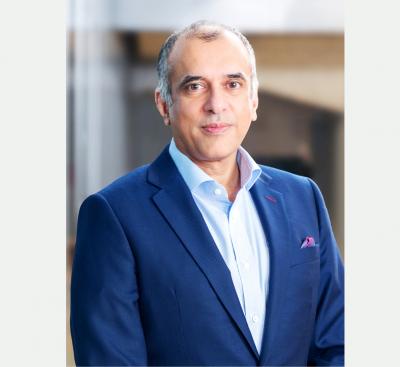
HSBC Holdings PLC is deepening its commitment to Taiwan as the economy emerges as one of the bank’s fastest-growing markets globally, driven by an artificial intelligence (AI) investment boom, expanding cross-border trade, and rising wealth creation. “The advantage that Taiwan has is a growth story linked to the semiconductor and broader AI industries, strong underlying corporate performance, and wealth creation,” said Surendra Rosha, HSBC’s co-chief executive for Asia and the Middle East, in an exclusive interview with the Taipei Times on June 2, during this year’s HSBC Taiwan Conference. That combination has helped HSBC cement its position as the most profitable international
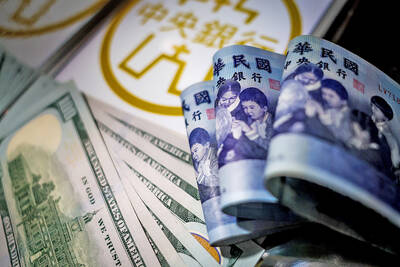
The New Taiwan dollar yesterday fell sharply against the US dollar to close at its lowest level since May 22 amid a massive outflow of funds from the country because of investors panicking over global equity markets. The NT dollar ended at NT$31.580 against the US dollar, slightly lower than its close of NT$31.568 on May 22, after moving between NT$31.5 and NT$31.648 on combined turnover of US$3.062 billion on the Taipei Foreign Exchange and the Cosmos Foreign Exchange. The NT dollar received a significant hit in the morning session, slumping as much as NT$0.173 at a time when other Asian currencies
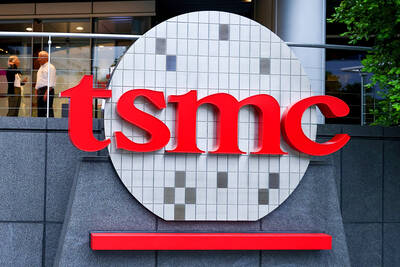
Taiwan Semiconductor Manufacturing Co (TSMC, 台積電) is now ranked ninth among the world’s 100 most valuable companies after its market capitalization more than doubled over the past year, PricewaterhouseCoopers (PwC) Taiwan said in a report last month. TSMC’s market capitalization surged 101 percent year-on-year to US$1.427 trillion as of March 31, the accounting and consulting firm’s 2026 Global Top 100 Companies by Market Capitalization report said. The gain catapulted the world’s largest contract chipmaker from 12th place to ninth in the rankings, and it was the fastest-growing among the global top 10, it said. TSMC was the only Taiwanese company among the top
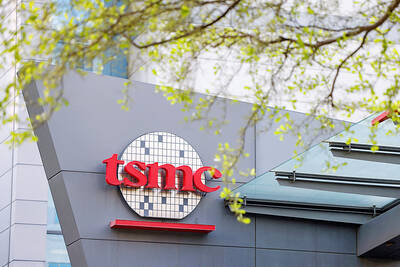
Taiwan Semiconductor Manufacturing Co (TSMC, 台積電) yesterday reported record revenue of NT$416.975 billion (US$13.17 billion) for last month, putting the world’s largest contract chipmaker on track to set a record for quarterly revenue. Last month’s figure surpassed March’s record NT$415.19 billion and represented increases of 1.5 percent from April and 30.1 percent from a year earlier. For the first five months of the year, TSMC generated NT$1.96 trillion in revenue, up 30 percent year-on-year, it said in a statement. TSMC has forecast second-quarter revenue of between US$39 billion and US$40.2 billion, representing sequential growth of about 10 percent and year-on-year growth of about


 RSS
RSS