


A local consumer advocacy group yesterday warned the public that convenience-store food warmers were unsanitary, serving as breeding grounds for bacteria.
"These hot, wet food containers can easily become a breeding ground for microorganisms," said Shyu Yuan-tay (徐源泰), a member of the Consumers' Foundation (消基會) and a horticulture professor at National Taiwan University.
Food warmers should keep items warmer than 600C in order to kill unwanted bacteria, he added.
Even scarier, the lack of covers on many stores hot-snack containers makes them perfect places for migrating viruses to rest.
"Imagine a customer sneezing in the store and then the air-borne virus lands in the food warmer," he said. Shyu was responding to questions after the foundation unveiled a report highlighting poor quality control in convenience stores.
Improperly heated hot dogs is also a problem.
"More than 75 percent of the convenience stores in Taipei County keep their hot dogs at temperatures below 600C," said Tsai Chai-ban (
The open-air hot dog warmers also pose a health risk, Tsai said. In October, the foundation tested 123 convenience stores in the Taipei County, conducting quality control checks on hot snacks as well as cold.
Chilled foods like noodles, sushi, sandwiches, yogurt and milk must all be refrigerated below 70C.
However, 29 retailers or 23.6 percent of the stores checked didn't meet this requirement.
Niko Mart Co (
In addition, more than two-thirds of the snacks in food warmers at President Chain Store Corp's 7-Eleven, Hi-Life International Co (萊爾富), Family Mart Co (全家) and OK Mart Co failed to meet the anti-bacterial standard.
Tsai stressed that with increasing numbers of people turning to convenience stores for quick meals, the food sanitation issue is more important than ever.
According to 7-Eleven, currently sales of hot snacks and fresh food account for 15 percent of the chain's total sales, and that figure is estimated to grow two or three percent annually over the next few years.
The foundation's report aims to raise public awareness as well as force retailers to improve food quality control, he added.
The effort is paying off.
"We've asked all of our outlets to recheck food container temperatures," said Chang Cheng (
SJ Express has also vowed to make some improvements.
"The company will send supervisors to stores to demonstrate how to preserve food correctly and improve our quality control next week," said Tai Chun-ying (戴君穎), an executive at SJ Express.
The company has ties with 250 convenience stores in Taiwan, all of them are franchised rather than directly operated. Franchising makes the problem difficult to remedy.
"This is a headache because our headquarters aren't involved in individual store operations," he added.
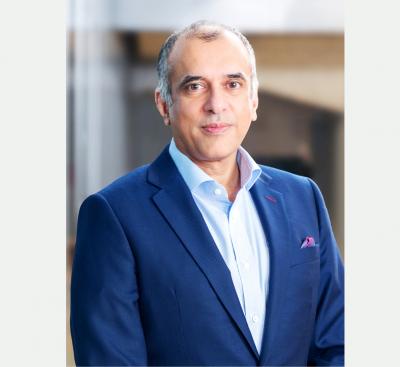
HSBC Holdings PLC is deepening its commitment to Taiwan as the economy emerges as one of the bank’s fastest-growing markets globally, driven by an artificial intelligence (AI) investment boom, expanding cross-border trade, and rising wealth creation. “The advantage that Taiwan has is a growth story linked to the semiconductor and broader AI industries, strong underlying corporate performance, and wealth creation,” said Surendra Rosha, HSBC’s co-chief executive for Asia and the Middle East, in an exclusive interview with the Taipei Times on June 2, during this year’s HSBC Taiwan Conference. That combination has helped HSBC cement its position as the most profitable international
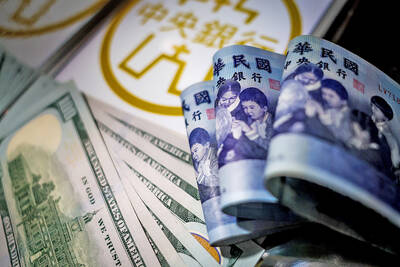
The New Taiwan dollar yesterday fell sharply against the US dollar to close at its lowest level since May 22 amid a massive outflow of funds from the country because of investors panicking over global equity markets. The NT dollar ended at NT$31.580 against the US dollar, slightly lower than its close of NT$31.568 on May 22, after moving between NT$31.5 and NT$31.648 on combined turnover of US$3.062 billion on the Taipei Foreign Exchange and the Cosmos Foreign Exchange. The NT dollar received a significant hit in the morning session, slumping as much as NT$0.173 at a time when other Asian currencies
Taiwan Semiconductor Manufacturing Co (TSMC, 台積電) is now ranked ninth among the world’s 100 most valuable companies after its market capitalization more than doubled over the past year, PricewaterhouseCoopers (PwC) Taiwan said in a report last month. TSMC’s market capitalization surged 101 percent year-on-year to US$1.427 trillion as of March 31, the accounting and consulting firm’s 2026 Global Top 100 Companies by Market Capitalization report said. The gain catapulted the world’s largest contract chipmaker from 12th place to ninth in the rankings, and it was the fastest-growing among the global top 10, it said. TSMC was the only Taiwanese company among the top
Taiwan Semiconductor Manufacturing Co (TSMC, 台積電) yesterday reported record revenue of NT$416.975 billion (US$13.17 billion) for last month, putting the world’s largest contract chipmaker on track to set a record for quarterly revenue. Last month’s figure surpassed March’s record NT$415.19 billion and represented increases of 1.5 percent from April and 30.1 percent from a year earlier. For the first five months of the year, TSMC generated NT$1.96 trillion in revenue, up 30 percent year-on-year, it said in a statement. TSMC has forecast second-quarter revenue of between US$39 billion and US$40.2 billion, representing sequential growth of about 10 percent and year-on-year growth of about


 RSS
RSS