


Two international buyers are looking to buy premium office buildings in Taipei next year, valued at NT$5 billion to NT$6 billion each, an executive at CB Richard Ellis Taiwan Ltd (
"Two of our clients have expressed a firm interest in buying Grade A office buildings in Taipei," said Andrew Liu (
Due to confidentiality agreements signed with its clients, CB Richard Ellis was unable to disclose the identities of the prospective buyers, but he did provide some information.
"One of them is attempting to buy an office building as its regional headquarters and the deal is expected to be finalized during the first half of 2003," he said.
Prime targets include the IBM Building located on Keelung Road, the Far Eastern Building (
"If the deals can be cut as expected, I don't think anyone can discount their importance," especially at a time when the office market is still haunted by oversupply, Liu said.
The surplus of office space in Taipei has continued to rise further during the third quarter, with average vacancy ratio edging up to 9.17 percent in Taipei, a record high for the past six years, according to DTZ Debenham Tie Leung (
Danny Shao (
"Last quarter, average rents dropped about 2.3 percent to NT$2,100 per ping from the previous quarter," he said.
While the domestic economy began to show signs of recovering in the second quarter, the rebound has not been as strong as earlier anticipated and potential investors are still conservative toward the Grade A office market, said Jacky Tsai (
The city's office vacancy rate is likely to continue to rise, albeit at a slower pace.
"Overall the average ratio was at around 11 percent in the third quarter and is expected to edge up to 12 percent in the fourth quarter," Tsai said. "Inquiries by potential buyers are always out there but any large-scale business deal -- be it buying or leasing -- is unlikely to happen over the next three years."
Office rental yields still remain low compared to markets elsewhere in the region, he said.
According to Colliers Jardine, the average yield for this year would stay at around 6 percent in Taipei, compared with 14 percent to 17 percent for cities such as Beijing and Shanghai.
But another international real-estate firm, Jones Lang LaSalle, said they remain confident that the domestic office market will pick up, despite the surplus in vacant office space.
"There are always changes in the market, good or bad," said Calvin Wang (王治平), managing director of Jones Lang LaSalle Taiwan (仲量聯行). "Direct-links between Taiwan and China, if followed through, would have some positive impact on the office market."
Though the office vacancy rate is high, there's a lack of Grade A office space in Taipei, Wang said.
Jones Lang LaSalle, the official agent for the yet-to-be-completed Taipei 101 office tower in Hsinyi District, also believes buying activity may start to pick up after banks begin to dispose of their bad loan-related collateral. Marketing of the Taipei 101 tower is expected to begin in the middle of 2003 as the completion of the building draws nearer, Wang said.
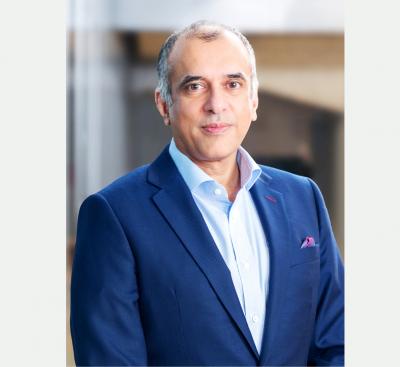
HSBC Holdings PLC is deepening its commitment to Taiwan as the economy emerges as one of the bank’s fastest-growing markets globally, driven by an artificial intelligence (AI) investment boom, expanding cross-border trade, and rising wealth creation. “The advantage that Taiwan has is a growth story linked to the semiconductor and broader AI industries, strong underlying corporate performance, and wealth creation,” said Surendra Rosha, HSBC’s co-chief executive for Asia and the Middle East, in an exclusive interview with the Taipei Times on June 2, during this year’s HSBC Taiwan Conference. That combination has helped HSBC cement its position as the most profitable international
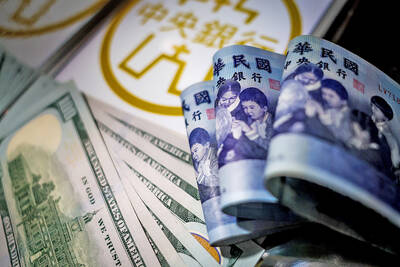
The New Taiwan dollar yesterday fell sharply against the US dollar to close at its lowest level since May 22 amid a massive outflow of funds from the country because of investors panicking over global equity markets. The NT dollar ended at NT$31.580 against the US dollar, slightly lower than its close of NT$31.568 on May 22, after moving between NT$31.5 and NT$31.648 on combined turnover of US$3.062 billion on the Taipei Foreign Exchange and the Cosmos Foreign Exchange. The NT dollar received a significant hit in the morning session, slumping as much as NT$0.173 at a time when other Asian currencies
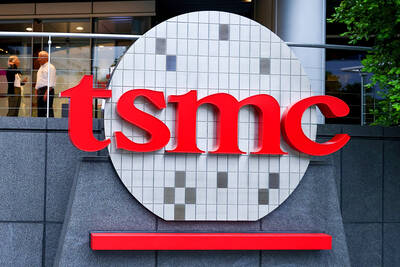
Taiwan Semiconductor Manufacturing Co (TSMC, 台積電) is now ranked ninth among the world’s 100 most valuable companies after its market capitalization more than doubled over the past year, PricewaterhouseCoopers (PwC) Taiwan said in a report last month. TSMC’s market capitalization surged 101 percent year-on-year to US$1.427 trillion as of March 31, the accounting and consulting firm’s 2026 Global Top 100 Companies by Market Capitalization report said. The gain catapulted the world’s largest contract chipmaker from 12th place to ninth in the rankings, and it was the fastest-growing among the global top 10, it said. TSMC was the only Taiwanese company among the top
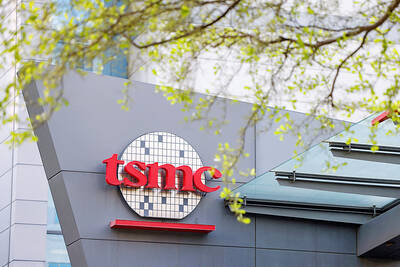
Taiwan Semiconductor Manufacturing Co (TSMC, 台積電) yesterday reported record revenue of NT$416.975 billion (US$13.17 billion) for last month, putting the world’s largest contract chipmaker on track to set a record for quarterly revenue. Last month’s figure surpassed March’s record NT$415.19 billion and represented increases of 1.5 percent from April and 30.1 percent from a year earlier. For the first five months of the year, TSMC generated NT$1.96 trillion in revenue, up 30 percent year-on-year, it said in a statement. TSMC has forecast second-quarter revenue of between US$39 billion and US$40.2 billion, representing sequential growth of about 10 percent and year-on-year growth of about


 RSS
RSS