


Intel Corp's plan to bundle three laptop computer chips together could hurt the local notebook manufacturing industry, analysts said yesterday.
Intel, known as the world's largest computer-chip company, currently supplies chips for 80 to 90 percent of the notebooks produced in Taiwan. However, its chips are often combined with compatible chips from other manufacturers.
If the new "all-in-one" package is accepted by the market, these choices may disappear.
"Intel has virtually dominated the market, now they want to make sure they [totally] dominate it," Stephen Tseng (
Laptop computers or notebooks have three key chips. The processor and the chipset serve as the brains and central nervous system of the computer respectively. The communications chip controls how the computer connects to Internet and office data networks.
Next year, Intel is expected to introduce the bundle of three computer chips which it says is designed to improve the performance, battery life and wireless communication capabilities of notebook computers.
The chip bundles will be offered to notebook makers at a discount to encourage the manufacturers to buy them.
Some industry leaders have balked at the scheme. "If you standardize, you hurt the industry," a report in a Chinese-language newspaper said yesterday, quoting Barry Lam (林百里), CEO of the world's largest notebook manufacturer, Quanta Computer Corp (廣達電腦). "Different sports cars have different engines. Differentiation is a competitive advantage for manufacturers," Lam is quoted as saying.
Intel denies that it is restricting customer choice. "When we launch, there will be two options: the processor alone, or the processor plus the chipset plus the communications chip," said Deborah Yan (顏亦君), marketing programs director at Intel in Taipei.
"[The processor] will work with other chipsets and communications chips. There will still be as many choices as before," Yan said.
"If the [manufacturer] chooses just the chip, they can choose whatever they want to go with it," she said.
"With the processor plus chipset plus communication chip package, manufacturers can save money," she said.
Chip design companies such as VIA Technologies Inc (
Tseng suggested that VIA would be affected if Intel's biggest rival, Advanced Micro Devices Inc (AMD), lost market share since VIA designs the chipsets for AMD's processors.
SiS would also be affected, as it is a major chipset manufacturer. If Intel dominates the chipset options that notebook manufacturers have, SiS may be squeezed out, Tseng said.
By having more purchase options, manufacturers are able to get better deals. "Choice is price. Look at the competition between Intel and AMD. AMD offers lower prices than Intel," Tseng said.
AMD makes up between 10 and 20 percent of the notebook market.
Another Intel rival, Transmeta Corp, has a much smaller market share.
Transmeta makes processors that use very little power, affording much longer battery life. Intel's new processor will directly compete with the Transmeta product on power consumption.
"By launching the [new processor] Intel is trying to kick out Transmeta," Tseng said.
Hewlett-Packard Co and Dell Computer Corp are the world's largest suppliers of notebooks. They both favor Intel chips, but do not use them exclusively.
"Of course, less choice is a problem. If HP and Dell adopt the new Intel platform, then this will further squeeze companies' profit margins," said Eve Jung (
"The impact will be sector wide," Jung said.
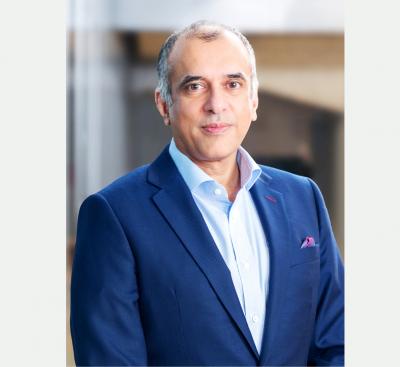
HSBC Holdings PLC is deepening its commitment to Taiwan as the economy emerges as one of the bank’s fastest-growing markets globally, driven by an artificial intelligence (AI) investment boom, expanding cross-border trade, and rising wealth creation. “The advantage that Taiwan has is a growth story linked to the semiconductor and broader AI industries, strong underlying corporate performance, and wealth creation,” said Surendra Rosha, HSBC’s co-chief executive for Asia and the Middle East, in an exclusive interview with the Taipei Times on June 2, during this year’s HSBC Taiwan Conference. That combination has helped HSBC cement its position as the most profitable international
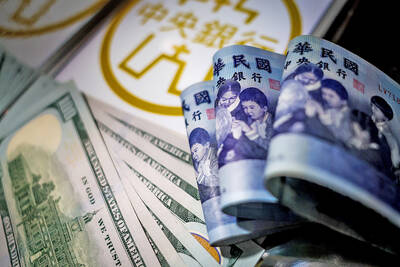
The New Taiwan dollar yesterday fell sharply against the US dollar to close at its lowest level since May 22 amid a massive outflow of funds from the country because of investors panicking over global equity markets. The NT dollar ended at NT$31.580 against the US dollar, slightly lower than its close of NT$31.568 on May 22, after moving between NT$31.5 and NT$31.648 on combined turnover of US$3.062 billion on the Taipei Foreign Exchange and the Cosmos Foreign Exchange. The NT dollar received a significant hit in the morning session, slumping as much as NT$0.173 at a time when other Asian currencies
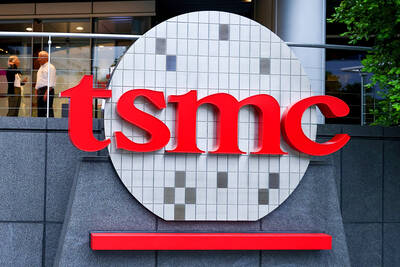
Taiwan Semiconductor Manufacturing Co (TSMC, 台積電) is now ranked ninth among the world’s 100 most valuable companies after its market capitalization more than doubled over the past year, PricewaterhouseCoopers (PwC) Taiwan said in a report last month. TSMC’s market capitalization surged 101 percent year-on-year to US$1.427 trillion as of March 31, the accounting and consulting firm’s 2026 Global Top 100 Companies by Market Capitalization report said. The gain catapulted the world’s largest contract chipmaker from 12th place to ninth in the rankings, and it was the fastest-growing among the global top 10, it said. TSMC was the only Taiwanese company among the top
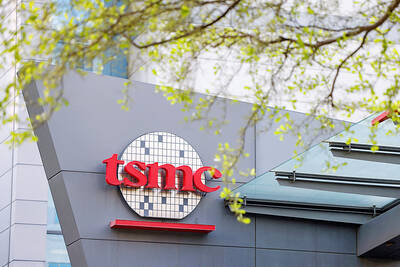
Taiwan Semiconductor Manufacturing Co (TSMC, 台積電) yesterday reported record revenue of NT$416.975 billion (US$13.17 billion) for last month, putting the world’s largest contract chipmaker on track to set a record for quarterly revenue. Last month’s figure surpassed March’s record NT$415.19 billion and represented increases of 1.5 percent from April and 30.1 percent from a year earlier. For the first five months of the year, TSMC generated NT$1.96 trillion in revenue, up 30 percent year-on-year, it said in a statement. TSMC has forecast second-quarter revenue of between US$39 billion and US$40.2 billion, representing sequential growth of about 10 percent and year-on-year growth of about


 RSS
RSS