


Owen Cheevers, 51, was head of high-yield bond research at the Bank of Montreal in New York when he wrote a cautionary report on companies in the radio industry. An experienced analyst, Cheevers was asked by investment bankers at his firm to make his report more glowing. He refused and pleaded with the bank's compliance department to intervene. He received no help. Two months later he was fired.
Joseph Mulder, 59, was a brokerage firm auditor with decades of experience, including identifying two money launderers who later went to prison. But soon after Mulder alerted his superiors to what he said were serious violations by a broker at Donaldson Lufkin & Jenrette, Mulder was fired. More than a decade later, the broker in question was accused by regulators of stealing US$3.2 million from clients.
It has become a well-worn refrain after scandals at Enron and other companies that if people want to deceive accountants, employees or shareholders, it is awfully hard to stop them.
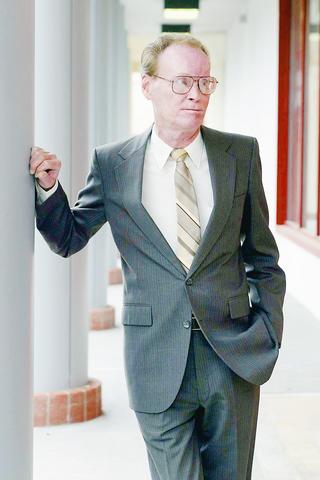
PHOTO: NY TIMES
But even though both the institutions involved deny wrongdoing in the terminations, the stories of these two men, although very different, raise an even more troubling proposition: what if the people who want to do the right thing can get no support, especially from executives hired to make sure regulations are followed? What if people like these are in fact punished for speaking out?
Federal regulators are asking such questions as they undertake a series of examinations of brokerage firm compliance departments. After several prominent cases in which illegal activities of brokers slid past compliance departments, the Securities and Exchange Commission is scrutinizing compliance at firms from the top down, not the bottom up, as has been its custom.
The new focus comes not a moment too soon. Investors' faith in the financial markets has been shaken by failures in safeguards intended to protect the public. As a self-regulated industry, the brokerage business employs cops inside its walls as a first line of defense for investors.
But regulators and investors are wondering if those cops are encouraged to identify wrongdoing by an individual or group that produces significant revenues.
"If you are a revenue producer or your importance to revenue production exceeds that of the compliance component that is dealing with you, it's very likely that compliance is going to be secondary," said Jeffrey L. Liddle, a lawyer at Liddle & Robinson in New York, who often represents brokerage employees in wrongful termination cases and who represents Cheevers.
Compliance professionals on Wall Street number about 150,000, according to the National Association of Securities Dealers. These people are charged with scrutinizing the activities of 650,000 securities representatives in 90,000 branch offices at 5,500 firms.
An especially embarrassing breakdown came to light earlier this year when Frank Gruttadauria, a branch manager and producing broker at Lehman Brothers in Cleveland, was sued by the SEC, which accused him of stealing more than US$40 million from 50 clients over six years.
But equally disturbing is that compliance executives at major firms under investigation for conflicts of interest were apparently unable or unwilling to prevent investment banking executives, eager to drum up new offerings with upbeat research reports, from interfering with analysts.
Industry guidelines say firms "should emphasize the high value of their reputation and interest in contributing to enhanced investor protection and the integrity of the securities industry."
"Therefore," the guidelines continue, "they should be committed to high standards of conduct and to support the positive and unique role served by those at the firm whose responsibilities are related to compliance or legal functions."
Failure to supervise
Brokerage firms must have a system of supervision "reasonably designed to prevent and detect violations by their employees." If they do not, executives can face action from the New York Stock Exchange, the NASD or the SEC for a "failure to supervise."
Dan Scotto, a bond analyst at BNP Paribas Securities in New York, was fired late last year after writing a negative report on Enron bonds in August 2001, just as the company began to unravel. Scotto, who had been an analyst for 25 years, said he had seen a deterioration in compliance in recent years.
"Twenty years ago, firms worried more about their reputations," he said. "Research wasn't a sales job. But as the commission structure broke down, there was a shift in compliance departments to be more sensitive to the revenue side of things, or the 'deal' side of things. That accelerated in the '90s."
A BNP Paribas spokeswoman said the bank's personal issues with Scotto "resulted from longstanding deficiencies in his performance as a manager and were unrelated to any research recommendations he made."
Now that revenue and profits are down, regulators worry that compliance departments will come under even more pressure to look the other way when big producers stray.
It was in just such an economic environment -- 1991 -- that Mulder was fired from Donaldson, Lufkin & Jenrette, shortly after he told superiors that R. Christopher Hanna was routinely violating brokerage firm and New York Stock Exchange regulations designed to protect customers.
Hanna, a big-producing broker, was left in place at the firm, which was later bought by Credit Suisse First Boston, and apparently continued to violate regulations. He was fired in May 2001, and in February, 12 years after Mulder identified his questionable practices, the SEC sued Hanna, contending he stole US$3.2 million from clients. That case is pending.
Willful blindness
"If they had listened to my first report in September 1990, they would have stopped him right in his tracks," Mulder said. The firm's response struck him as "a willful blindness."
Mulder took his report to his supervisors, but nothing was done. Six months later, he was fired. He had worked for DLJ since 1978. Hanna remained at the firm.
The reason DLJ gave for the firing was that the firm was downsizing. But Mulder sued the firm and won US$114,000. He never got another job on Wall Street.
A Credit Suisse First Boston spokeswoman said two arbitration panels rejected Mulder's claim that he was fired for making these allegations. "At the time these allegations were raised DLJ conducted an internal review and retained outside counsel to fully investigate this matter," she said
"After those internal reviews and external reviews were concluded, Mulder's allegations were found to be without any support."
Hanna could not be reached for comment.
Les Trager, a lawyer at Morley & Trager in New York, represented Mulder. He said his client had been let down not only by his firm, but also by the SEC, which he had told of Hanna's violations.
An official at the SEC declined to comment.
Although Cheevers declined to comment on his termination from Bank of Montreal, his wrongful termination case states his side of the story. According to the complaint and internal e-mail messages from the bank, Cheevers was asked by Michael Andres, an investment banker, to make an extensive report he had written in March 2001 on the radio industry "more bullish."
Andres wrote: "We accomplish nothing marketing-wise by being negative about prospects for industry." He added: "Our research should have a stronger positive emphasis on medium-sized radio operators as these will ultimately be our high-yield clients."
According to his complaint, Cheevers declined to comply and complained to his boss, who did not respond, and to the bank's compliance department.
In April, the bank's investment bankers killed Cheevers' report, and Robert Bade, head of US compliance for the bank, asked Cheevers what happened.
In an e-mail message, Bade wrote, "There may be some serious securities law considerations here."
But by the next month, nothing had been done, and on June 7, 2001, Cheevers was terminated. The reason given, as in Mulder's case, was downsizing. But according to his complaint, Cheevers was the only person fired and a person who reported to him was given his job.
Gary Friedman, partner at Mayer, Brown, Rowe & Maw in New York City, represents Bank of Montreal in the matter.
He said that Cheevers' allegations were thoroughly investigated by the company after his termination and found to be meritless. "Bank of Montreal Nesbitt Burns Corp. intends to defend against them vigorously," he said.
Trager said one way to ensure that companies could not fire compliance employees for pointing out violations was to require the SEC to interview every compliance professional who is ever fired.
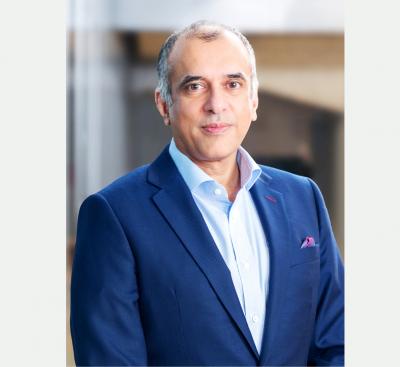
HSBC Holdings PLC is deepening its commitment to Taiwan as the economy emerges as one of the bank’s fastest-growing markets globally, driven by an artificial intelligence (AI) investment boom, expanding cross-border trade, and rising wealth creation. “The advantage that Taiwan has is a growth story linked to the semiconductor and broader AI industries, strong underlying corporate performance, and wealth creation,” said Surendra Rosha, HSBC’s co-chief executive for Asia and the Middle East, in an exclusive interview with the Taipei Times on June 2, during this year’s HSBC Taiwan Conference. That combination has helped HSBC cement its position as the most profitable international

The New Taiwan dollar yesterday fell sharply against the US dollar to close at its lowest level since May 22 amid a massive outflow of funds from the country because of investors panicking over global equity markets. The NT dollar ended at NT$31.580 against the US dollar, slightly lower than its close of NT$31.568 on May 22, after moving between NT$31.5 and NT$31.648 on combined turnover of US$3.062 billion on the Taipei Foreign Exchange and the Cosmos Foreign Exchange. The NT dollar received a significant hit in the morning session, slumping as much as NT$0.173 at a time when other Asian currencies
Taiwan Semiconductor Manufacturing Co (TSMC, 台積電) is now ranked ninth among the world’s 100 most valuable companies after its market capitalization more than doubled over the past year, PricewaterhouseCoopers (PwC) Taiwan said in a report last month. TSMC’s market capitalization surged 101 percent year-on-year to US$1.427 trillion as of March 31, the accounting and consulting firm’s 2026 Global Top 100 Companies by Market Capitalization report said. The gain catapulted the world’s largest contract chipmaker from 12th place to ninth in the rankings, and it was the fastest-growing among the global top 10, it said. TSMC was the only Taiwanese company among the top
Taiwan Semiconductor Manufacturing Co (TSMC, 台積電) yesterday reported record revenue of NT$416.975 billion (US$13.17 billion) for last month, putting the world’s largest contract chipmaker on track to set a record for quarterly revenue. Last month’s figure surpassed March’s record NT$415.19 billion and represented increases of 1.5 percent from April and 30.1 percent from a year earlier. For the first five months of the year, TSMC generated NT$1.96 trillion in revenue, up 30 percent year-on-year, it said in a statement. TSMC has forecast second-quarter revenue of between US$39 billion and US$40.2 billion, representing sequential growth of about 10 percent and year-on-year growth of about


 RSS
RSS