


Pierre Olivier Sarkozy was one of a hundred bankers at Credit Suisse First Boston, a division of Credit Suisse, the Swiss bank, who had been guaranteed a one-time bonus of US$4 million, plus a salary of at least US$3.5 million for two years. Credit Suisse had hoped that the money would keep top bankers like Sarkozy from leaving after its purchase of Donaldson, Lufkin & Jenrette, an investment bank, for US$13.5 billion in November 2000.
But in March, Sarkozy -- whose job is advising large banks on acquisitions -- quit to join UBS Warburg, an investment banking unit of UBS, another large Swiss bank.

PHOTO: NY TIMES
The departure of high-priced, talented executives like Sarkozy is just one symptom of what has shaped up as a painfully expensive and largely unsuccessful foray by many large banks into the investment banking business.
Lured by dreams of quantum leaps in profits from mergers, underwritings and strategic advice to corporate clients during the bull market of the 1990s, big banks spent more than US$40 billion acquiring investment banks, with relatively little to show in return except a lot of high-level turmoil in the ranks.
The most prominent example of that occurred last Thursday, when Geoffrey Boisi was forced out as co-head of investment banking at JP Morgan Chase after two years. The performance of the investment banking business had been weak, and Boisi had clashed with William Harrison Jr., the chief executive. Boisi was replaced by David Coulter, the former chief executive of BankAmerica who had been head of JP Morgan Chase's consumer bank side.
The troubled marriages of banks and investment banks were inspired by the relaxation during the 1990s of Depression-era legislation that had kept commercial banks out of the investment banking business. The first large deal came in 1997, when Bankers Trust New York now a part of Deutsche Bank, bought Alex. Brown for US$2.1 billion.
Commercial bankers were eager to get into the investment banking business because it is potentially far more profitable than making loans. During the peak of the bull market, the return on equity for investment banks was substantially higher than for commercial banks, according to study results released last month by McKinsey & Co, the consulting firm.
But by the end of the decade, most of these acquisitions were already proving to be disappointments. After paying peak prices for the acquisitions, many of the big banks failed to keep the important investment bankers whose talents had made these acquisitions enticing.
Most big banks chose not to go after large investment banks, like Merrill Lynch or the Goldman Sachs Group. Instead, banks went after relatively small firms, whose tightknit culture and entrepreneurial approach often became lost in the acquirer's bureaucracy.
"The reason some of these didn't work is that large financial institutions haven't had the commitment to build a global capital markets business," said Thomas Weisel, who sold his firm, Montgomery Securities, to Nationsbank, now Bank of America, for US$1.2 billion in 1997.
Weisel left Nationsbank a year later with a group of executives and went on to form an investment bank, Thomas Weisel Partners, after having clashed with Hugh McColl Jr., then the bank's chief executive. Today, only nine of the 68 Montgomery partners at the time of the merger remain at the bank, Weisel said.
Deals vanish with bankers
More recently, other big-name investment bankers have fled banks despite expensive efforts to retain them.
Last November, Bruce Wasserstein left Dresdner Bank to become chief executive of Lazard, the merger advisory firm, a year after he sold his firm, Wasserstein Perella, to Dresdner for US$1.3 billion. In November 2000, Credit Suisse lost Kenneth Moelis, who helped build Donaldson Lufkin's junk-bond business into the industry leader. Like Sarkozy, Moelis went to UBS Warburg, to head its investment banking business for the Americas.
Along with the talented bankers, many deals have vanished. Commercial banks have gained market share underwriting bonds, but such work makes relatively little money for the banks, the McKinsey study said. The real payoff comes from equity offerings and advising on mergers, but the sluggish stock market has made those deals scarce.
As they wait for the markets to recover, many banks are deciding whether to hang on until the economy improves or to bail out before losses grow bigger -- and their shareholders angrier.
"I attribute the problems with these deals to cyclical improvidence," said Robert Albertson, the president of Pilot Financial, which invests in the stocks of financial services companies. "Those who can persevere will ultimately be able to build those businesses when the market improves."
Among those that Albertson believes will ultimately succeed in investment banking is JP Morgan Chase, which greatly expanded that business just before the market for deals collapsed. JP Morgan's shares have fallen more than 20 percent in the last year, largely because its emphasis on deal-making has hurt its profits. But the stock has rebounded from its recent lows, reflecting hopes that business will revive as the economy improves.
In contrast, FleetBoston Financial is giving up: it announced last month that it was selling Robertson Stephens, the investment bank acquired in 1998.
"The thought was that Robertson Stephens could be our equity platform," said Eugene McQuade, FleetBoston's chief financial officer. But FleetBoston has given up on the idea, he said. "We didn't want to make the investment because we didn't think we could get enough of a return for our shareholders."
Buying the man, not the business
UBS is pursuing yet another strategy. Having already tried to build a business through takeovers, it is now hiring individual bankers instead, like Moelis and Sarkozy, rather than buying an entire firm.
"For us to buy something would be a huge destruction of value right now," said John Costas, the chief executive of UBS Warburg.
No commercial banks appear to be looking at acquiring investment banks now, although many can be had for bargain prices.
"This would be an opportune time to buy an investment bank, when they are trading close to book value," said Gary Shedlin, a managing director at Lazard who specializes in the financial services industry. "But most banks won't make the commitment because they fear the uncertainty."
Instead, banks are focusing on their consumer businesses, which are less volatile.
Sanford Weill, the chairman and chief executive of Citigroup, has snatched up many investment banks over the years, including Salomon Brothers and Smith Barney. But Weill's most recent acquisition, announced last week, is Golden State Bancorp, the nation's third-largest savings institution.
Jamie Dimon, the chief executive of Bank One and a former protege of Weill, said recently that he was not looking at investment banks. An acquisition of a consumer-focused bank "makes the most sense," Dimon said in a conference call for clients of Prudential Securities.
Banks that acquired investment banks in recent years are re-evaluating how to balance their lending and investment banking businesses.
The theory behind these deals was that banks could use their extensive capital and experience in making loans to win lucrative fees advising on mergers and arranging stock offerings for companies. Last year, commercial banks won several big underwriting and merger assignments, partly because of their willingness to provide loans to companies that wanted to combine.
But with some of those companies in fragile shape, the arrangements now look shortsighted.
"Banks that bundle credit with investment banking services will end up with the riskiest borrowers, since corporations that can't borrow easily are the most likely to welcome this strategy," said the McKinsey study.
JP Morgan Chase, which arranged large loans for WorldCom a year ago, was rewarded with leading a US$12 billion bond offering. The bank collected millions of dollars in fees on these deals, but a year later it is less certain the deals were a good idea: WorldCom shares have fallen 88 percent in the last 12 months, and the loans are trading below their face value. A JP Morgan spokesman declined to comment.
Many banks based their acquisitions of investment banks on what they viewed as the natural fit of lending and deal-making. Chase Manhattan, before merging with JP Morgan, bought the technology specialist Hambrecht & Quist because Chase, which had made venture capital investments and lent money to many less established companies, felt that it was missing out on taking those companies public.
The deal was poorly timed: months after the acquisition, technology shares went into a free fall and new stock offerings dwindled.
JP Morgan says that, unlike FleetBoston, it is sticking with the technology banking business. "We are happy with the progress we've made, and are well positioned for a market recovery," said Carlos Hernandez, head of equity capital markets at JP Morgan.
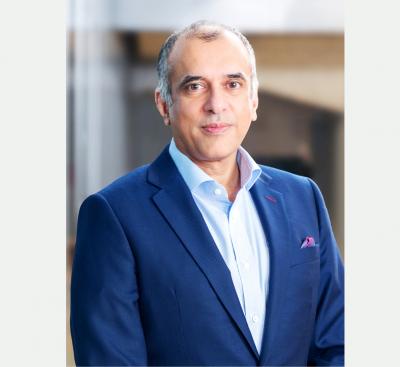
HSBC Holdings PLC is deepening its commitment to Taiwan as the economy emerges as one of the bank’s fastest-growing markets globally, driven by an artificial intelligence (AI) investment boom, expanding cross-border trade, and rising wealth creation. “The advantage that Taiwan has is a growth story linked to the semiconductor and broader AI industries, strong underlying corporate performance, and wealth creation,” said Surendra Rosha, HSBC’s co-chief executive for Asia and the Middle East, in an exclusive interview with the Taipei Times on June 2, during this year’s HSBC Taiwan Conference. That combination has helped HSBC cement its position as the most profitable international

The New Taiwan dollar yesterday fell sharply against the US dollar to close at its lowest level since May 22 amid a massive outflow of funds from the country because of investors panicking over global equity markets. The NT dollar ended at NT$31.580 against the US dollar, slightly lower than its close of NT$31.568 on May 22, after moving between NT$31.5 and NT$31.648 on combined turnover of US$3.062 billion on the Taipei Foreign Exchange and the Cosmos Foreign Exchange. The NT dollar received a significant hit in the morning session, slumping as much as NT$0.173 at a time when other Asian currencies
Taiwan Semiconductor Manufacturing Co (TSMC, 台積電) is now ranked ninth among the world’s 100 most valuable companies after its market capitalization more than doubled over the past year, PricewaterhouseCoopers (PwC) Taiwan said in a report last month. TSMC’s market capitalization surged 101 percent year-on-year to US$1.427 trillion as of March 31, the accounting and consulting firm’s 2026 Global Top 100 Companies by Market Capitalization report said. The gain catapulted the world’s largest contract chipmaker from 12th place to ninth in the rankings, and it was the fastest-growing among the global top 10, it said. TSMC was the only Taiwanese company among the top
Taiwan Semiconductor Manufacturing Co (TSMC, 台積電) yesterday reported record revenue of NT$416.975 billion (US$13.17 billion) for last month, putting the world’s largest contract chipmaker on track to set a record for quarterly revenue. Last month’s figure surpassed March’s record NT$415.19 billion and represented increases of 1.5 percent from April and 30.1 percent from a year earlier. For the first five months of the year, TSMC generated NT$1.96 trillion in revenue, up 30 percent year-on-year, it said in a statement. TSMC has forecast second-quarter revenue of between US$39 billion and US$40.2 billion, representing sequential growth of about 10 percent and year-on-year growth of about


 RSS
RSS