


Amid scathing criticism from oppositon and ruling party lawmakers regarding Christine Tsung's (宗才怡) competancy and calls for her resignation after only a month on the job, it goes without saying that newly appointed economics minister needs to ante up now and demonstrate whether or not she's capable of the task.
Tsung's remarkably poor performance before lawmakers during her first appearance at the Legislative Yuan earlier this week -- and her continuing failure to clearly explain the details of how she intends to make the economy "take off" within two years -- aren't inspiring much confidence in a nation that has endured a slowing economy for over a year.
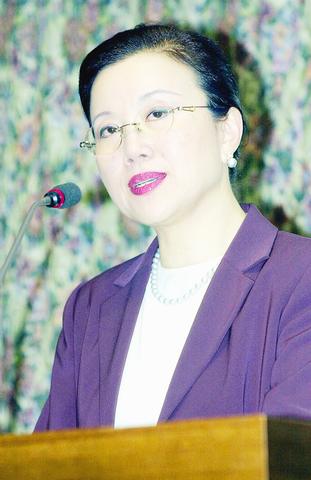
PHOTO: CHIANG YING-YING, TAIPEI TIMES
Further clouding hopes that Tsung will rise to the task is her dearth of experience in participating in Taiwan's economic affairs on a national level, coupled with the political overtones behind her appointment by the DPP.
However, former economics minister and now Vice Premier Lin Hsin-yi (
"The ministry must manage industry, trade, investment, small and medium-sized enterprises, water, electricity, oil and gas and land development ... With such a wide scope of responsibility, to absorb all of this within, month is extremely difficult," Lin told lawmakers yesterday.
"Minister Tsung hasn't yet had time to learn all of the details of the ministry's briefs ... to be fair we should give her more time to understand Taiwan's economic situation."
Premier Yu Shyi-kun told law-makers earlier this week that Tsung might need between three and four months to get a handle on the job, helping to quiet some of the DPP voices that have called for Tsung's resignation.
Wang Tuoh (
Despite being named late last year as the world's 10th most powerful woman in international business by Fortune magazine and as a person to watch this year by the same publication in January, Tsung until now has had no experience in managing national economic affairs.
Having lived in the US for the better part of three decades, Tsung served as the finance director from 1982 to 1995 for the small city of Poway in California. She also served as president of China Airlines Co (
Although she is a close friend of President Chen Shui-bian (陳水扁), Tseng denied reports that she and her husband, head of the First Commercial Bank (第一銀行) Jerome Chen (陳建隆) contributed funds to Chen's presidential campaign.
But according to Hsu Chen-ming (
"Small, local financial problems have nothing to do with regional economic development or foreign trade and foreign investment problems ... it's totally different," he said.
Hsu doubts that even after three months Tsung will have proven she is up to the task. "She is not qualified for this job," Hsu said. "Tsung has had no experience with public administration on a national scale and she has remained abroad for a long time. I doubt that she is at all familiar with the function of the economics ministry."
Others say Tsung should be given a chance.
"Minister Tsung should be given the benefit of the doubt. She should be given a fair go," said Richard Henson, president of the American Chamber of Commerce in Taipei.
"Taiwan is facing very, very tough economic challenges, and to tear down a minister rather than support [her on] the difficult road ahead is the wrong way to go," he said.
Pointing out that with Taiwan's economy is only beginning to show signs of a recovery, Hsu said that the timing of placing a questionable candidate as the head of the ministry was a poor decision.
"The economy is not so good at this moment and we need a strong minister to handle such problems," Hsu said. "Tsung has no plan, she does not know how to handle the economy or how to reach her goals of an economic growth rate of 3.5 percent," he said.
At least one foreign business leader, who declined to be named, appeared to agree.
"There is a reason she's taking a lambasting in the press," he said. "The foreign business community has a tremendous sense of urgency in fixing the problems of the economy. We don't feel the government has that same sense of urgency.
"Business does not work by political schedules. Taiwan's national security rests on its economic strength. The economics ministry portfolio is the gem in the crown of the government ministries. You need very strong leadership coming from there," he said.
While Tsung reportedly spent a break during harsh legislative interpellation crying in the ladies room - not exactly a picture of strong leadership - it would seem unfair to be too quick in calling for her to exit the stage.
Opposition lawmakers afterall can be an ornery bunch to the uninitiated and lack of poise under fire doesn't necessarily mean an individual is devoid of the more refined strategem.
However, if Tsung can't produce the goods sometime in the near future then calls for this eventuality are only going to grow, on both sides of the political fence.
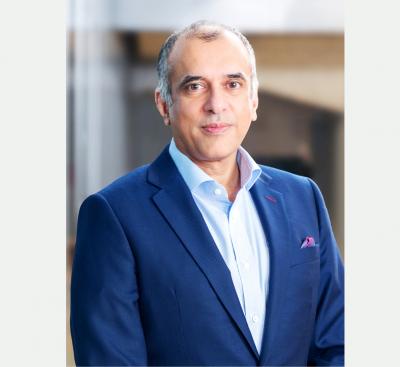
HSBC Holdings PLC is deepening its commitment to Taiwan as the economy emerges as one of the bank’s fastest-growing markets globally, driven by an artificial intelligence (AI) investment boom, expanding cross-border trade, and rising wealth creation. “The advantage that Taiwan has is a growth story linked to the semiconductor and broader AI industries, strong underlying corporate performance, and wealth creation,” said Surendra Rosha, HSBC’s co-chief executive for Asia and the Middle East, in an exclusive interview with the Taipei Times on June 2, during this year’s HSBC Taiwan Conference. That combination has helped HSBC cement its position as the most profitable international
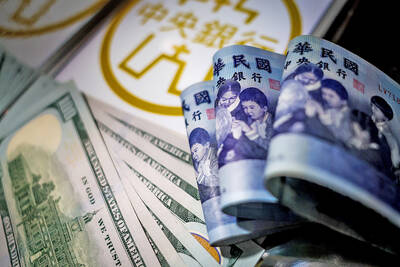
The New Taiwan dollar yesterday fell sharply against the US dollar to close at its lowest level since May 22 amid a massive outflow of funds from the country because of investors panicking over global equity markets. The NT dollar ended at NT$31.580 against the US dollar, slightly lower than its close of NT$31.568 on May 22, after moving between NT$31.5 and NT$31.648 on combined turnover of US$3.062 billion on the Taipei Foreign Exchange and the Cosmos Foreign Exchange. The NT dollar received a significant hit in the morning session, slumping as much as NT$0.173 at a time when other Asian currencies
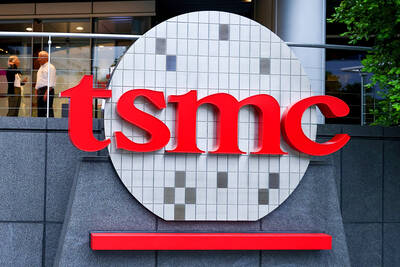
Taiwan Semiconductor Manufacturing Co (TSMC, 台積電) is now ranked ninth among the world’s 100 most valuable companies after its market capitalization more than doubled over the past year, PricewaterhouseCoopers (PwC) Taiwan said in a report last month. TSMC’s market capitalization surged 101 percent year-on-year to US$1.427 trillion as of March 31, the accounting and consulting firm’s 2026 Global Top 100 Companies by Market Capitalization report said. The gain catapulted the world’s largest contract chipmaker from 12th place to ninth in the rankings, and it was the fastest-growing among the global top 10, it said. TSMC was the only Taiwanese company among the top
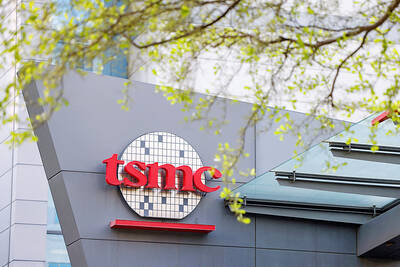
Taiwan Semiconductor Manufacturing Co (TSMC, 台積電) yesterday reported record revenue of NT$416.975 billion (US$13.17 billion) for last month, putting the world’s largest contract chipmaker on track to set a record for quarterly revenue. Last month’s figure surpassed March’s record NT$415.19 billion and represented increases of 1.5 percent from April and 30.1 percent from a year earlier. For the first five months of the year, TSMC generated NT$1.96 trillion in revenue, up 30 percent year-on-year, it said in a statement. TSMC has forecast second-quarter revenue of between US$39 billion and US$40.2 billion, representing sequential growth of about 10 percent and year-on-year growth of about


 RSS
RSS