


The government is considering a range of options to either soften the impact of a surge of Chinese imports or temporarily ban them outright after Taiwan is officially admitted into the WTO today.
The Mainland Affairs Council (MAC) said yesterday that opening to imports from China would take time.
"In accordance with WTO regulations, [Taiwan] will gradually open up its market to China within a certain transitional period of time," the highest cross-strait policy-maker yesterday said in a written statement.
The statement added that Taiwan has made issues relating to cross-strait trade and Chinese capital investment in the service industry a top priority.
But the statement failed to clarify whether Chinese agricultural products would be allowed to enter Taiwanese market from today.
The comments come after local media reported yesterday that Taiwan would withhold market access from China after joining the WTO, choosing instead to "temporarily" leave its markets closed to China in the agriculture and services sectors after joining the world trade body.
But Fu Don-cheng (
According to an official at the Ministry of Economic Affairs, the government has long considered whether or not it would place a blanket restriction on imports from China on the basis of national security under the WTO.
"In the context of our China relations, there are many special safeguards -- both within the WTO and in our own policy inventory -- designed to prevent a surge in imports from China," said the official, who requested anonymity.
Fearing the massive impact cheap Chinese imports would have on sectors such as agriculture and manufacturing, the government is still considering whether a blanket ban on all goods or simply sector specific restrictions should be used, the official said.
"Our situation is much different from other countries which are also facing a risk from Chinese goods due simply to our proximity," the official added.
The government is concerned about the lack of a price mechanism in China and the technical difficulties in identifying what could constitute dumping by Chinese producers here on this side of the Strait.
"If there is a surge of imports at a very low cost how do you determine if that constitutes some kind of dumping?" the official asked.
"You have to identify what is a fair price and if no price mechanism exists how can you clearly define at what point you should trigger this kind of mechanism," he said.
The basic tenet of the WTO is to promote free trade while also serving as a guarantor of fair trade.
Article 2.2 of the WTO Agreement on Technical Barriers to Trade, it stipulates that "... technical regulations shall not be more trade-restrictive than necessary to fulfill a legitimate objective ..." which would include national security concerns.
While not ruling out any eventuality, the official said the government was working on the assumption that Taiwan's markets would be open to Chinese products and that the main consideration was simply how to appropriately control the volume and price of imports.
With regard to the possibility that Beijing may take offense to any blocking actions by Taiwan and appeal to the WTO's dispute settlement board, the official was dismissive.
"Although we don't really know what they might do, what we have heard via the press is that they don't want to bring any dispute settlement cases to the WTO," he said.
China does not want to internationalize what it considers a domestic relationship.
Sunny Chang (張耿銘), a Taiwan-ese lawyer who works on Beijing's arbitration commission (北京仲裁委員會), raised concerns over the legal footing of the move.
"The closed-door strategy may become an excuse for China to attack or embarrass Taiwan on the international economic stage," Chang said.
China would be on more solid legal ground than Taiwan if the issue was brought up under the WTO's dispute-resolution framework, he said.
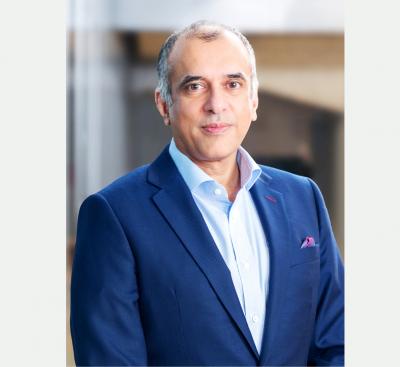
HSBC Holdings PLC is deepening its commitment to Taiwan as the economy emerges as one of the bank’s fastest-growing markets globally, driven by an artificial intelligence (AI) investment boom, expanding cross-border trade, and rising wealth creation. “The advantage that Taiwan has is a growth story linked to the semiconductor and broader AI industries, strong underlying corporate performance, and wealth creation,” said Surendra Rosha, HSBC’s co-chief executive for Asia and the Middle East, in an exclusive interview with the Taipei Times on June 2, during this year’s HSBC Taiwan Conference. That combination has helped HSBC cement its position as the most profitable international
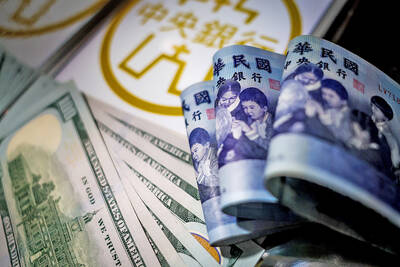
The New Taiwan dollar yesterday fell sharply against the US dollar to close at its lowest level since May 22 amid a massive outflow of funds from the country because of investors panicking over global equity markets. The NT dollar ended at NT$31.580 against the US dollar, slightly lower than its close of NT$31.568 on May 22, after moving between NT$31.5 and NT$31.648 on combined turnover of US$3.062 billion on the Taipei Foreign Exchange and the Cosmos Foreign Exchange. The NT dollar received a significant hit in the morning session, slumping as much as NT$0.173 at a time when other Asian currencies
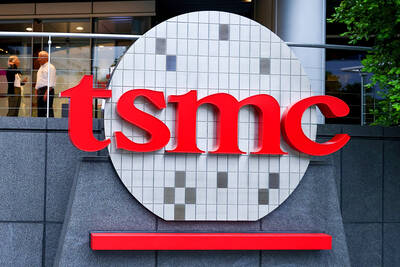
Taiwan Semiconductor Manufacturing Co (TSMC, 台積電) is now ranked ninth among the world’s 100 most valuable companies after its market capitalization more than doubled over the past year, PricewaterhouseCoopers (PwC) Taiwan said in a report last month. TSMC’s market capitalization surged 101 percent year-on-year to US$1.427 trillion as of March 31, the accounting and consulting firm’s 2026 Global Top 100 Companies by Market Capitalization report said. The gain catapulted the world’s largest contract chipmaker from 12th place to ninth in the rankings, and it was the fastest-growing among the global top 10, it said. TSMC was the only Taiwanese company among the top
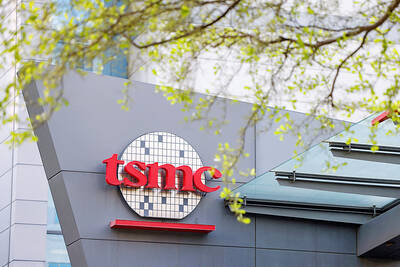
Taiwan Semiconductor Manufacturing Co (TSMC, 台積電) yesterday reported record revenue of NT$416.975 billion (US$13.17 billion) for last month, putting the world’s largest contract chipmaker on track to set a record for quarterly revenue. Last month’s figure surpassed March’s record NT$415.19 billion and represented increases of 1.5 percent from April and 30.1 percent from a year earlier. For the first five months of the year, TSMC generated NT$1.96 trillion in revenue, up 30 percent year-on-year, it said in a statement. TSMC has forecast second-quarter revenue of between US$39 billion and US$40.2 billion, representing sequential growth of about 10 percent and year-on-year growth of about


 RSS
RSS