


Government intervention in the stock market will only prolong the effects of Typhoon Nari and last week's terrorist attacks in the US while discouraging foreign investment, analysts said yesterday.
The Ministry of Finance yesterday reduced the daily downward volatility limit on shares to 3.5 percent from 7 percent through Sept. 28, though the upward limit remains at 7 percent.
"The measure is certainly aimed at reducing the impact of the two major bearish factors on the local market," said Chou Tien-chen (
Chou said that "without the measures, the stock market might rebound more quickly."
On Tuesday, following a two-day closure of the market due Typhoon Nari, Minister of Finance Yen Ching-chang (
Chou said the government's measures run counter to the principles of a free market. The professor said that there shouldn't be any limits on share movements, as the restrictions prevent stocks from reaching their actual market price.
"This limitation stops buyers from buying shares ... and prolongs the time investors need to bring real share prices back to the level they should be at," Chou said.
Another analyst said Taiwan should remove all restrictions on share price movements. Otherwise, foreign investors will likely take their money elsewhere.
"If Taiwan wants to become an internationally-recognized trading place, one of the priorities should be abandoning the current daily limit on share price movements," said the analyst, who declined to be identified.
"Only a stock market with free market mechanisms will attract international investors ... and too much intervention will only scare them away," the analyst said.
The TAIEX yesterday dropped 103.89 points yesterday at the opening, but gradually recovered to close at 3,781.17 -- up 6.55 points.
The long climb back was due to another form of state intervention, analysts said. Government funds may have bought shares to support the stock market.
With investor sentiment affected by two major disasters, the move was to be expected.
"It was a prudent measure by the government to the unknown impact brought by the two main bearish factors," said Neal Stovicek, an analyst of National Securities Corp (
"It has a lot to do with the background and history of the securities market, which varies from market to market."
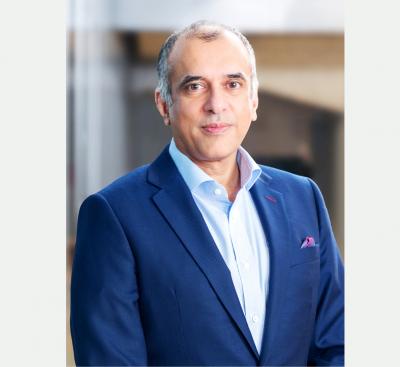
HSBC Holdings PLC is deepening its commitment to Taiwan as the economy emerges as one of the bank’s fastest-growing markets globally, driven by an artificial intelligence (AI) investment boom, expanding cross-border trade, and rising wealth creation. “The advantage that Taiwan has is a growth story linked to the semiconductor and broader AI industries, strong underlying corporate performance, and wealth creation,” said Surendra Rosha, HSBC’s co-chief executive for Asia and the Middle East, in an exclusive interview with the Taipei Times on June 2, during this year’s HSBC Taiwan Conference. That combination has helped HSBC cement its position as the most profitable international
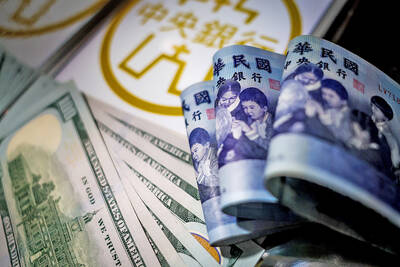
The New Taiwan dollar yesterday fell sharply against the US dollar to close at its lowest level since May 22 amid a massive outflow of funds from the country because of investors panicking over global equity markets. The NT dollar ended at NT$31.580 against the US dollar, slightly lower than its close of NT$31.568 on May 22, after moving between NT$31.5 and NT$31.648 on combined turnover of US$3.062 billion on the Taipei Foreign Exchange and the Cosmos Foreign Exchange. The NT dollar received a significant hit in the morning session, slumping as much as NT$0.173 at a time when other Asian currencies
Taiwan Semiconductor Manufacturing Co (TSMC, 台積電) is now ranked ninth among the world’s 100 most valuable companies after its market capitalization more than doubled over the past year, PricewaterhouseCoopers (PwC) Taiwan said in a report last month. TSMC’s market capitalization surged 101 percent year-on-year to US$1.427 trillion as of March 31, the accounting and consulting firm’s 2026 Global Top 100 Companies by Market Capitalization report said. The gain catapulted the world’s largest contract chipmaker from 12th place to ninth in the rankings, and it was the fastest-growing among the global top 10, it said. TSMC was the only Taiwanese company among the top
Taiwan Semiconductor Manufacturing Co (TSMC, 台積電) yesterday reported record revenue of NT$416.975 billion (US$13.17 billion) for last month, putting the world’s largest contract chipmaker on track to set a record for quarterly revenue. Last month’s figure surpassed March’s record NT$415.19 billion and represented increases of 1.5 percent from April and 30.1 percent from a year earlier. For the first five months of the year, TSMC generated NT$1.96 trillion in revenue, up 30 percent year-on-year, it said in a statement. TSMC has forecast second-quarter revenue of between US$39 billion and US$40.2 billion, representing sequential growth of about 10 percent and year-on-year growth of about


 RSS
RSS