


A senior telecom official said yesterday that despite Chunghwa Telecom Co's (中華電信) delayed connection of two long distance carriers since May, the government was adament about getting the company's connected by Aug. 1.
It seems the government means business this time.
"Minister of Transportation and Communications Yeh Chu-lang (
On Monday, Yeh ordered Chunghwa to finalize its interconnection with Sparq (
The controversy surrounding the two carriers has been going on since May when Chunghwa was originally scheduled to flip the switch. The fixed-line phone companies must use Chunghwa's network to reach end users. Rival Eastern Broadband Telecommunications Co Ltd (
Since the transportation ministry is Chunghwa's top shareholder, they have some tough decisions to make.
"On the one hand, [the government] wants to liberalize the market for new entrants, but on the other hand, they don't want the entrants to spoil [things for] Chunghwa," said an analyst who requested anonymity.
According to Hsu An-ling (
Income generated by long distance calls is split between companies, partly for use of the line running from a Chunghwa connected home, and the other part goes to the long distance line operator.
However, from a technical point of view, the interconnection is ready to go, and consumers could theoretically receive phone service from Sparq and Taiwan Fixed Network right away, Kao said. He added that although the billing system is a complicated task, "the service should be launched first" and the phone records can be used to clarify payments.
Meanwhile, the delay may be hurting the new entrants' bottom line. On the sidelines of Sparq's official launch in March, Chief Operating Officer Ng Seng Sum (
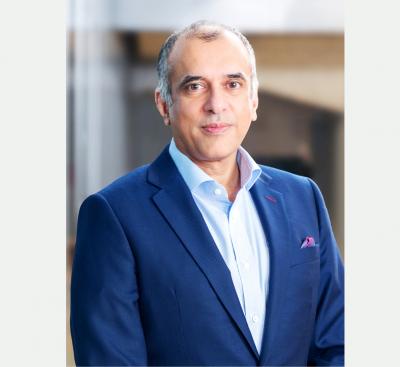
HSBC Holdings PLC is deepening its commitment to Taiwan as the economy emerges as one of the bank’s fastest-growing markets globally, driven by an artificial intelligence (AI) investment boom, expanding cross-border trade, and rising wealth creation. “The advantage that Taiwan has is a growth story linked to the semiconductor and broader AI industries, strong underlying corporate performance, and wealth creation,” said Surendra Rosha, HSBC’s co-chief executive for Asia and the Middle East, in an exclusive interview with the Taipei Times on June 2, during this year’s HSBC Taiwan Conference. That combination has helped HSBC cement its position as the most profitable international
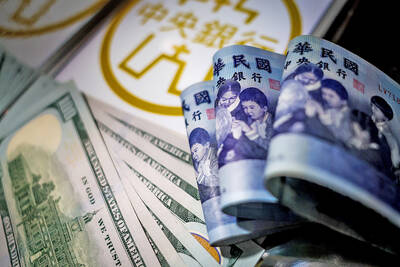
The New Taiwan dollar yesterday fell sharply against the US dollar to close at its lowest level since May 22 amid a massive outflow of funds from the country because of investors panicking over global equity markets. The NT dollar ended at NT$31.580 against the US dollar, slightly lower than its close of NT$31.568 on May 22, after moving between NT$31.5 and NT$31.648 on combined turnover of US$3.062 billion on the Taipei Foreign Exchange and the Cosmos Foreign Exchange. The NT dollar received a significant hit in the morning session, slumping as much as NT$0.173 at a time when other Asian currencies
Taiwan Semiconductor Manufacturing Co (TSMC, 台積電) is now ranked ninth among the world’s 100 most valuable companies after its market capitalization more than doubled over the past year, PricewaterhouseCoopers (PwC) Taiwan said in a report last month. TSMC’s market capitalization surged 101 percent year-on-year to US$1.427 trillion as of March 31, the accounting and consulting firm’s 2026 Global Top 100 Companies by Market Capitalization report said. The gain catapulted the world’s largest contract chipmaker from 12th place to ninth in the rankings, and it was the fastest-growing among the global top 10, it said. TSMC was the only Taiwanese company among the top
Taiwan Semiconductor Manufacturing Co (TSMC, 台積電) yesterday reported record revenue of NT$416.975 billion (US$13.17 billion) for last month, putting the world’s largest contract chipmaker on track to set a record for quarterly revenue. Last month’s figure surpassed March’s record NT$415.19 billion and represented increases of 1.5 percent from April and 30.1 percent from a year earlier. For the first five months of the year, TSMC generated NT$1.96 trillion in revenue, up 30 percent year-on-year, it said in a statement. TSMC has forecast second-quarter revenue of between US$39 billion and US$40.2 billion, representing sequential growth of about 10 percent and year-on-year growth of about


 RSS
RSS