

Citigroup announced late on Saturday that it had persuaded a New York judge to temporarily block Wells Fargo from acquiring Wachovia, firing the first shot in what could be a prolonged legal battle.
Citigroup has accused Wells Fargo of wrecking its plan to acquire Wachovia’s banking operations for US$2.2 billion, or US$1 a share, in a deal arranged by the Federal Deposit Insurance Corp. Four days after that deal was struck, it fell apart when Wachovia agreed to Wells Fargo’s offer to pay seven times as much for the entire company.
The underlying battle is over which company will emerge from the economic crisis in a stronger position among a smaller number of financial giants. Citigroup contends that the deal with Wells Fargo violates an agreement that prohibited Wachovia from having any sale or merger discussions with anyone other than Citigroup until today.
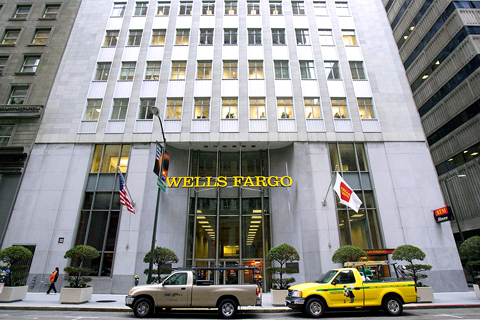
PHOTO: BLOOMBERG
The order issued by a judge on Saturday extends the term of that agreement until further court action, Citigroup said. A person briefed on the situation said that Citigroup was seeking US$60 billion in damages from Wells Fargo for interfering with the initial transaction.
Efforts to reach a Wells Fargo representative late on Saturday night were unsuccessful. Christy Phillips-Brown, a Wachovia spokeswoman, said the bank “believes its agreement with Wells is proper, valid, and is in the best interest of shareholders, employees and American taxpayers.”
“Under that agreement, Citigroup is always free to make a superior offer to Wachovia,” Phillips-Brown said.
The litigation could be a blockbuster, pitting some of the nation’s largest surviving financial institutions against one another and giving work to the most expensive legal talent money can buy. Citigroup is represented by the New York lawyer Gregory Joseph; Wachovia by David Boies of Boies, Schiller & Flexner; and Wells Fargo by Paul Rowe of Wachtell, Lipton, Rosen & Katz, people briefed on the matter say.
Until late on Thursday, Citigroup believed it had reached a deal with Wachovia after protracted talks last weekend under intense pressure from federal regulators worried about Wachovia’s financial condition. Regulators agreed to help Citigroup by absorbing losses over US$42 billion.
Wells Fargo, which had walked away from talks with Wachovia, returned late on Thursday with its surprise bid, in which Wells Fargo offered to buy all of Wachovia, not just its banking operations, for about US$15 billion in stock, far more than Citigroup had offered. And Wells Fargo’s deal, which takes advantage of a lucrative tax loophole tied to deferred losses, would be structured without any direct government support.
Federal regulators did not block Wells Fargo’s proposal, and by early Friday morning, its merger with Wachovia was approved by the boards of both companies.
The move left Citigroup officials fuming. On Friday, they put out word to regulators and the public that Wachovia had breached an exclusivity agreement and that Wells Fargo had interfered with their deal. That night and on Saturday morning, Citigroup officials huddled in a makeshift war room at the law offices of Davis Polk & Wardwell in midtown Manhattan.
Federal regulators have been discussing the offers, with senior officials from the Federal Reserve encouraging the parties to reach a swift resolution, a person briefed on the matter said.
Citigroup raised the stakes in the merger battle on Saturday afternoon, asking Justice Charles Ramos of the trial-level state Supreme Court to issue an emergency order blocking the deal between Wachovia and Wells Fargo. Representatives from the banks met at Ramos’ home in Cornwall, Connecticut, late on Saturday afternoon for more than three hours of oral arguments, according to people briefed on the situation.
In the unusual weekend session, Citigroup presented Ramos with a 16-page complaint naming both Wells Fargo and Wachovia, and their boards, as defendants. But it has not yet filed the suit formally because the courts were closed.
Late on Saturday, after several hours of intense legal jockeying, Ramos issued an injunction effectively blocking the Wells Fargo deal, pending a hearing scheduled for Friday.
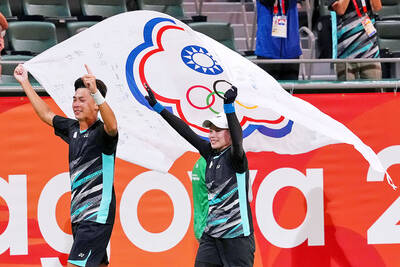
SOFT TENNIS: Yu Kai-wen and Huang Shih-yuan narrowly defeated their Japanese rivals to capture Taiwan’s first gold at the Asian Games in Nagoya Yu Kai-wen (余凱文) and Huang Shih-yuan (黃詩媛) won Taiwan’s first gold of this year’s Asian Games, defeating a Japanese duo in a nail-biter in the soft tennis mixed doubles final in Nagoya, Japan, while Johnny Sun (孫家閎) won silver in wushu and Shih Cheng-chung (石政中) won bronze in men’s kumite. Yu and Huang narrowly defeated Japan’s Toshiki Uematsu and Rena Temma 5-4 (2-4, 5-3, 4-2, 1-4, 1-4, 4-0, 1-4, 4-1, 7-5) to give Taiwan its first gold in soft tennis mixed doubles at an Asian Games since 2018. Sun secured Taiwan’s first wushu medal at this year’s game, with a combined score
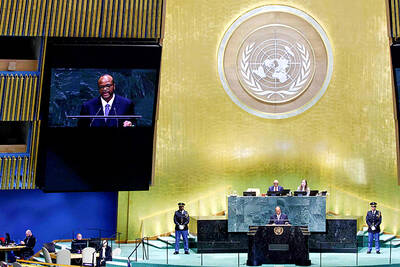
UNITY: Lai thanked the nations who spoke up for Taiwan, saying that democracies must stand together to face global authoritarian expansion Taiwan yesterday thanked eight European and Indo-Pacific countries for opposing unilateral changes to the “status quo” in the Taiwan Strait in a joint statement earlier this week, as well as three of Taiwan’s allies for speaking up for the nation’s participation in the UN at the body’s General Assembly in New York. Minister of Foreign Affairs Lin Chia-lung (林佳龍) welcomed the support and expressed his appreciation for the countries’ stance, the Ministry of Foreign Affairs said in a statement. Foreign ministers and senior representatives of Australia, France, Germany, Japan, New Zealand, Poland, South Korea and the UK issued a statement on Tuesday
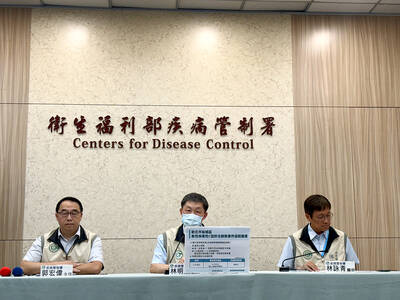
AT-RISK GROUPS: Of the accumulated 1,586 severe cases and 304 related deaths in this flu season, 65.8% were older people and 83.2% had chronic diseases, an official said The Centers for Disease Control (CDC) yesterday said that 165 severe flu cases and 30 flu-related deaths were reported last week, the highest weekly numbers in this flu season, and that cases might continue to increase, urging people to take precautions. Medical visits for flu-like illnesses increased by 1.4 percent to 141,374 last week, with 11.8 percent being emergency visits, showing that the seasonal flu is still in its epidemic period, CDC Epidemic Intelligence Center Director Guo Hung-wei (郭宏偉) said. From Tuesday last week to Monday, 165 severe flu cases and 30 flu-related deaths were confirmed, the highest weekly numbers

Aerospace Industrial Development Corp (AIDC, 漢翔航空工業) has finished production of the nation’s T-5 Brave Eagle (勇鷹) advanced jet trainers, with the final aircraft scheduled to be formally delivered at a ceremony on Thursday. The delivery of the trainer jets marks the end of the program, which dates back to 2017, with the first prototypes completed in 2019. Fifty-six of the 66 trainers had been delivered as of May. The Brave Eagle was developed and produced by AIDC and the National Chungshan Institute of Science and Technology. The program has provided a foundation for the development of a domestically produced next-generation primary trainer and


 RSS
RSS