


Japanese optics maker Hoya said yesterday it had agreed to buy camera maker Pentax in a stock swap estimated at ¥91 billion (US$771 million), giving the glass maker access to digital imaging technology.
The companies will combine operations on Oct. 1, next year, and the new company will be called Hoya Pentax HD Corp, Tokyo-based Hoya said in a release. Under the accord, each Pentax shareholder will get 0.158 Hoya shares for each share of Pentax.
Hoya president and chief executive Hiroshi Suzuki will stay on to lead the combined company.
The acquisition comes amid increasingly tough competition in the digital imaging market, with both old guard camera makers like Pentax and Nikon struggling against electronics giants like Sony and Samsung to gain the lead in digital cameras. Falling prices have undermined profit margins upping the pressure on firms to seek partners.
The move would also make Hoya and Pentax more competitive in the imaging field against rivals Olympus and Konica Minolta, which also make copiers and medical equipment. Konica Minolta was earlier forced to sell its camera unit to Sony amid spiraling development costs and has since focused on copiers.
"While the market for advanced medical products has been growing globally with further growth expected, competition has also been intensifying," Hoya said in its release. "It is critical that Hoya and Pentax leverage their respective competitive advantages and make aggressive investments through mergers and acquisitions and research and development."
The stock swap is valued at roughly ¥91 billion, based on Hoya's closing stock price of ¥4,510 yesterday on Tokyo's Stock Exchange.
Hoya's market capitalization stands at about ¥1.93 trillion, while Pentax's stands at only about ¥82 billion, the Nihon Keizai newspaper reported.
But the companies have seen radically divergent fates in recent years.
While Hoya has posted three straight years of increasing net income, Pentax has seen its profits mostly flat and falling. Hoya has also seen rising sales, compared with relatively stagnant sales at Pentax.
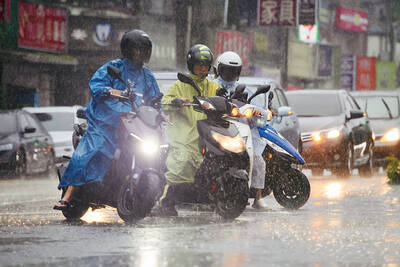
The combined effect of the monsoon, the outer rim of Typhoon Fengshen and a low-pressure system is expected to bring significant rainfall this week to various parts of the nation, the Central Weather Administration (CWA) said. The heaviest rain is expected to occur today and tomorrow, with torrential rain expected in Keelung’s north coast, Yilan and the mountainous regions of Taipei and New Taipei City, the CWA said. Rivers could rise rapidly, and residents should stay away from riverbanks and avoid going to the mountains or engaging in water activities, it said. Scattered showers are expected today in central and

COOPERATION: Taiwan is aligning closely with US strategic objectives on various matters, including China’s rare earths restrictions, the Ministry of Foreign Affairs said Taiwan could deal with China’s tightened export controls on rare earth metals by turning to “urban mining,” a researcher said yesterday. Rare earth metals, which are used in semiconductors and other electronic components, could be recovered from industrial or electronic waste to reduce reliance on imports, National Cheng Kung University Department of Resources Engineering professor Lee Cheng-han (李政翰) said. Despite their name, rare earth elements are not actually rare — their abundance in the Earth’s crust is relatively high, but they are dispersed, making extraction and refining energy-intensive and environmentally damaging, he said, adding that many countries have opted to
FORCED LABOR: A US court listed three Taiwanese and nine firms based in Taiwan in its indictment, with eight of the companies registered at the same address Nine companies registered in Taiwan, as well as three Taiwanese, on Tuesday were named by the US Department of the Treasury’s Office of Foreign Assets Control (OFAC) as Specially Designated Nationals (SDNs) as a result of a US federal court indictment. The indictment unsealed at the federal court in Brooklyn, New York, said that Chen Zhi (陳志), a dual Cambodian-British national, is being indicted for fraud conspiracy, money laundering and overseeing Prince Holding Group’s forced-labor scam camps in Cambodia. At its peak, the company allegedly made US$30 million per day, court documents showed. The US government has seized Chen’s noncustodial wallet, which contains
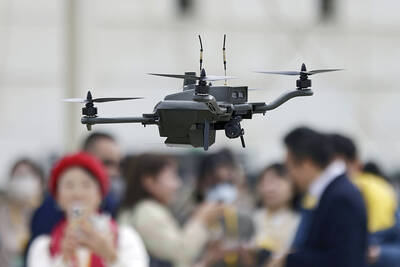
SUPPLY CHAIN: Taiwan’s advantages in the drone industry include rapid production capacity that is independent of Chinese-made parts, the economic ministry said The Executive Yuan yesterday approved plans to invest NT$44.2 billion (US$1.44 billion) into domestic production of uncrewed aerial vehicles over the next six years, bringing Taiwan’s output value to more than NT$40 billion by 2030 and making the nation Asia’s democratic hub for the drone supply chain. The proposed budget has NT$33.8 billion in new allocations and NT$10.43 billion in existing funds, the Ministry of Economic Affairs said. Under the new development program, the public sector would purchase nearly 100,000 drones, of which 50,898 would be for civil and government use, while 48,750 would be for national defense, it said. The Ministry of


 RSS
RSS