


■ Oil
Production cut unlikely
The OPEC cartel will likely decide against cutting oil production in Vienna on Wednesday owing to stubbornly high prices and simmering international tensions over Iran and Nigeria. "There is clearly going to be some caution because of the political situation in Iran and the lost production in Nigeria, so the chances of OPEC cutting production is very, very slim," Barclays Capital analyst Kevin Norrish said. OPEC is expected to keep its production quota of 28 million barrels per day, where it has remained for the past eight months, despite some disagreement among members. The threat of UN sanctions against Iran is likely to dominate output talks amid an ongoing nuclear crisis.
■ Mining
Australia going for the gold
Australia may overtake South Africa as the world's largest gold producing country later this decade as new mines start up, industry adviser Surbiton Associates said. The decision by Newmont Mining Corp and AngloGold Ashanti Ltd to develop the Boddington gold mine in Western Australia will add 30 tonnes a year to Australia's output starting 2009, Melbourne-based Surbiton said yesterday in a statement. Higher gold prices may encourage other projects, it said. Gold production in South Africa fell last year to an 82-year low of 296.3 tonnes as gains in the local currency caused mine closures, the Chamber of Mines in Johannesburg said on Friday. Australia, the world's second-largest producer, produced 263 tonnes last year, 3 tonnes more than in 2004, Surbiton estimates. More than a dozen mining operations are expected to start production in Australia this year, Surbiton said.
■ Telecom
SMS still tops for users
Text messaging remains the most popular service for mobile phone users in the Asia-Pacific region despite offers for applications such as e-mail and gaming, International Data Corp (IDC) said on Friday. IDC its survey showed that less than 10 percent of mobile phone users are utilizing services other than the reliable short messaging system (SMS), or text messaging. There had been hype that the humble SMS would be eclipsed by its more advanced cousins following the emergence of pricey third generation (3G) mobile phones and more content applications. But IDC said that the "latest findings reveal that, despite the proliferation of content-rich mobile data services, the adoption of advanced services such as mobile phone payment, online mobile gaming and mobile e-mail have yet to reach noteworthy levels of usage." IDC's survey covered 4,056 urban Internet users in Australia, Hong Kong, Malaysia, China, Singapore, South Korea and Taiwan.
■ Automobiles
GM to sell Suzuki stake
Embattled US car maker General Motors (GM) has finalized plans to sell its entire 20 percent stake in Japan's Suzuki Motor to end a capital tie-up which dates back to 1981, a report said yesterday. The world's biggest automaker, which has been wallowing in losses, is the largest shareholder of Suzuki and has told the Japanese carmaker about its decision to end the tie-up, Japanese business daily the Nihon Keizai Shimbun reported, without citing sources. Suzuki is also in talks with GM about selling its interest of about 11 percent in South Korea's GM Daewoo Auto and Technology Co to the US firm, the report said.
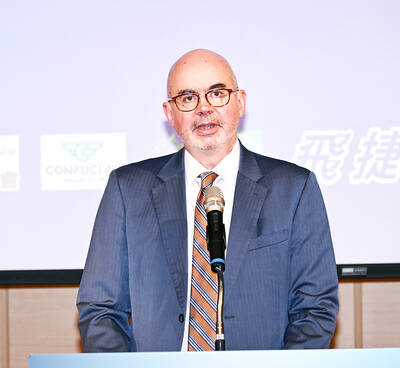
RESILIENCE: Deepening bilateral cooperation would extend the peace sustained over the 45 years since the Taiwan Relations Act, Greene said Taiwan-US relations are built on deep economic ties and shared values, American Institute in Taiwan (AIT) Director Raymond Greene said yesterday, adding that strengthening supply chain security in critical industries, enhancing societal resilience through cooperation and deepening partnerships are key to ensuring peace and stability for Taiwan in the years ahead. Greene made the remarks at the National Security Youth Forum, organized by National Taiwan University’s National Security and Strategy Studies Institution in Taipei. In his address in Mandarin Chinese, Greene said the Taiwan-US relationship is built on deep economic ties and shared interests, and grows stronger through the enduring friendship between
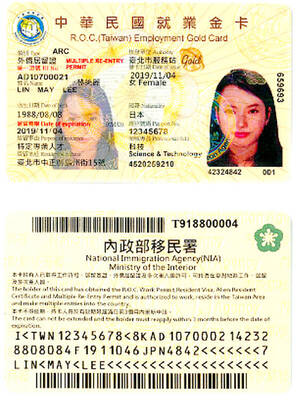
GAINING STEAM: The scheme initially failed to gather much attention, with only 188 cards issued in its first year, but gained popularity amid the COVID-19 pandemic Applications for the Employment Gold Card have increased in the past few years, with the card having been issued to a total of 13,191 people from 101 countries since its introduction in 2018, the National Development Council (NDC) said yesterday. Those who have received the card have included celebrities, such as former NBA star Dwight Howard and Australian-South Korean cheerleader Dahye Lee, the NDC said. The four-in-one Employment Gold Card combines a work permit, resident visa, Alien Resident Certificate (ARC) and re-entry permit. It was first introduced in February 2018 through the Act Governing Recruitment and Employment of Foreign Professionals (外國專業人才延攬及雇用法),
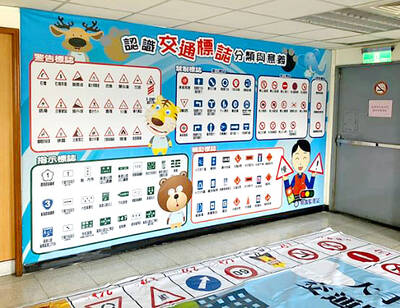
The Ministry of Transportation and Communications yesterday said that it would redesign the written portion of the driver’s license exam to make it more rigorous. “We hope that the exam can assess drivers’ understanding of traffic rules, particularly those who take the driver’s license test for the first time. In the past, drivers only needed to cram a book of test questions to pass the written exam,” Minister of Transportation and Communications Chen Shih-kai (陳世凱) told a news conference at the Taoyuan Motor Vehicle Office. “In the future, they would not be able to pass the test unless they study traffic regulations
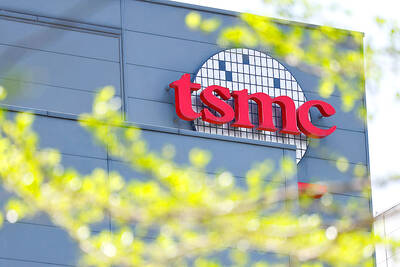
EUROPEAN TARGETS: The planned Munich center would support TSMC’s European customers to design high-performance, energy-efficient chips, an executive said Taiwan Semiconductor Manufacturing Co (TSMC, 台積電), the world’s largest contract chipmaker, yesterday said that it plans to launch a new research-and-development (R&D) center in Munich, Germany, next quarter to assist customers with chip design. TSMC Europe president Paul de Bot made the announcement during a technology symposium in Amsterdam on Tuesday, the chipmaker said. The new Munich center would be the firm’s first chip designing center in Europe, it said. The chipmaker has set up a major R&D center at its base of operations in Hsinchu and plans to create a new one in the US to provide services for major US customers,


 RSS
RSS