


It's small and smelly, and it looks like a radish. But many Peruvians consider it the combined answer to ginseng and Viagra.
Maca, a frost-resistant root that grows in the frigid Andean highlands, has been used in this South American country for centuries to boost stamina and sex drive.
Archaeologists have discovered traces of maca cultivation at sites dating back 2,000 years in the central Andes mountains, where the plant thrives naturally at 3,900mabove sea level.
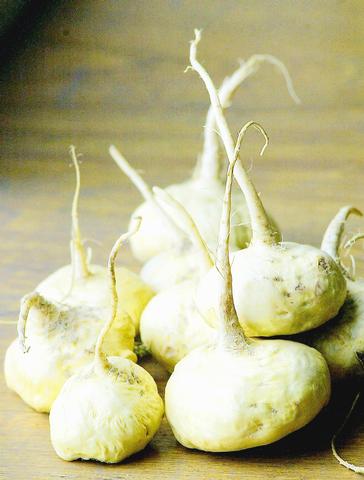
PHOTO: AP
Spanish conquistadors are said to have accepted bushels of the protein-rich root from local communities during the 16th century as tax payments.
Chroniclers also reported that Peru's various pre-Hispanic groups bartered with maca, used it for peace offerings and offered it to their mountain and sun gods.
Today, Peruvians eat maca fresh, dried, boiled into porridge or ground into powder and mixed with water or milk in a drink that tastes somewhat like butterscotch with an earthy aftertaste.
Just as the Incas did centuries ago, many Peruvians swear by maca's energizing and aphrodisiacal powers. It is also touted as a tonic for a host of other health problems, including post-menopause syndrome and stress.
For scientists, the verdict is still out.
Nutritionists say the root packs a powerful dose of amino acids, vitamins and minerals, particularly magnesium and phosphorous. But no major independent studies have been published about its effects.
"It's still what you call an alternative medicine. There is still no scientific basis," says Dr. Alberto Tejada, a urologist at the Fertility Institute in Lima.
But Tejada and many Peruvian doctors recommend maca to patients anyway.
"What we do know is that it is energizing, that it increases sexual stimulus, that it improves the disposition toward sexual activity and improves mood," he says.
Hersil, a Peruvian pharmaceutical company that plans to market maca-based tablets internationally, says small-scale research it financed at Peru's Cayetano Heredia University found maca increased men's sex drive and sperm counts.
Dr. Fernando Cabieses, a neurologist who for two decades has studied Peru's treasure trove of medicinal plants, supervised the study, which involved 60 volunteers who were divided into two groups. One group took maca tablets for 12 weeks, the other placebos.
"It's a very interesting study, with interesting results, which need to be corroborated by other scientific groups to see if this repeats,'' Cabieses says.
Jose Luis Silva, Hersil's assistant general manager, sees opportunities for maca to compete for some of the US$2 billion now spent around the world each year on ginseng, a root highly prized in Asia for its energy-giving and curative properties. Overseas sales would be a boon for this impoverished nation's rural farmers.
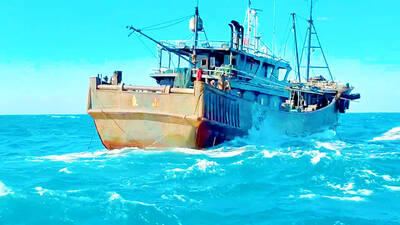
MAKING WAVES: China’s maritime militia could become a nontraditional threat in war, clogging up shipping lanes to prevent US or Japanese intervention, a report said About 1,900 Chinese ships flying flags of convenience and fishing vessels that participated in China’s military exercises around Taiwan last month and in January last year have been listed for monitoring, Coast Guard Administration (CGA) Deputy Director-General Hsieh Ching-chin (謝慶欽) said yesterday. Following amendments to the Commercial Port Act (商港法) and the Law of Ships (船舶法) last month, the CGA can designate possible berthing areas or deny ports of call for vessels suspected of loitering around areas where undersea cables can be accessed, Oceans Affairs Council Minister Kuan Bi-ling (管碧玲) said. The list of suspected ships, originally 300, had risen to about
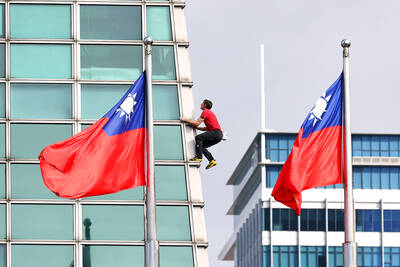
DAREDEVIL: Honnold said it had always been a dream of his to climb Taipei 101, while a Netflix producer said the skyscraper was ‘a real icon of this country’ US climber Alex Honnold yesterday took on Taiwan’s tallest building, becoming the first person to scale Taipei 101 without a rope, harness or safety net. Hundreds of spectators gathered at the base of the 101-story skyscraper to watch Honnold, 40, embark on his daredevil feat, which was also broadcast live on Netflix. Dressed in a red T-shirt and yellow custom-made climbing shoes, Honnold swiftly moved up the southeast face of the glass and steel building. At one point, he stepped onto a platform midway up to wave down at fans and onlookers who were taking photos. People watching from inside

Japan’s strategic alliance with the US would collapse if Tokyo were to turn away from a conflict in Taiwan, Japanese Prime Minister Sanae Takaichi said yesterday, but distanced herself from previous comments that suggested a possible military response in such an event. Takaichi expressed her latest views on a nationally broadcast TV program late on Monday, where an opposition party leader criticized her for igniting tensions with China with the earlier remarks. Ties between Japan and China have sunk to the worst level in years after Takaichi said in November that a hypothetical Chinese attack on Taiwan could bring about a Japanese
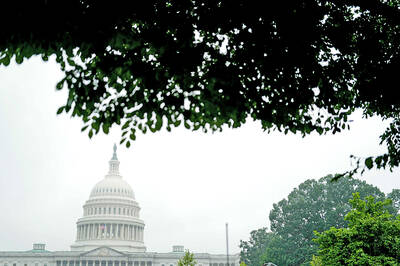
STREAMLINED: The dedicated funding would allow the US to transfer equipment to Taiwan when needed and order upgraded replacements for stockpiles, a source said The US House of Representatives on Thursday passed a defense appropriations bill totaling US$838.7 billion, of which US$1 billion is to be allocated to reinforcing security cooperation with Taiwan and US$150 million to replace defense articles provided to the nation. These are part of the Consolidated Appropriation Act, which the US House yesterday passed with 341 votes in favor and 88 against. The act must be passed by the US Senate before Friday next week to avoid another government shutdown. The US House Committee on Appropriations on Monday unveiled the act, saying that it allocates US$1 billion for the Taiwan Security Cooperation Initiative


 RSS
RSS