

Belarusian authorities are using the country’s criminal justice system as an instrument of repression to systematically target government opponents, UN investigators said yesterday.
A group of independent UN experts at the Office of the High Commissioner for Human Rights tasked with probing the rights situation in Belarus determined that the country had for years “weaponized” its judicial system, “creating a system of punishment and legal sanctions against any form of dissent, real or perceived.”
“What emerges is not a picture of isolated violations, but of a system in which state institutions have systematically been used to suppress dissent and fundamental freedoms,” group chairwoman Karinna Moskalenko said in a statement.

Photo: Reuters
“Criminal justice processes are an integral part of a broader machinery of repression,” she said, adding that “their impacts are felt not only by those arrested, prosecuted or imprisoned, but by an entire society being warned about the price of dissent.”
The expert group was created in April 2024 by the office to investigate violations committed in Belarus since 2020, when the country was gripped by unprecedented anti-government demonstrations followed by a brutal crackdown.
In their first report last year, the experts determined that some of the abuses by Belarusian President Alexander Lukashenko’s government since then amounted to crimes against humanity.
The latest report looked specifically at the judicial system, documenting abuses at every stage of the process.
Arrests were often “arbitrary” and “violent,” and carried out by plain-clothes officers without warrants, who frequently denied arrestees access to lawyers and forced them to record humiliating “repentance” videos, the experts said.
Detainees were held in “overcrowded, excessively hot and unsanitary cells, often without enough beds and infested with bedbugs, while being deprived of adequate food and sleep,” the report found.
It highlighted gender-specific abuses, including invasive strip searches of female detainees in view of male guards and the deliberate denial of basic menstrual hygiene products.
Trials against political opponents, journalists and rights activists in particular were riddled with systematic violations of fair-trial guarantees, with defendants kept in metal cages in the courtroom and their defense lawyers often disbarred or detained, the experts found.
Once convicted, detainees held on politically motivated grounds were marked with yellow tags and systematically subjected to “discrimination, inhuman conditions of detention, cruel, inhuman or degrading treatment and incommunicado detention,” the report said.
Among other things, former detainees interviewed for the report described facing repeated punishment for “alleged disciplinary violations,” including being held in frosty isolation cells, referred to as “torture by cold.”
State persecution continued even after release, with courts frequently ordering lengthy and intrusive preventive supervision, the report said.
That exposed former prisoners to nighttime raids by security forces, movement restrictions and immediate rearrest for minor schedule deviations, it found.
“Releases ... cannot be mistaken for an end to repression,” expert Monika Platek said in the statement.
The experts called on Belarusian authorities to immediately release all those held on politically motivated charges and to promptly investigate and prosecute all allegations of rights violations. They also urged other countries to step up pressure on Belarus.
“The international community must not look away,” expert Susan Bazilli said. “Those responsible for serious human rights violations must know that impunity is not a permanent shield, and victims must know that their rights have not been forgotten.”
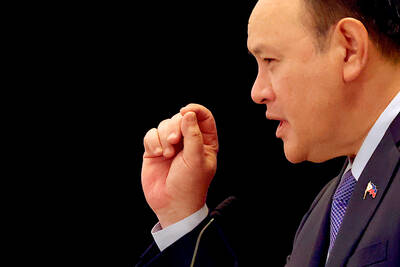
Philippine Secretary of National Defense Gilberto Teodoro Jr on Tuesday hit out at China at an international forum after a memo asserting Beijing’s position over their longstanding maritime dispute was delivered to him while he was speaking on stage. The unusual incident was captured on video at the Seoul Defense Dialogue as the secretary was responding to a question about “gray zone” coercion in the South China Sea. The video shows what appears to be a conference staffer placing it on the table next to him while speaking. “I have a note here, I think this is from China,” he said, describing

Thai police yesterday said that they arrested a senior Buddhist monk on suspicion of embezzling US$2.8 million intended for his monastery, alongside a suspected female accomplice he was having sex with. The case is the latest scandal to hit the clergy in Buddhist-majority Thailand after a sex and extortion case involving senior monks last year prompted public outrage and calls for greater scrutiny of temple finances. Phra Wachirayan Wi, the 66-year-old abbot of the 14th-century Wat Phutthaisawan in the ancient capital of Ayutthaya, was arrested on Thursday on charges including embezzlement and money laundering, lead police investigator Pattanasak Bupphasuwan said. A 47-year-old woman

SECRET FOOTAGE: A 17-year-old girl told British broadcaster Channel 4 that she had been approached by a man who covertly recorded her and their interaction Calls are growing louder in Europe for action against “pervert” smart glasses after secretly filmed footage of girls and women appeared online — with a petition in Britain demanding a ban on their sale. Anyone wearing smart glasses can take photos, film videos, listen to music, make phone calls, translate text or interact with an artificial intelligence (AI) assistant, with sales now hitting millions. The devices grabbed attention this summer after a marketing tie-up between Kylie Jenner, beauty mogul and member of the Kardashian dynasty, and tech giant Meta. Since smartphones are now embedded in daily life, “big tech” is
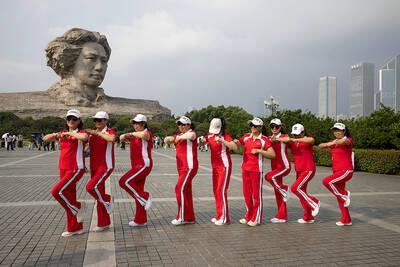
China yesterday marked half a century since the death of Mao Zedong (毛澤東), founder of the People’s Republic, who brought roughly one-quarter of the world’s population under communist rule and whose specter still haunts China’s future. Mao’s death on Sept. 9, 1976, at age 82, mourned by many and welcomed by some who suffered under his nearly three-decade rule, also hastened the end of the Cultural Revolution, a frenzied mass movement he launched in 1966. The party later condemned the Cultural Revolution as a grave error for which Mao bore primary responsibility, but still reveres him, saying his achievements outweigh his mistakes. Mao’s


 RSS
RSS