

North Korea yesterday fired multiple ballistic missiles, Seoul said, a day after South Korea concluded five days of joint maritime drills with the US and Japan that were focused on the North.
Pyongyang last month slammed plans for the so-called Freedom Edge joint exercises in international waters off South Korea as a “threat” to North Korea and other countries of the region.
Yesterday, Seoul’s military detected “multiple short-range ballistic missiles launched from the Wonsan area toward the East Sea [the Sea of Japan],” the South Korean Joint Chiefs of Staff said in a statement.
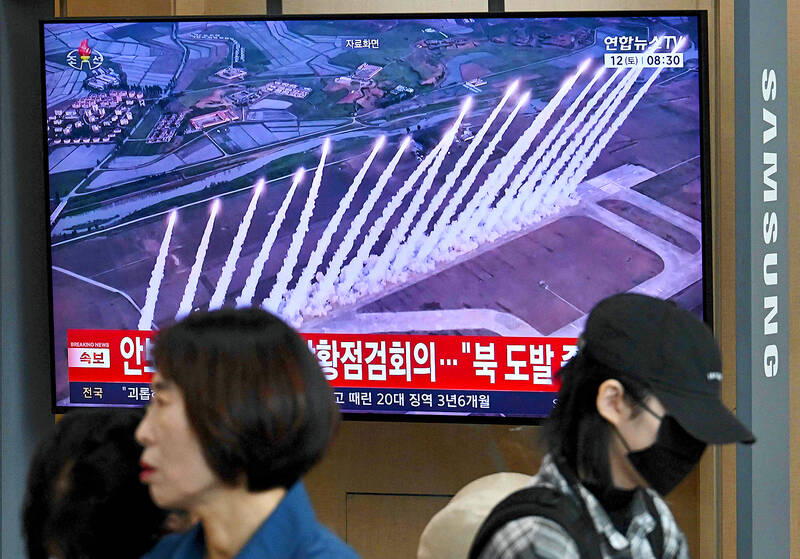
Photo: AFP
The missiles were detected at about 05:20am and flew about 250km, they added.
South Korean and US intelligence authorities “have tracked and shared relevant developments since the initial stage of the launch and also shared information regarding the ... missile with Japan,” they said.
In its last test, North Korea fired a barrage of missiles into the sea on Aug. 20, despite an overture from US President Donald Trump, who said he planned to meet this year with North Korean leader Kim Jong-un.
That launch from the nuclear-armed North came as South Korea and the US held a shorter edition of their annual Ulchi Freedom Shield military exercises, following an order from Trump to scale them back.
Trump’s order alarmed US allies in the region, with the president calling the drills “inappropriate and hostile” toward North Korea.
However, Seoul’s spy agency told lawmakers earlier this month that a summit between the US and North Korea appeared possible “at any time” as signs have emerged of dialogue between them.
Trump met Kim three times during his first term — once declaring they were “in love” — in high-profile summits aimed at securing a denuclearization deal, but no tangible progress was made.
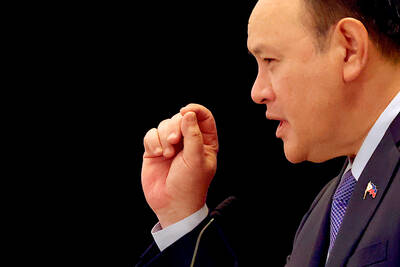
Philippine Secretary of National Defense Gilberto Teodoro Jr on Tuesday hit out at China at an international forum after a memo asserting Beijing’s position over their longstanding maritime dispute was delivered to him while he was speaking on stage. The unusual incident was captured on video at the Seoul Defense Dialogue as the secretary was responding to a question about “gray zone” coercion in the South China Sea. The video shows what appears to be a conference staffer placing it on the table next to him while speaking. “I have a note here, I think this is from China,” he said, describing

PAINSTAKING PROCESS: Ice makers freeze water for up to 72 hours, replace tainted water with a fresh batch once freezing begins, and are constantly stirring In the historic Japanese city of Kanazawa, craftsmen painstakingly shape and slice blocks of ice destined to chill negronis in some of the world’s trendiest bars. The men work for Kuramoto Ice, a century-old company in Ishikawa on the Sea of Japan coast and one of dozens of Japanese firms producing ultra-clear, premium ice. This luxury product, believed by those in the industry to melt more slowly than regular blocks, is a staple of Japan’s cocktail culture, but its popularity is also spilling over to bars abroad, from the US to Australia, who pay as much as ¥200 (US$1.28) per cube. Kuramoto Ice
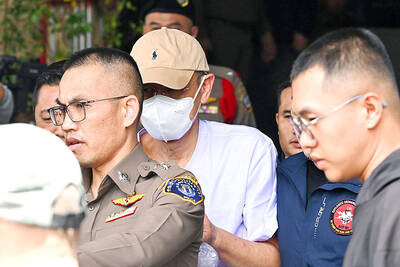
Thai police yesterday said that they arrested a senior Buddhist monk on suspicion of embezzling US$2.8 million intended for his monastery, alongside a suspected female accomplice he was having sex with. The case is the latest scandal to hit the clergy in Buddhist-majority Thailand after a sex and extortion case involving senior monks last year prompted public outrage and calls for greater scrutiny of temple finances. Phra Wachirayan Wi, the 66-year-old abbot of the 14th-century Wat Phutthaisawan in the ancient capital of Ayutthaya, was arrested on Thursday on charges including embezzlement and money laundering, lead police investigator Pattanasak Bupphasuwan said. A 47-year-old woman
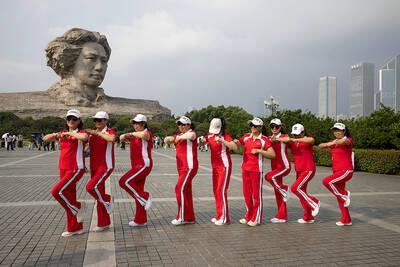
China yesterday marked half a century since the death of Mao Zedong (毛澤東), founder of the People’s Republic, who brought roughly one-quarter of the world’s population under communist rule and whose specter still haunts China’s future. Mao’s death on Sept. 9, 1976, at age 82, mourned by many and welcomed by some who suffered under his nearly three-decade rule, also hastened the end of the Cultural Revolution, a frenzied mass movement he launched in 1966. The party later condemned the Cultural Revolution as a grave error for which Mao bore primary responsibility, but still reveres him, saying his achievements outweigh his mistakes. Mao’s


 RSS
RSS