

Thailand is ready to shift its approach to a slow-burn insurgency in its Muslim-majority deep south and revitalize a peace process, Bangkok’s chief negotiator said, as violence simmers in one of Southeast Asia’s longest-running conflicts.
Any such move could mark a return to addressing the political roots of a conflict that has killed more than 7,800 people since 2004, when the latest round of the insurgency led mainly by the Barisan Revolusi Nasional (BRN) flared in Thailand’s southernmost provinces, bordering Malaysia. In the latest violence in the region, five security personnel were killed in an attack last month.
Since negotiations facilitated by Malaysia began in 2013, the peace process has repeatedly stalled amid changing governments in Bangkok, internal divisions on both sides and a focus on trading concessions for a reduction in violence.
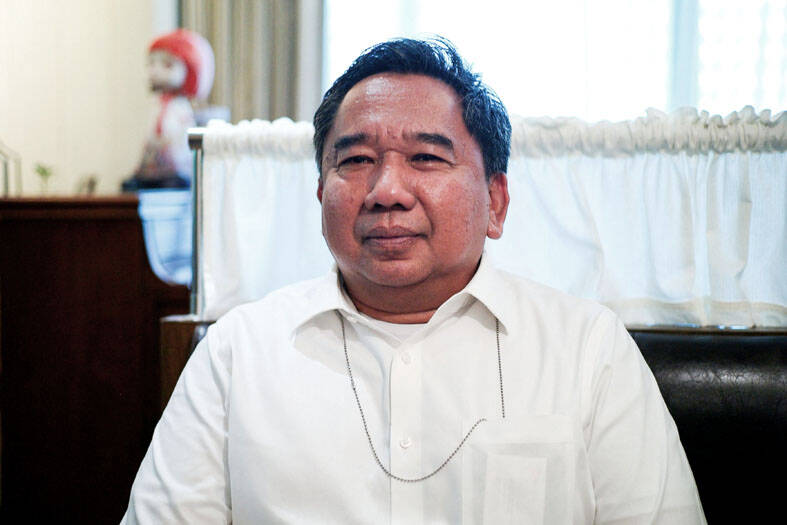
Photo: Reuters
Thanut Suvarnananda, head of Thailand’s National Intelligence Agency who was appointed by the government in April to lead the peace process, said he wanted to move away from a transactional approach.
“My principle is not ‘deal or no deal,’” he told reporters in an interview, underlining the traditional approach and pointing to previous confidence-building measures that yielded limited results.
“If they stop shooting, what does Thailand have to give them in return? We [cannot] fall into the same trap as the past 10-plus years,” he said.
“Why don’t we reopen the discussion and talk about what form of governance would actually be appropriate for the southern border region?” he said, indicating Bangkok’s willingness to be more accommodating to self-administration mechanisms than in the past.
“From the discussions I’ve had, I think I’ve found what is at the heart of it: an appropriate form of governance,” he said.
This way, Thanut said, he seeks to turn the BRN from an adversary into a potential partner in addressing demands from communities across Thailand’s deep south, including the predominantly Malay-Muslim provinces of Pattani, Yala and Narathiwat that were once part of the independent Malay sultanate of Patani.
Amnesty, pardons and sentence reductions for suspected insurgents with outstanding warrants or in custody were being considered, Thanut said.
Such proposals have been discussed previously, but have not yielded concrete measures.
The BRN, fighting a guerrilla war to secure independence for the three southern provinces, did not respond to a request for comment.
Bangkok needs to demonstrate that negotiations can deliver meaningful political change and ensure its multiple security agencies are aligned, if Thai authorities are looking to pivot after years of focusing on violence reduction, said Rungrawee Chalermsripinyorat, a lecturer at Prince of Songkla University who studies the conflict.
“It has to be prepared to make political concessions,” she said, referring to the government.
So far, efforts to restart formal talks have been complicated by violence, including the attack last month in Narathiwat that killed five security personnel and injured six civilians, prompting Bangkok to postpone pre-planned dialogue processes.
Thanut said he had asked the BRN why attacks were taking place when discussions had been progressing well and the two sides were moving toward signing a “preliminary framework” as early as next month.
He said the BRN was still discussing the matter internally.
However, there are no new dates for formal talks to resume and Thanut said communication between both sides would continue.
A recent upsurge in violence in the south has been driven by waning confidence within the BRN in the peace process, said Rungrawee, citing discussions with members of the movement.
“People sitting at the negotiating table may still be interested, but many others within the organization have lost faith in it,” she said.
Following public consultations, Thanut said he envisages an approach where BRN representatives, or people trusted by the movement, can work with Thai officials and experts to explore decentralization and other governance arrangements.
Restrictive security measures, including village cordons, searches and checkpoints, that could stoke resentment within local communities and fuel the insurgency, also need to be reviewed, he said.
“We’ve been fighting for years. They cannot defeat the state, and we cannot eliminate them completely,” Thanut said. “So let’s talk.”

TWIN DISASTERS: Authorities are investigating the cause of the stampede in Bihar that killed seven people and the fire at a hotel in West Bengal that also killed seven A deadly stampede yesterday broke out at a Hindu temple in eastern India’s Bihar state, hours after a fire swept through a hotel housing pilgrims in West Bengal state. Seven people were killed and more than a dozen injured in the stampede, while the blaze left at least seven people dead and several others critically injured, police said. The incident in Bihar occurred near Ashok Dham Temple in Lakhisarai District, as thousands of devotees gathered to offer prayers on the third Monday of Shravan. The period, which usually falls between July and August, is dedicated to the worship of Hindu god Lord Shiva

US President Donald Trump’s war against Iran is stretching the limits of US aircraft carriers and leaving the western Pacific without one of the key US warships as China shows more signs of aggression. The USS George Washington is departing the Pacific and expected to replace the USS Abraham Lincoln in the Middle East amid growing concerns about mental health and supply issues aboard the long-deployed carrier. The Lincoln has had its time at sea extended from its original May return date to support operations against Iran. The lack of a US carrier in the Pacific might be short-lived if

‘KOKUSHOBI’: Japan has recorded its first-ever ‘cruelly hot day,’ a new category introduced this year by the Japan Meteorological Agency for temperatures above 40°C In a potato field in Yanggu County, 130km northeast of Seoul, Lee Sang-hyuk dug into the soil and found nothing worth saving. A week earlier the crop, in Gangwon Province, had looked fine. Now the potatoes came up soft and collapsing, “like boiled potatoes,” spoiled by heat that had turned the ground into something closer to an oven. “It’s not just one or two fields like this. How can I even put it into words? It’s so upsetting,” he told local Seoul Broadcasting System. His ruined harvest is one thread in a punishing summer across east Asia, as record heat

When food safety inspectors raided a Mumbai dessert parlor famed for its ice cream sandwiches last month, they found rats, houseflies and expired flavoring agents. At another beloved restaurant known for slow-cooked mutton and beef stews, they discovered meat stored in filthy containers, greasy floors and open windows that could let in insects and crows. Both eateries were ordered shut in the toughest crackdown in years on restaurants in the megacity of more than 20 million people. Residents of India’s financial capital are fiercely protective of their food culture, but many have welcomed the closure of some of the best-known establishments over


 RSS
RSS