


Bolivia’s crisis on Saturday intensified as Bolivian President Rodrigo Paz declared a state of emergency, enabling wider military deployment to clear blockades and restore order after protests brought the economy to a halt over the past 50 days.
The emergency declaration gives Paz broader constitutional tools to restore order, such as sending armed forces to clear blockades. While the order goes into effect immediately, the president must notify the Bolivian Congress of the state of emergency within 24 hours of issuing the decree, which then has up to 72 hours to approve or reject the measure.
Protesting groups, many allied to former leftist president Evo Morales, have cut off key roads, stranding trucks and choking supplies of food, fuel and medicines to many areas, including La Paz.
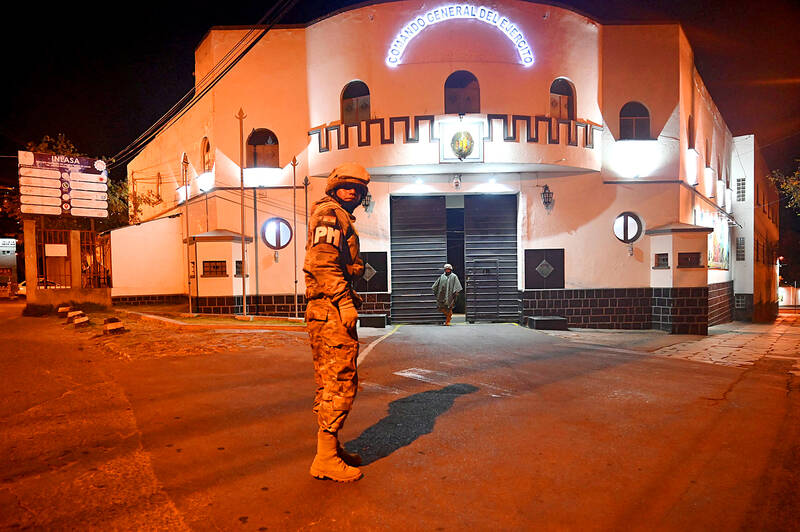
Photo: Reuters
The conflict initially erupted after Paz abruptly cut long-standing fuel subsidies to shrink the deficit, amid a worsening US dollar crunch and talks with the IMF. Despite later steps to stabilize fuel prices and reverse unpopular land reforms, protests intensified into broader discontent, with unions demanding wage increases, an end to fuel and US dollar shortages, and Paz’s resignation.
Paz’s declaration came in a live message to the nation just hours after he on Friday unveiled a deal struck with the main union, the Bolivian Workers’ Confederation, that aimed to ease tension.
However, many roads connecting the South American nation’s main production center are under the control of rural associations aligned with Morales, who were not a part of the negotiations and are continuing to protest mainly in the area of Cochabamba.
Paz said the crisis had evolved into an organized attempt to destabilize democracy after weeks of violence and blockades. He said the state of emergency aims to restore order, protect citizens and ensure the flow of essential goods, while warning that those continuing disruptions would face legal consequences.
“This is not a state of emergency to restrict people’s lives... It is a state of emergency to give freedom back to the people, to free Bolivia from those who use political conflict to block roads and harm the population,” Paz said.

Voters in Switzerland yesterday cast their ballots on an initiative championed by the top right-wing party to cap the Alpine country’s population at 10 million. As of press time last night, early results showed that Swiss voters were leaning against it. The populist Swiss People’s Party, which has the most seats in parliament, has stirred up and fostered anti-migration sentiment over the years, notably about an influx of workers from the neighboring EU. Critics called the bid a self-inflicted wound, saying the boom in migration over the past generation has brought foreign labor and skills to sectors such as healthcare, finance, pharmaceuticals
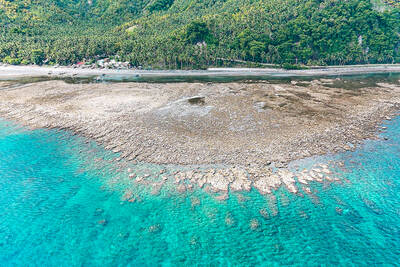
Arsenio Butil Jr fell to his knees and began to pray when last week’s deadly magnitude 7.8 earthquake began shaking his home on the coast of the southern Philippines. When he opened his eyes, he saw a once-familiar shoreline changing in real time, with swathes of previously submerged coral suddenly pushing above the waterline. The June 8 quake, driven by a shifting of the nearby Cotabato Trench, toppled buildings, triggered landslides and killed at least 76 people on the southern island of Mindanao. The tectonic forces at work also thrust chunks of the island’s coastline upward in a phenomenon known as “coastal uplift,”
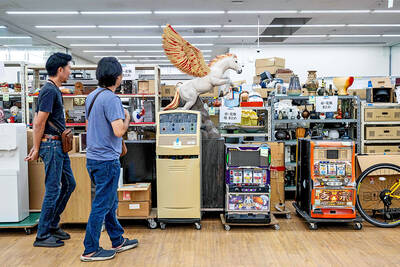
YUCK OR YUM? While it is difficult to sell second-hand goods that are more than seven years old in Japan, they are still popular in foreign markets, an executive said Under a scorching sun in a Bangkok suburb, a whistle blew, and shouts filled the air as dozens of shoppers rushed into a warehouse bearing the sign “Japanese Second-Hand Store.” From bags and bicycles to surfboards and suitcases, the Japanese second-hand market is booming, with quality-conscious buyers in other Asian countries increasingly tapping into the circular economy trend. “What is considered garbage for them can still be useful in Thailand,” said 36-year-old Lookpoo Sathitpanyapon, who runs an online store selling toy keychains. “That bag, that bag,” one shopper shouted while racing through the warehouse, filled with everything from colorful toys
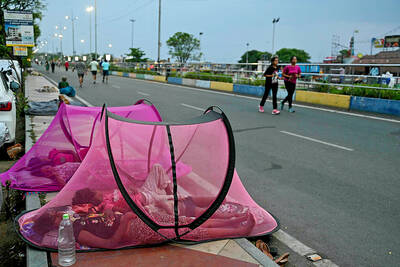
Growing up in Tahiti, Anna-Bella Failloux saw first-hand the threat posed by mosquitoes: Nearly one-third of adults on the picturesque island once had swollen limbs from elephantiasis caused by their bites. She has since dedicated her life to studying mosquitoes and the diseases they transmit — a concern that looms ever larger as climate change expands the area where the insects roam. “You have to accept being bitten by a mosquito from time to time,” the 63-year-old entomologist at France’s Pasteur Institute said. “But we have to avoid too many people getting sick and dying from the infections,” Failloux said, as she observed


 RSS
RSS