


Police in Sweden have seized a false-flagged cargo ship off its southern coast believed to belong to Russia’s shadow fleet and suspected of transporting stolen Ukrainian grain, authorities said on Saturday.
The 96m Caffa left Casablanca in Morocco on Feb. 24 and was headed for Saint Petersburg, Russia, when armed Swedish police on Friday boarded it off the southern town of Trelleborg.
“The vessel is on the Ukraine sanctions list. Information indicates that it has essentially been used to transport grain that is stolen, as we understand it, from Ukraine,” Swedish Coast Guard Acting Head of Operations Daniel Stenling told a news conference.
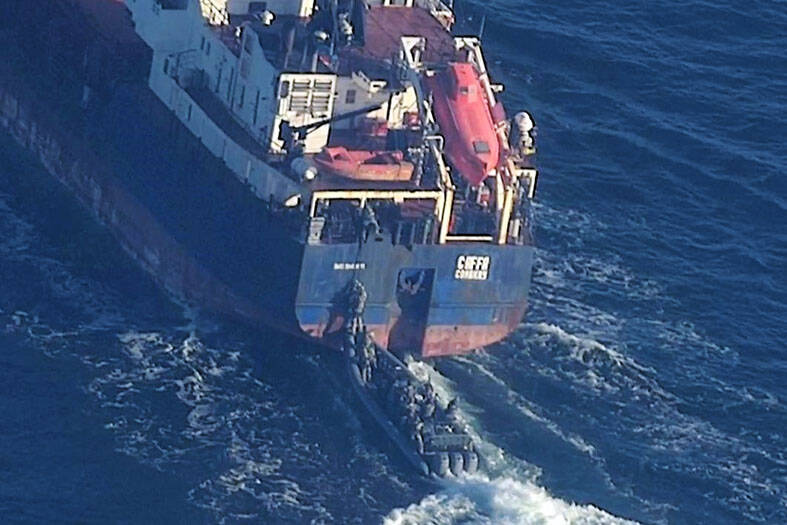
Photo: Swedish Coast Guard via AP
“We have been able to establish that the vessel is sailing under a false flag. She is registered in Guinea, but that registration is in fact false,” he said.
The Russian embassy in Stockholm said it had been informed by the Swedish coast guard that 10 of the 11-person crew were Russian citizens.
It wrote on Telegram that it was in contact with Swedish authorities to “provide consular assistance to the Russian nationals among the crew.”
One crew member was under investigation for contravening the maritime code on seaworthiness and on ship safety, Stenling said, refusing to disclose the suspect’s identity or crew role.
“The investigative measures we have taken so far reinforce our suspicions and our view that there are extensive maritime safety deficiencies on this vessel,” he said.
The Swedish Transport Agency was to inspect the ship and determine whether it was seaworthy and authorized to continue its journey.
Moscow’s “shadow fleet” consists of vessels with opaque ownership used to skirt Western sanctions.
“It’s a problem for us that we are seeing more ships that don’t respect the law of the sea,” Stenling said, adding that “the risk of accidents increases when ships are not certified.”
“We might not even know what kind of crew is on board, what kind of skills they have, what certifications they hold, and they often lack insurance if something were to happen,” he said.
Ukrainian Minister of Foreign Affairs Andrii Sybiha on Saturday thanked Sweden.
“Collective action against such vessels is gaining momentum. This is a welcome development,” he wrote on X. “Sanctions work when they are strictly enforced. Together, we must stop the activities of Russia’s shadow fleet to protect Europe’s security and environment.”
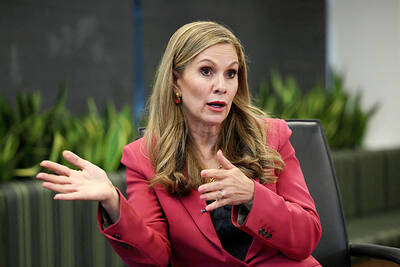
Australians were downloading virtual private networks (VPNs) in droves, while one of the world’s largest porn distributors said it was blocking users from its platforms as the country yesterday rolled out sweeping online age restriction. Australia in December became the first country to impose a nationwide ban on teenagers using social media. A separate law now requires artificial intelligence (AI)-powered chatbot services to keep certain content — including pornography, extreme violence and self-harm and eating disorder material — from minors or face fines of up to A$49.5 million (US$34.6 million). The country also joined Britain, France and dozens of US states requiring
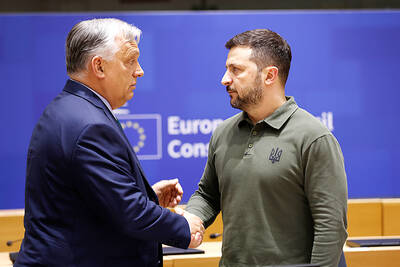
Hungarian authorities temporarily detained seven Ukrainian citizens and seized two armored cars carrying tens of millions of euros in cash across Hungary on suspicion of money laundering, officials said on Friday. The Ukrainians were released on Friday, following their detention on Thursday, but Hungarian officials held onto the cash, prompting Ukraine to accuse Hungary’s Russia-friendly government of illegally seizing the money. “We will not tolerate this state banditism,” Ukrainian Minister of Foreign Affairs Andrii Sybiha said. The seven detained Ukrainians were employees of the Ukrainian state-owned Oschadbank, who were traveling in the two armored cars that were carrying the money between Austria and
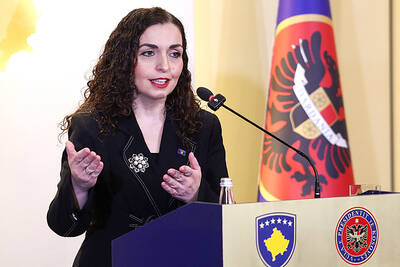
Kosovar President Vjosa Osmani on Friday after dissolving the Kosovar parliament said a snap election should be held as soon as possible to avoid another prolonged political crisis in the Balkan country at a time of global turmoil. Osmani said it is important for Kosovo to wrap up the upcoming election process and form functional institutions for political stability as the war rages in the Middle East. “Precisely because the geopolitical situation is that complex, it is important to finish this electoral process which is coming up,” she said. “It is very hard now to imagine what will happen next.” Kosovo, which declared

MORE BANS: Australia last year required sites to remove accounts held by under-16s, with a few countries pushing for similar action at an EU level and India considering its own ban Indonesia on Friday said it would ban social media access for children under 16, citing threats from online pornography, cyberbullying, online fraud and Internet addiction. “Accounts belonging to children under 16 on high-risk platforms will start to be deactivated, beginning with YouTube, TikTok, Facebook, Instagram, Threads, X, Bigo Live and Roblox,” Indonesian Minister of Communications and Digital Meutya Hafid said. “The government is stepping in so that parents no longer have to fight alone against the giants of the algorithm. Implementation will begin on March 28, 2026,” she said. The social media ban would be introduced in stages “until all platforms fulfill their


 RSS
RSS