


Chinese tourists are continuing to shun Japan in large numbers, with the country falling out of the top 10 destinations for those celebrating the Lunar New Year with a trip abroad.
Japan has had a dramatic drop in the number of Chinese visitors since the end of last year, as a diplomatic row between Tokyo and Beijing over the security of Taiwan continues.
Chinese tourism to Japan, where a weak currency is helping fuel a tourism boom, almost halved in December compared with the same period last year, the Japanese Ministry of Land, Infrastructure, Transport and Tourism said.
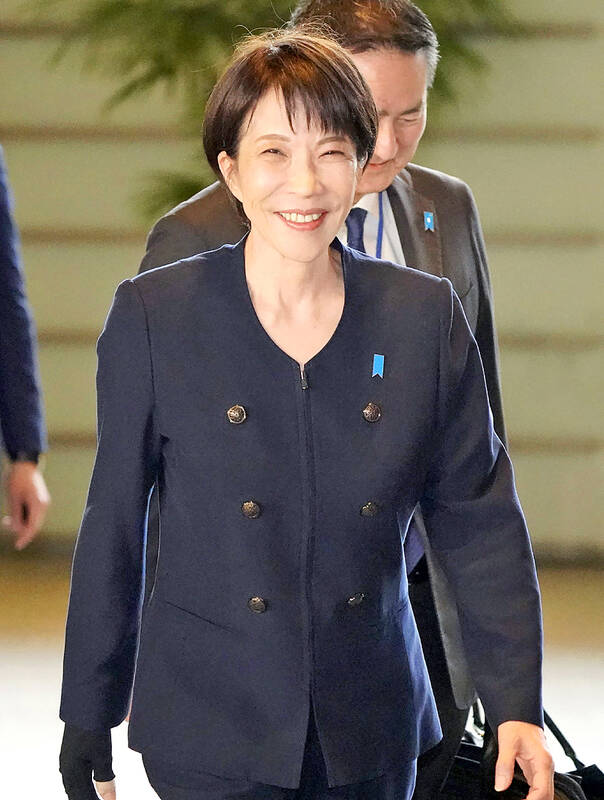
Photo: AFP
The trend looks set to continue, months after Japanese Prime Minister Sanae Takaichi suggested her country’s self-defense forces could be deployed if China attempted to invade Taiwan.
Takaichi’s remarks led to an angry response in China, where officials urged tourists and students not to travel to Japan.
South Korea is expected to become the most popular overseas destination for Chinese travelers during the 40-day travel frenzy, with an estimated 250,000 expected to visit, up 1.5 times from the previous year.
Japan would welcome fewer people from China than other countries in the region, including Thailand, Singapore, Vietnam and Russia, media reports said.
Instead, the number of Chinese tourists visiting Japan during the Lunar New Year holidays is expected to fall by up to 60 percent from the previous year.
The dispute over Taiwan has intensified since Takaichi told MPs in November that military involvement was an option if a crisis in the Taiwan Strait posed an “existential” threat to Japan.
Her refusal to back down has invited more criticism from China, including its foreign minister, Wang Yi, who this week accused Takaichi of trying to revive Japan’s militarist past.
Wang told the Munich Security Conference on Monday: “Japanese people should no longer allow themselves to be manipulated or deceived by those far-right forces, or by those who seek to revive militarism.
“All peace-loving countries should send a clear warning to Japan: If it chooses to walk back on this path, it will only be heading toward self-destruction,” Wang said.
In response, Japan protested through diplomatic channels, while the foreign ministry in Tokyo condemned Wang’s claims as “factually incorrect and ungrounded.”
“Japan’s efforts to strengthen its defense capabilities are in response to an increasingly severe security environment and are not directed against any specific third country,” the ministry said in a statement.
It said there were “countries in the international community that have been rapidly increasing their military capabilities in a non-transparent manner,” but added that “Japan opposes such moves and distances itself from them.”
Chinese Special Representative on Korean Peninsula Affairs Liu Xiaoming (劉曉明) upped the ante when he said Takaichi’s remarks were proof of Japan’s “unextinguished ambition to invade and colonize Taiwan once again, and the lingering ghost of revived militarism”.
In a post on X that referenced Japan’s 1941 surprise attack on Pearl Harbor, Liu added: “The lessons of history are not far away and must be heeded. If Japan refuses to repent and change its ways, it will inevitably repeat the same tragic mistakes.”
Beijing officials have repeatedly warned travelers they face threats to their safety in Japan, although there have been no reports of incidents targeting tourists from China.
On Sunday, the Chinese consulate general in Osaka again urged Chinese nationals to refrain from traveling to Japan after a fatal stabbing in the city. The incident, in which a teenager was stabbed to death and two others injured in a popular tourist area, did not involve Chinese nationals.
Not all people have heeded the official travel advice. A Chinese man told Kyodo news agency it was important to promote goodwill between ordinary people from both countries. Another, a woman from Shanghai, said she still planned to visit Japan with her parents.
“The travel alert is aimed at promoting criticism of Japan,” she told Kyodo. “But my family has not been brainwashed.”
Additional reporting by Reuters

An American scientist convicted of lying to US authorities about payments from China while he was at Harvard University has rebuilt his research lab in Shenzhen, China, to pursue technology the Chinese government has identified as a national priority: embedding electronics into the human brain. Charles Lieber, 67, is among the world’s leading researchers in brain-computer interfaces. The technology has shown promise in treating conditions such as amyotrophic lateral sclerosis and restoring movement in paralyzed people. It also has potential military applications: Scientists at the Chinese People’s Liberation Army have investigated brain interfaces as a way to engineer super soldiers by boosting
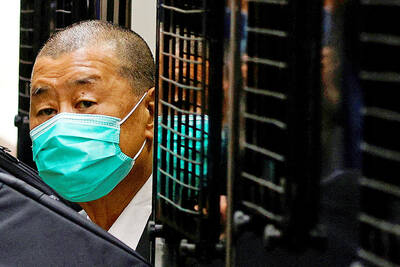
Jailed media entrepreneur Jimmy Lai (黎智英) has been awarded Deutsche Welle’s (DW) freedom of speech award for his contribution to Hong Kong’s pro-democracy movement. The German public broadcaster on Thursday said Lai would be presented in absentia with the 12th iteration of the award on June 23 at the DW Global Media Forum in Bonn. Deutsche Welle director-general Barbara Massing praised the 78-year-old founder of the now-shuttered news outlet Apple Daily for standing “unwaveringly for press freedom in Hong Kong at great personal risk.” “With Apple Daily, he gave journalists a platform for free reporting and a voice to the democracy movement in
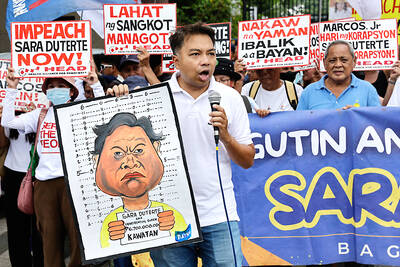
PHILIPPINE COMMITTEE: The head of the committee that made the decision said: ‘If there is nothing to hide, there is no reason to hide, there is no reason to obstruct’ A Philippine congressional committee on Wednesday ruled that there was “probable cause” to impeach Philippine Vice President Sara Duterte after hearing allegations of unexplained wealth, misuse of state funds and threats to have the president assassinated. The unanimous decision of the 53-member committee in the Philippine House of Representatives sends the two impeachment complaints to deliberations and voting by the entire lower chamber, which has more than 300 lawmakers. The complaints centered on Duterte’s alleged illegal use and mishandling of intelligence funds from the vice president’s office, and from her time as education secretary under Philippine President Ferdinand Marcos Jr. Duterte and the

Burmese President Min Aung Hlaing yesterday cut all prisoners’ sentences by one-sixth, a blanket measure that a source close to deposed leader Aung San Suu Kyi said would further shorten her detention. Aung San Suu Kyi has been sequestered since a 2021 military coup, but the senior member of her dissolved National League for Democracy (NLD) party said that while her term had been reduced, her remaining sentence is still unclear. “We also don’t know exactly how many years she has left,” the source told reporters, speaking on condition of anonymity for security reasons. The military toppled Aung San Suu Kyi’s elected government


 RSS
RSS