


Africa’s top regional body is hosting its annual summit in Ethiopia this weekend to discuss the future of the continent of about 1.4 billion people, but across the continent the organization is becoming less popular.
Set up to “promote the unity and solidarity of the African States,” analysts said the African Union (AU) is facing a legitimacy crisis among the continent’s youth after failing to meet their expectations. African countries are battling military coups, disputed elections and protests inspired by hardship worsened by foreign aid cuts.
Africa has the youngest population in the world with more than 400 million people aged 15 to 35 years old, but is also home to several of the world’s oldest and longest-serving leaders — a paradox that has contributed to an upsurge in coups.
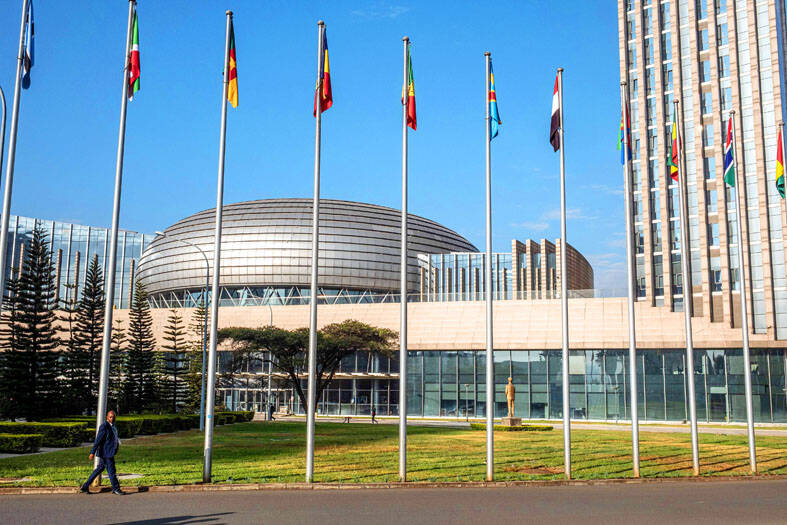
Photo: AFP
With a young population set to double by 2050, it is the only rapidly growing region where its people are getting poorer. In different countries and on social media, African youths view the AU as a bloc of old leaders and one which sees their interests as less of a priority.
The organization has missed opportunities to be people-centered and citizen-driven and has instead focused largely on governments and leaders, Crisis Group senior analyst Liesl Louw-Vaudran said.
“What the youth is really asking and why people are frustrated is because this is not an African Union for citizens. It’s not a people-driven African Union,” Louw-Vaudran added.
As several African countries held elections for new presidents over the past year, there was a clear pattern of sidelined opposition candidates, disputed results and protests from mostly young voters after incumbents were re-elected.
Despite the election outcomes, the AU was often accused of being quick to side with re-elected incumbents and slow to call out flawed processes.
As authorities in Uganda shut down the Internet and clamped down on the opposition during its presidential election last month, the AU Commission issued a statement “commending” the conduct of the poll. A day after, the AU election observer mission issued a preliminary report noting “reports of harassment, intimidation, and arrest of opposition leaders, candidates, supporters’ media and civic society actors” in the election.
The AU social media post commending the election enraged many youths, with one person retorting: “Dictatorship club has spoken.”
One key challenge the AU has battled with over the years is weak enforcement of resolutions, US International University Nairobi history professor Macharia Munene said.
That is because “not all members meet their dues or fully accept what is generally decided,” he said.
At the 39th AU Summit in Ethiopia’s capital of Addis Ababa yesterday and today, the theme is water and sanitation. Discussions would feature the continent’s response to climate change and humanitarian crises following foreign aid cuts from international partners such as the US.
Observers said the AU Summit would provide an opportunity to align continental priorities with international partners, especially at a time of discussions around a ‘new world order’ stirred by US President Donald Trump with foreign leaders signaling shifting global alliances.
Still, critics urged the AU to look inward by paying closer attention to the continent’s most pressing challenges and doing more to hold leaders accountable when they fail to meet expectations.
In Nigeria’s capital of Abuja, resident Chima Ekwueme said the AU does not care about holding leaders accountable, citing Nigeria’s deadly security crises and economic hardship despite its rich mineral wealth.
“They are there for their own interests,” Ekwueme said. “In Nigeria, we have all it takes to put things in order, [but] look at how difficult things are and where is the AU.”
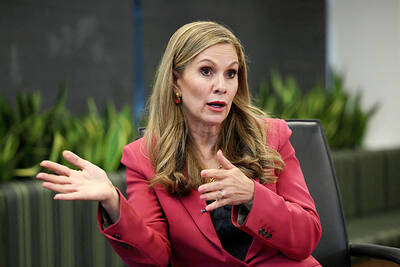
Australians were downloading virtual private networks (VPNs) in droves, while one of the world’s largest porn distributors said it was blocking users from its platforms as the country yesterday rolled out sweeping online age restriction. Australia in December became the first country to impose a nationwide ban on teenagers using social media. A separate law now requires artificial intelligence (AI)-powered chatbot services to keep certain content — including pornography, extreme violence and self-harm and eating disorder material — from minors or face fines of up to A$49.5 million (US$34.6 million). The country also joined Britain, France and dozens of US states requiring

Hungarian authorities temporarily detained seven Ukrainian citizens and seized two armored cars carrying tens of millions of euros in cash across Hungary on suspicion of money laundering, officials said on Friday. The Ukrainians were released on Friday, following their detention on Thursday, but Hungarian officials held onto the cash, prompting Ukraine to accuse Hungary’s Russia-friendly government of illegally seizing the money. “We will not tolerate this state banditism,” Ukrainian Minister of Foreign Affairs Andrii Sybiha said. The seven detained Ukrainians were employees of the Ukrainian state-owned Oschadbank, who were traveling in the two armored cars that were carrying the money between Austria and
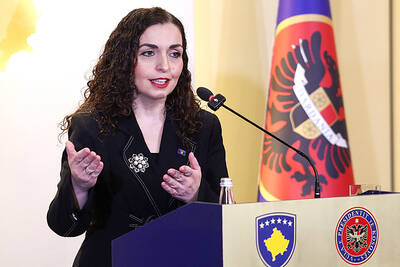
Kosovar President Vjosa Osmani on Friday after dissolving the Kosovar parliament said a snap election should be held as soon as possible to avoid another prolonged political crisis in the Balkan country at a time of global turmoil. Osmani said it is important for Kosovo to wrap up the upcoming election process and form functional institutions for political stability as the war rages in the Middle East. “Precisely because the geopolitical situation is that complex, it is important to finish this electoral process which is coming up,” she said. “It is very hard now to imagine what will happen next.” Kosovo, which declared

MORE BANS: Australia last year required sites to remove accounts held by under-16s, with a few countries pushing for similar action at an EU level and India considering its own ban Indonesia on Friday said it would ban social media access for children under 16, citing threats from online pornography, cyberbullying, online fraud and Internet addiction. “Accounts belonging to children under 16 on high-risk platforms will start to be deactivated, beginning with YouTube, TikTok, Facebook, Instagram, Threads, X, Bigo Live and Roblox,” Indonesian Minister of Communications and Digital Meutya Hafid said. “The government is stepping in so that parents no longer have to fight alone against the giants of the algorithm. Implementation will begin on March 28, 2026,” she said. The social media ban would be introduced in stages “until all platforms fulfill their


 RSS
RSS